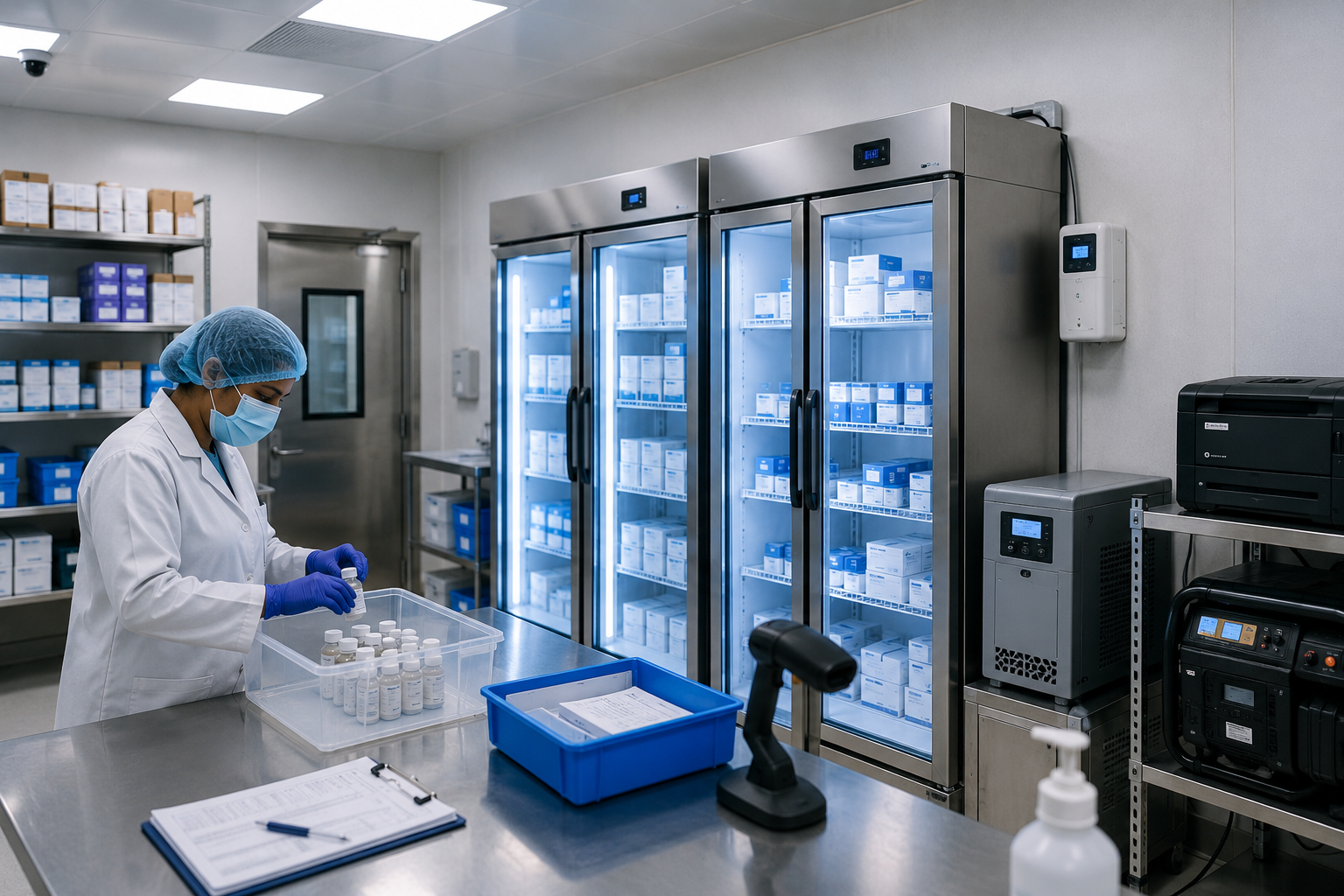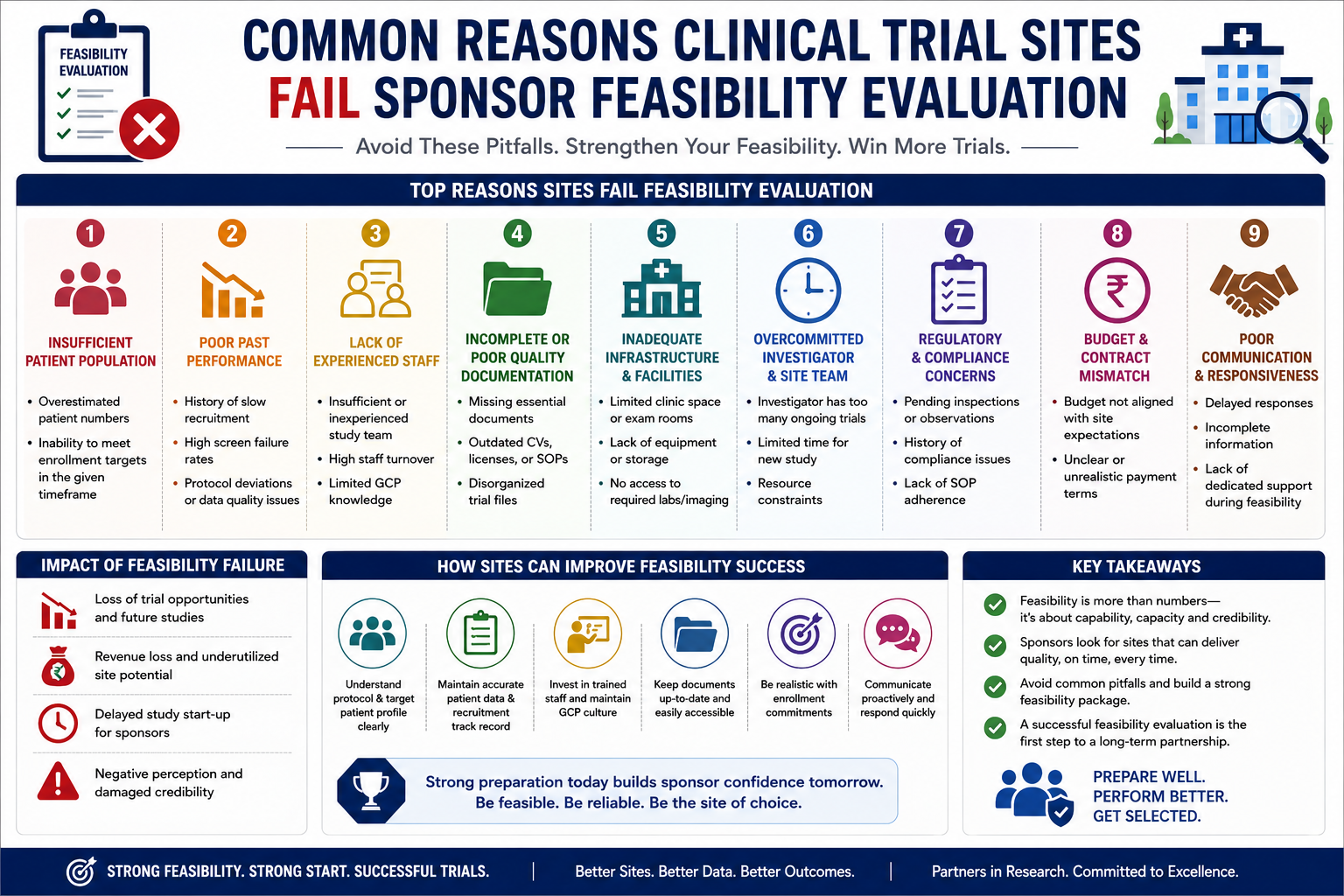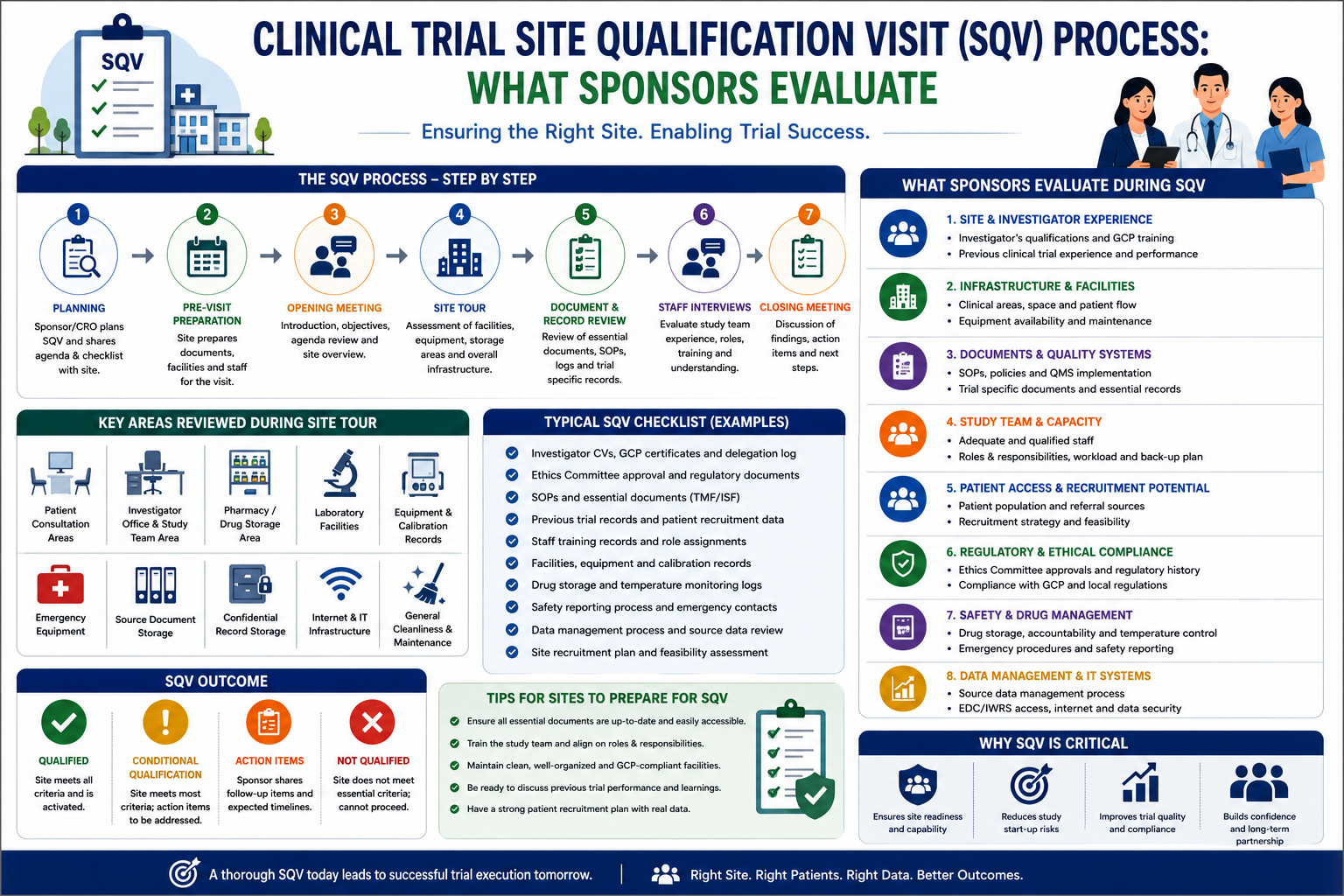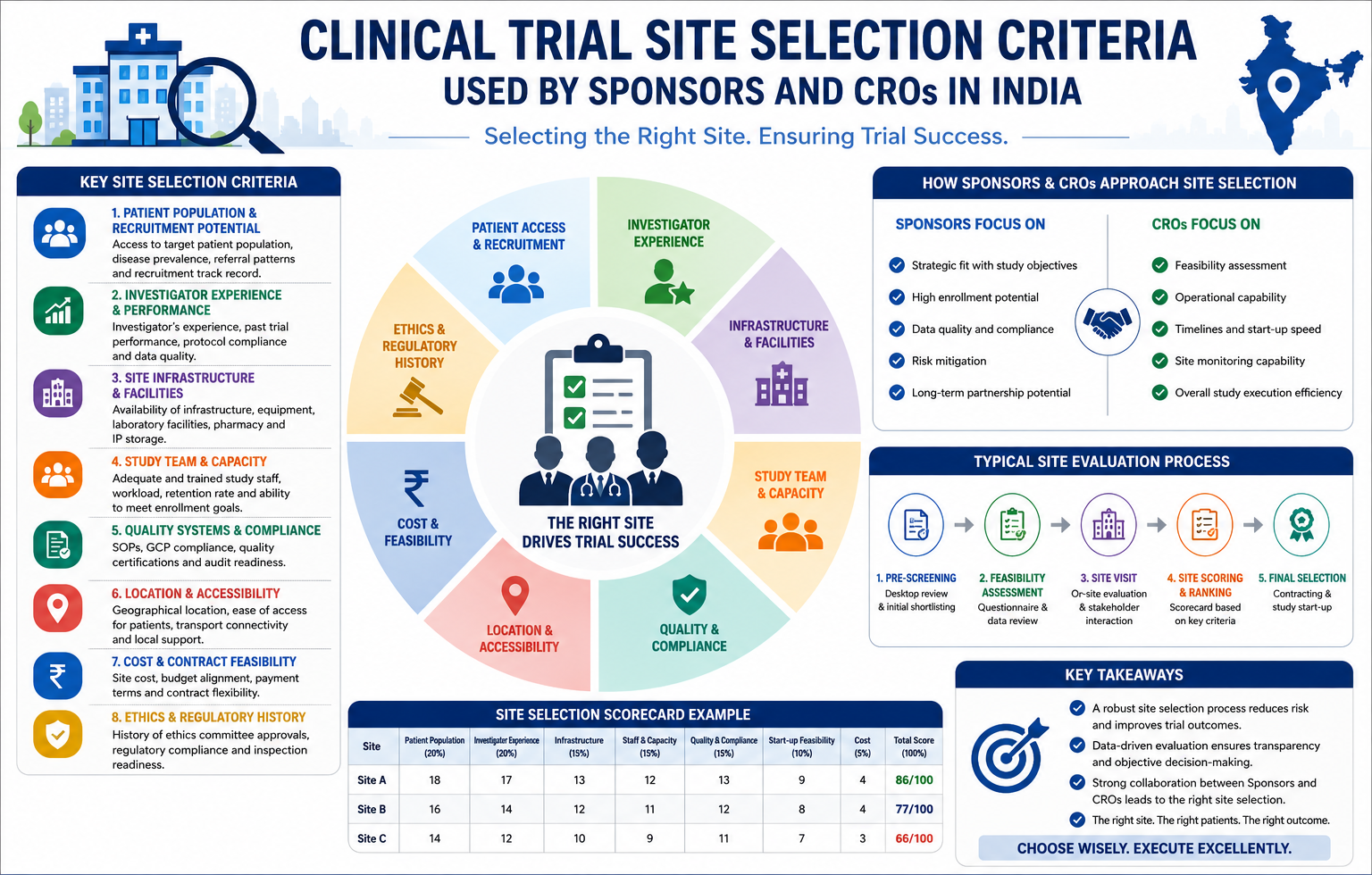
I have stood in hospital pharmacies in Mumbai watching a Phase III trial fall apart because the backup generator failed during a monsoon power cut, causing $80,000 worth of temperature-sensitive Investigational Product (IP) to be destroyed. On paper, that site was perfect. It had 500 beds, a renowned Principal Investigator (PI), and a massive patient pool. In reality, the infrastructure was held together by hope rather than robust Standard Operating Procedures (SOPs). Selecting a site in India for a global trial is not about looking for the most modern building. It is about identifying the sites where execution meets the requirements of the New Drugs and Clinical Trials Rules (2019) and ICH-GCP E6(R3). If the infrastructure fails, the data can become compromised (Clinical Trial Site Infrastructure).
Consequently, data integrity issues may emerge. If the data becomes compromised, your multi-million-dollar filing may face significant regulatory risks. As a result, sponsors must invest in reliable infrastructure and robust quality controls. Ultimately, strong infrastructure protects both data integrity and regulatory submissions (Clinical Trial Site Infrastructure).
Where Site Discovery Fails: The Approval and Startup Funnel
Site selection in India often fails because of a mismatch between the PI’s clinical reputation and the site’s operational capacity. We often see sponsors chasing “Big Names” in Tier 1 cities, only to find the Ethics Committee (EC) meets once every two months, or the pharmacy hasn’t updated its temperature logs in a week. The approval process in India involves three distinct layers: the Institutional Ethics Committee (IEC), the Central Drugs Standard Control Organisation (CDSCO), and the Clinical Trials Registry – India (CTRI). If a site’s document management infrastructure is poor, navigating these three approval stages can take six months instead of three. As a result, study startup timelines may increase significantly. Furthermore, delays at one stage can affect subsequent milestones (Clinical Trial Site Infrastructure).
Consequently, sponsors may face higher operational costs and slower project execution. Therefore, sites should establish efficient document management systems from the outset. Ultimately, strong infrastructure supports faster approvals and smoother trial execution (Clinical Trial Site Infrastructure).
Real operational efficiency happens in the “last mile” of startup. This includes establishing the Site Master File (SMF), calibrating equipment, and training specialized staff. Sites failing this stage usually do so because they lack a dedicated Site Management Organization (SMO) or a focused Clinical Research Coordinator (CRC) team (Clinical Trial Site Infrastructure).
Table 2: Functional Readiness vs. Site Performance Metrics
Sr. No. Site Area Essential Equipment Maintenance Cycle Risk if Absent Staffing Requirement Compliance Standard Operational Bottleneck
1 Pharmacy Digital Data Loggers Monthly Temp Excursion Pharmacist Schedule M IP Dispensing Delay
2 Phlebotomy Calibrated Centrifuges Quarterly Sample Hemolysis Lab Tech NABL/ISO Sample Stability
3 Admin High-speed Scanner Ongoing Reporting Delay Data Entry Op ICH-GCP Query Resolution
4 Storage Fire-rated Cabinets Annual Document Loss Archivist NDCT 2019 Retrieval Speed
5 Subject Area ECG/Vital Monitors Half-yearly Inaccurate Data Nurse/CRC Local Standard Patient Flow
Case Studies: Real-World Execution Outcomes
Case Study 1: The Temperature Excursion Trap
· Study Type: Phase III Multi-center Vaccine Trial.
· Site Type: Large Private Multi-specialty Hospital.
· Problem: The site pharmacy’s digital data logger failed, and the manual backup logs were falsified by a clinical assistant.
· Root Cause: Lack of a centralized, automated temperature monitoring system and poor oversight by the PI.
· Action Taken: 400 doses of IP were quarantined. The site was put on hold for 60 days.
· Outcome: The sponsor lost $120,000 in IP costs and missed the first-patient-in (FPI) target by three months.
· Lesson Learned: Automated alerts sent to the CRA/Sponsor are non-negotiable for high-value IP storage.
Case Study 2: The Archive Accessibility Crisis
· Study Type: Retrospective Phase IV Observational Study.
· Site Type: Academic Medical Institute.
· Problem: During an FDA audit, the site could not retrieve source documents for patients enrolled five years prior.
· Root Cause: Documents were stored in a damp basement without pest control or a cataloging system.
· Action Taken: Massive data queries; the site was issued a 483-style observation.
· Outcome: The sponsor had to exclude the site’s data from the final submission, weakening the statistical power of the study.
· Lesson Learned: Digital archiving and off-site fire-proof storage are essential long-term investments.
Case Study 3: The Connectivity Bottleneck
· Study Type: Phase II Oncology with Electronic Data Capture (EDC).
· Site Type: Specialized Cancer Research Center.
· Problem: The site’s internal firewall blocked the sponsor’s EDC system and the Central Lab’s portal.
· Root Cause: IT infrastructure was optimized for hospital billing, not clinical research data transfer.
· Action Taken: It took 45 days to get IT clearance for a dedicated research internet line.
· Outcome: Monitoring was delayed, and the site became a “red flag” for future high-tech trials.
· Lesson Learned: Assess IT and firewall protocols during the feasibility stage, not after site initiation.
Challenges and Mitigation in the Indian Context
Operational risks in India are often environmental and logistical rather than purely clinical. The primary challenges include:
1. Power Stability: Even in Tier 1 cities, power fluctuations can destroy sensitive lab equipment. Mitigation requires Uninterruptible Power Supply (UPS) systems with at least 4 hours of backup and secondary DG (Diesel Generator) sets.
2. Staff Turnover: CRCs in India often move for better pay. This leads to a loss of institutional knowledge. Mitigation involves working with a structured clinical research service in India that provides redundant staffing models.
3. Courier Logistics: Shipping biological samples from remote sites to a central lab in Mumbai or Delhi requires dry ice replenishment and temperature tracking. Failure here is common during public holidays or extreme summer heat.
Myths vs. Reality
· Myth: “Premier academic government hospitals are the best because they have the most patients.”
· Reality: While they have patients, they often lack the administrative infrastructure to handle sponsor-specific audits and rapid EDC entry.
· Myth: “Any hospital with a pharmacy can store Investigational Products.”
· Reality: Most hospital pharmacies are optimized for high-turnover retail, not the strict segregation and access control required by clinical trial site management in India.
· Myth: “Digital signatures are universally accepted across all Indian sites.”
· Reality: Many Institutional Ethics Committees still require physical “wet” signatures on all thick dossiers, impacting timelines.
Common Mistakes
Sponsor Mistakes
Global sponsors often try to apply a Western template to Indian feasibility. They focus on the number of MRI machines but forget to check if the site has a dedicated space where a monitor can sit for 8 hours without being interrupted. Choosing a site based solely on PI publication record rather than the PI’s available time is a recurring error.
CRO Mistakes
CROs often over-promise recruitment rates to win the bid. This leads to selecting “fast” sites that cut corners on infrastructure, eventually leading to audit failures. CROs also frequently fail to adequately train the site’s IT department on the specific requirements of the study’s software.
Site Mistakes
Sites often treat clinical research as a side project. They fail to invest in calibrated equipment and instead rely on the hospital’s general maintenance, which may not meet the precision standards of a global protocol.
Counterintuitive Insight: The “Empty Room” Rule
Most sponsors look for busy, bustling clinics. However, a site with an “empty room” specifically designated for research is often superior to a site with 100 extra beds. Why? Because research requires dedicated space for the SMF, IP, and the CRA. If a site hasn’t allocated dedicated square footage for these activities, the clinical flow will eventually displace the research requirements, leading to lost folders and compromised IP security.
Practical Sponsor Checklist for Site Infrastructure
Feasibility Stage
· Verify presence of a registered Institutional Ethics Committee (IEC).
· Check temperature logs for the last 6 months (look for consistency).
· Evaluate the distance between the phlebotomy area and the centrifuge.
· Confirm the presence of a dedicated, lockable cupboard for the Site Master File.
Startup Stage
· Ensure all equipment (centrifuges, fridges, BP apparatus) has valid calibration certificates.
· Review the site’s SOPs for power failure and emergency IP relocation.
· Establish a clear IT protocol for EDC access and remote monitoring.
· Confirm the Site Management Organization (SMO) or CRC team roles.
Execution Stage
· Monitor EDC entry timelines (target <5 days from patient visit).
· Conduct periodic checks of IP storage access logs.
· Perform unexpected “spot checks” on pharmacy temperature logs. · Engage with clinical research contact in India for local troubleshooting.
Regulatory and Compliance Context
Infrastructure is not just a logistical necessity; it is a legal requirement under the following frameworks:
· CDSCO & DCGI: They mandate that sites must be “adequate” for the conduct of the trial.
· ICMR: Provides the ethical guidelines for biomedical research involving human participants.
· CTRI: Every trial must be registered here before the first patient is recruited.
· NDCT Rules 2019: These rules modernized the Indian regulatory landscape, placing heavy emphasis on the PI’s responsibility for infrastructure and data.
Compliance with ICH-GCP E6(R3) is the gold standard that ensures the data generated at an Indian site is acceptable to the FDA, EMA, MHRA, and WHO.
Table 3: Risk Assessment for Site Infrastructure
Sr. No. Risk Factor Probability Impact on Data Mitigation Strategy Monitoring Frequency Regulatory Severity Cost to Fix
1 Power Outage High Extreme Dual Backup Generators Weekly High Moderate
2 Poor Internet Moderate Timeline Delay Dedicated 5G/Fiber line Daily Low Low
3 Staff Attrition High Quality Drop Redundant Staffing Monthly Medium Moderate
4 Temp Excursion Moderate IP Loss Automated Alert System Ongoing Critical High
5 Space Constraint Low Data Chaos Dedicated Research Wing Semi-Annual Medium High
FAQ: Real-World Operational Questions
How do we handle sites that refuse to allow remote access to their EMR? This is a common issue in India due to data privacy concerns. The solution is usually a “shared screen” approach during a video call or ensuring the CRA has a dedicated, secure terminal on-site. Trying to force a hospital to change its IT policy mid-study will only lead to delays.
What is the minimum requirement for IP storage in Tier 2 cities in India? At a minimum, you need a pharmaceutical-grade refrigerator (not a domestic one), a dual-probe digital data logger with 24/7 monitoring, a dedicated UPS, and a restricted-access room. If the site cannot provide adequate storage facilities, sponsors should store the Investigational Product (IP) at a central depot and arrange just-in-time shipments. As a result, they can maintain product quality and compliance. However, this strategy may increase logistics costs.
Are independent Ethics Committees (ECs) being phased out? The CDSCO prefers institutional ECs for site-specific trials. However, independent ECs still play a role under specific conditions
defined in the 2019 rules. Always verify the Ethics Committee’s DCGI registration before starting the study. Otherwise, regulators may consider the study data legally invalid.
How much extra time should we budget for site startup in India? If the site’s infrastructure is ready, expect 3-4 months for EC and CDSCO approvals. If the site needs infrastructure upgrades (e.g., installing a fire-proof archive), add at least another 60 days to your timeline.
Who is responsible for equipment calibration—the site or the sponsor? Legally, the site must provide calibrated equipment. However, in practice, if the sponsor requires a highly specialized device (like a -80°C freezer or a specific ECG model), the sponsor often provides it and manages the calibration to ensure global standardization.
Execution in clinical trials is a game of details. You can visit Oxygen Clinical Trial to understand more about how we bridge the gap between site selection and operational excellence. For specific queries regarding Indian site feasibility, feel free to reach out to Govind Pawar at govindpawar@oxygenclinicaltrials.com or connect via LinkedIn.
To succeed in India, you must look past the “premier” branding and inspect the pharmacy’s backup power. Infrastructure is the foundation of data; without a solid foundation, the entire trial is at risk.
Suggested External References: · CDSCO Official Portal · Clinical Trials Registry – India (CTRI) · ICMR Ethical Guidelines · ICH-GCP E6(R3) Draft Guidance (Clinical Trial Site Infrastructure).
for more info click here`