
oxygenclinicaltrial.com

insights

Business insights and articles written by our team of world-class professionals

Clinical Trial SQV Process

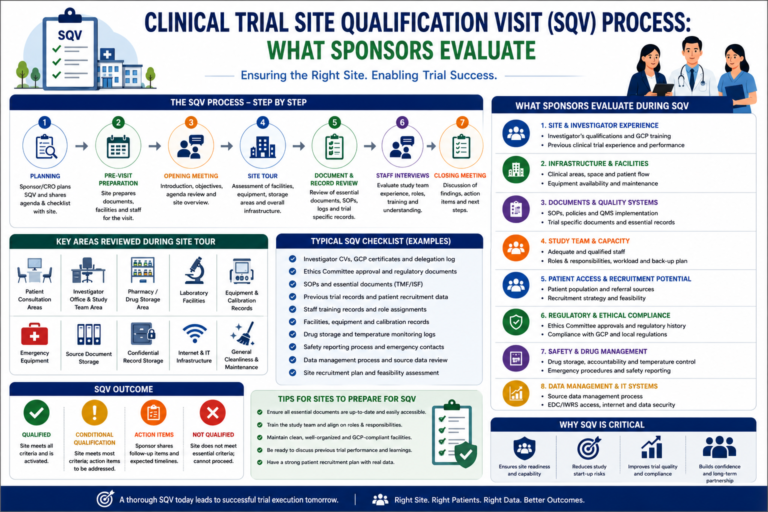
Clinical Trial Site Qualification Visit (SQV) Process: What Sponsors Evaluate

Clinical Trial SQV Process. I have spent fifteen years standing in hospital corridors, sitting across from overworked Principal Investigators (PIs), and reviewing site files that looked perfect on paper but were a liability in reality. I have seen trials delayed by six months because a site was qualified based on “reputation” rather than operational reality. I have seen data get tossed during a CDSCO audit because a site’s source documentation didn’t meet ALCOA+ standards, despite a “successful” SQV. A Site Qualification Visit (SQV) is frequently treated as a box-ticking exercise by junior monitors or rushed CROs. This is a mistake that costs sponsors millions. In India’s unique regulatory and clinical landscape, the SQV is the only barrier between a successful trial and a multi-year regulatory nightmare. If you don’t find the cracks during the SQV, you will find them during the first patient audit.   Executive Summary: The Sponsor Perspective on Risk For a Sponsor or a Clinical Operations head, the SQV is about three things: predictability, compliance, and ROI. Every day a site is stagnant costs thousands of dollars. In India, the “New Drugs and Clinical Trials Rules (2019)” have streamlined some aspects, but the complexity of Ethics Committee (EC) management and investigator commitment remains a bottleneck Clinical Trial SQV Process. What is at stake during an SQV? If a site fails at the SQV stage, it is a win. The real failure is qualifying a site that should never have been selected in the first place.   The Site Qualification Process: Beyond the Facility Tour When we walk into a site for an SQV in India, we are looking for a culture of compliance. Most PIs will show you their high-end diagnostic equipment or their CV. As a seasoned leader, I look at the study coordinator’s desk and the site’s Standard Operating Procedures (SOPs) Clinical Trial SQV Process.   The PI Interview: Assessing Real Commitment Many Indian PIs are “academic giants” but “operational ghosts.” During the SQV, I evaluate if the PI is actually going to oversee the trial or if they are delegating everything to a junior resident.   Staffing and Infrastructure We evaluate the Site Management Organization (SMO) support if applicable. If a site relies on a single coordinator for three different therapeutic areas, your data quality will suffer. We check for:   Where the Delays Happen: The Indian Context Indian clinical trials often stall at the transition between SQV and Site Initiation Visit (SIV). The SQV must identify these potential “silent delays”: Learn more about navigating clinical research services in India   Real Operational Insights: What Actually Works vs. What Fails Sites often fail not because they lack equipment, but because they lack process. In my experience, a Tier-2 city hospital with a dedicated PI and a meticulous coordinator often outperforms a “prestigious” metro hospital where the PI is rarely on-site.   Evidence of Recruitment Capability During an SQV, don’t just ask for a recruitment estimate. Ask to see the de-identified patient logs from the last six months. If a site says they see 50 diabetic patients a week but cannot show a log to prove it, they are guessing. Guessing leads to recruitment failure.   ALCOA+ Compliance Data must be Attributable, Legible, Contemporaneous, Original, Accurate, and now Complete, Consistent, Enduring, and Available. I have seen sites using scrap paper for primary vitals then “transcribing” them into source notes. This is a red flag. During the SQV, we must verify that the site has a system for capturing data at the point of care.   Case Studies: Lessons from the Field Case Study 1: The Celebrity PI Trap   Case Study 2: The Cold Chain Crisis   Case Study 3: The Unregistered Ethics Committee   Case Study 4: The Recruitment Overestimate   Challenges and Mitigation: The Unfiltered Reality Executing trials in India involves navigating a mix of high-tech facilities and legacy bureaucratic hurdles. Mitigation: Ensure the site has a documented internal training SOP. Don’t just train the coordinator; train the site. Mitigation: Ask the PI how they handle SAE (Serious Adverse Event) reporting. If their response is “the CRO handles it,” they are a liability. Mitigation: Verify NABL/CAP certifications during the SQV or plan for a central lab. Our site management expertise addresses these specific risks   Myths vs. Reality Reality: While the bureaucracy is real, government hospitals in India often have the highest patient volumes and the most loyal patient pools for long-term follow-up studies. Reality: A certificate is a piece of paper. During an SQV, I ask the staff to explain the Informed Consent Form (ICF) process for an illiterate patient. Their answer tells me more than any certificate. Reality: In many Indian hospitals, EMRs are used for billing, not for clinical notes. You must check if the clinical source data is actually in the EMR or still in handwritten folders.   Common Mistakes Sponsor Mistakes   CRO Mistakes   Site Mistakes   Counterintuitive Insight: Why “Busy” PIs Can Be a Red Flag Most sponsors want the top-ranked doctor in the country. In India, these doctors often see 100+ patients a day. They have no time to read the protocol, let alone oversee the daily nuances of a complex Phase II study Clinical Trial SQV Process. The best-performing sites are often led by “Mid-Career” PIs. These are investigators who are established enough to have patient volume but are still hungry enough to be personally involved in the research. They value the publication potential and the data quality. During the SQV, I look for the PI who asks me technical questions about the drug’s mechanism of action. That shows real interest Clinical Trial SQV Process. Practical Sponsor Checklist Feasibility Stage (Pre-SQV)   Startup Stage (During SQV)   Execution Stage (Post-SQV Assessment)   Regulatory and Compliance Context Navigating the Indian regulatory environment requires adherence to multiple bodies: For technical inquiries or site-specific feasibility in India, you can reach out directly at govindpawar@oxygenclinicaltrials.com or connect via LinkedIn.   Suggested Visuals for Deployment   External References

Read more >
Clinical Trial Site Selection Criteria Used by Sponsors and CROs in India

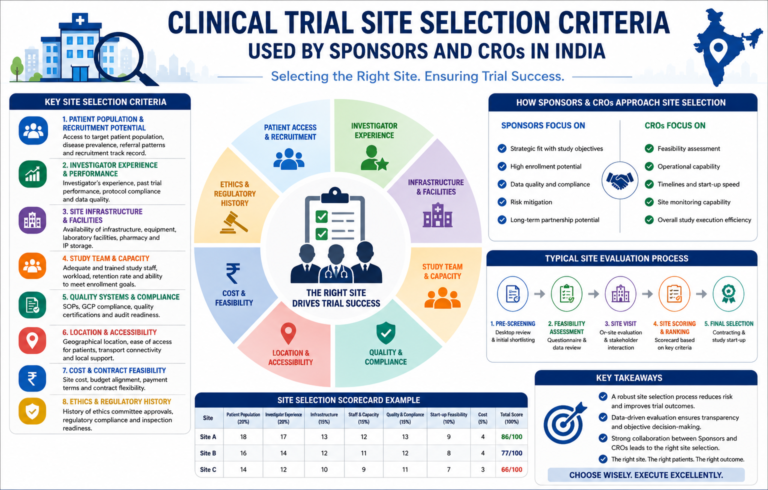
Clinical Trial Site Selection Criteria Used by Sponsors and CROs in India

Clinical Trial Site Selection. A sponsor recently approached me after a Phase III global study stalled. They had selected ten high-profile oncology sites in India based on impressive feasibility questionnaires. Six months post-SIV, four sites had zero enrollments. The “paper patients” promised during feasibility didn’t exist in the actual outpatient clinics, and the Principal Investigators (PIs) were over-committed to five other competing global trials. This isn’t a unique failure; it is the standard outcome of selecting sites based on marketing rather than operational reality. Clinical Trial Site Selection In India, site selection is the most significant risk-mitigation step in the study lifecycle. If you get the site wrong, no amount of monitoring or “rescue” activity will bring the timeline back. You are not just looking for a site with a freezer and a centrifuge; you are looking for an ecosystem that can survive a CDSCO audit, meet recruitment targets without compromising GCP, and manage the administrative burden of the New Drugs and Clinical Trials Rules (2019).   Executive Summary: Operational Site Comparison Clinical Trial Site Selection Selecting a site based only on the PI’s CV is a recipe for delay. Sponsors must evaluate the infrastructure, the institutional ethics committee (IEC) efficiency, and the actual availability of the study coordinator.   Table 1: Site Selection Framework and Impact Analysis Sr. No. Site Category Average Startup (Weeks) Recruitment Reliability Data Quality Rating Regulatory Audit Risk Cost per Patient Staff Turnover EC Meeting Frequency PI Involvement 1 Large Tier-1 Corporate 18–24 High Volume Moderate Low High High Monthly Low 2 Govt. Academic Center 26–40 Very High Variable Moderate Low Low Quarterly Moderate 3 Private Specialist Clinic 12–16 Consistent High Low Moderate Low Monthly High 4 Multi-Specialty Hospital 16–20 Moderate High Low Moderate Moderate Bi-Monthly Moderate 5 Regional Cancer Center 24–30 Very High Moderate Moderate Low Low Bi-Monthly Low   Indian Regulatory Approval Process and Selection Bottlenecks Clinical Trial Site Selection The Indian regulatory landscape requires a dual-track mindset. While the CDSCO (Central Drugs Standard Control Organization) has streamlined the DCGI approval process to approximately 30–60 days for global studies, the local site-level bottlenecks remain. A site might have a brilliant PI, but if their Institutional Ethics Committee (IEC) meets once every three months and has an arduous 20-step submission process, your “fast-track” study will sit in a drawer. When we evaluate sites via Oxygen Clinical Research Services India, we look at the EC’s track record of queries. Are they asking relevant safety questions, or are they stalling on administrative trivialities? The New Drugs and Clinical Trials Rules (2019) mandate specific compensation clauses and injury management protocols. Sites that lack a dedicated legal or administrative team frequently struggle to sign Clinical Trial Agreements (CTAs), leading to delays that can exceed three months.   Real Operational Insights: What Fails and Why Most feasibility questionnaires are filled out by a junior study coordinator and signed by a PI who hasn’t read the protocol. To find the truth, look at these three indicators:       Table 2: Operational Risk Assessment Matrix Sr. No. Risk Factor Probability Impact on Timeline Impact on Cost Mitigation Strategy Data Quality Effect Monitoring Burden Site Type Sensitivity 1 EC Delay High 3–5 Months High Select sites with monthly ECs Minimal High Academic/Govt 2 Staff Turnover Moderate 1–2 Months Moderate Verify site-level SOPs for training Severe Very High Corporate 3 PI Unavailability High Ongoing Low Appoint a strong Co-Investigator High High Tier-1 Private 4 IP Storage Issues Low 1 Month High Temperature log audit during PSSV Severe Moderate Small Clinics 5 Poor Recruitment High Indefinite Severe Patient database verification Low Moderate All   Case Studies: Real-World Execution Outcomes Case Study 1: The “Paper Patient” Trap   Case Study 2: The EC Administrative Loop   Case Study 3: The Data Integrity Crisis   Challenges and Mitigation in Indian Sites The biggest challenge is not the science; it is the infrastructure and “trial-readiness.” In India, you will face:   Myths vs Reality   Common Mistakes Sponsor Mistakes   CRO Mistakes   Site Mistakes   The Counterintuitive Insight: Avoid the “Star” PI Most sponsors chase the “Key Opinion Leaders” (KOLs). In my experience, the KOL is your biggest risk factor. They are in Switzerland for a conference, they are at a national gala, or they are performing surgeries 12 hours a day. They have no time to check the Case Report Forms (CRFs). Instead, select a site where the PI is mid-career, hungry for publication, and actively involved in the daily clinic. This PI will actually see the patient, and that is where data quality lives. Practical Sponsor Checklist Feasibility Stage   Startup Stage   Execution Stage   Regulatory and Compliance Context Navigating the Indian environment requires strict adherence to: For those looking to establish a footprint, understanding the Clinical Research Contact India requirements is the first step in avoiding early administrative rejection.   Suggested Infographics (Concept)   External References   FAQ Section 1. How long does the average site selection and startup take in India? From initial feasibility to Site Initiation Visit (SIV), you should budget 4 to 6 months. While regulatory approval is faster now, the site-level hurdles—EC approvals and CTA negotiations—remain the primary delay factors. 2. Is patient recruitment in India still as fast as it used to be? Yes, but the quality has changed. Regulatory oversight is much stricter. You can still recruit quickly, but you must ensure that every patient is truly eligible and that the consent process is perfectly documented to survive an audit. 3. What is the biggest error made during feasibility? Relying on “database numbers.” Sites see thousands of patients, but only a fraction meet the restrictive inclusion/exclusion criteria of a modern protocol. You must perform an actual “chart review” during feasibility. 4. Are local ethics committees reliable for global trials? Many private and corporate hospitals have highly efficient and ICH-GCP compliant ECs. However, some smaller or older academic centers have committees that are understaffed and slow. Always audit the EC’s SOPs before selecting a site.

Read more >
Clinical Trial Staff Structure

Clinical Trial Site Staff Structure: A Blueprint for High-Quality Execution

Clinical Trial Staff Structure. Most clinical trial delays in India do not stem from a lack of patients; they stem from a lack of bandwidth at the site level. When I review failed timelines, the common denominator is almost always an under-resourced site team, where the Principal Investigator (PI) is distracted by clinical practice and the study coordinator is overwhelmed by administrative burden. If you are a sponsor or a CRO leader, you know the cost of a site falling behind. It is not just the burn rate of the site; it is the delay in your global submission, the integrity of your data, and the potential for a disastrous audit. After 15 years in the field, I have realized that the site staff structure is the most critical variable in the trial success equation. The following comparison highlights the impact of site staffing models on key trial metrics. Sr No Role Structure Budget Impact Start-up Speed Data Quality Audit Risk Protocol Adherence Staff Turnover Patient Retention Monitoring Load 1 Full-time Dedicated High Fast High Low Excellent Low High Medium 2 Part-time Shared Medium Moderate Medium Medium Good Moderate Medium High 3 Minimalist/PI-led Low Slow Low High Poor High Low Very High 4 Hybrid (CRO-funded) High Fast High Low Excellent Low High Medium 5 Outsourced Support Medium Moderate Medium Medium Moderate High Moderate High   The Reality of Site Staffing in India Under the New Drugs and Clinical Trials Rules (2019), the responsibility of the PI is absolute. However, the operational execution is delegated. A standard, high-performing site team in India requires more than just a PI and a coordinator. Essential Roles for Execution When these roles are collapsed—for example, when a single person handles both IP management and patient recruitment—data quality suffers. We see this often in clinical trial site management in India.   Operational Bottlenecks: Where Projects Fail Delays occur at the intersection of regulatory compliance and site workload. CDSCO and EC submissions are rigorous. If your site team is focused only on patient visits, the regulatory paperwork—the foundation of your trial—will lag. Table 2: Common Operational Failures at Site Level Sr No Process Area Typical Delay Impact on Trial Root Cause Risk Level Mitigation Strategy Cost Overrun 1 EC Approval 4–6 weeks Start-up Incomplete docs High Proactive review Low 2 IP Management Ongoing Compliance Poor documentation Critical Dedicated staff Moderate 3 Data Entry 2+ weeks Query load Staff bandwidth Medium Real-time monitoring High 4 Patient Consent Daily Ethics Hurried process Critical Training/Audit High 5 Lab/Sample Ongoing Data loss Improper logs Critical Standardized SOPs High   Case Studies: Real-World Execution Insights Case 1: The Overloaded Coordinator   Case 2: The Regulatory Bottleneck   Case 3: The IP Compliance Breach   Challenges and Mitigation: The Hard Truth Most sponsors try to save costs by minimizing site staff. This is a false economy. A site with a lean, overworked team will require more monitoring visits (CRAs), more data cleaning, and potentially more site management travel. My experience at Oxygen Clinical Trial shows that investing in the right headcount at the start prevents expensive “firefighting” later.   Myths vs. Reality   Practical Sponsor Checklist Feasibility Stage   Startup Stage   Execution Stage   Regulatory Context: CDSCO and Global Standards Compliance with the New Drugs and Clinical Trials Rules (2019) is non-negotiable. Your site staff must be trained on ICH-GCP E6(R3) and understand the implications of non-compliance for both the sponsor and the investigator. Periodic review of CTRI registration and adherence to EC conditions is where many projects fail during inspections.   FAQ: Clinical Operations Insights Why does site monitoring often fail at the start? Lack of alignment on expectations. The CRA expects the site to be ready, but the site lacks the administrative support to prioritize the CRA’s requests Clinical Trial Staff Structure.   Conclusion Effective site staff structure is the difference between a high-quality data set and a regulatory warning letter. If you are struggling with site performance or want to ensure your next study in India is executed with precision, let’s discuss your operational strategy. For site management support, you can reach out directly at govindpawar@oxygenclinicaltrials.com or connect with me on LinkedIn. You can also learn more about our approach at Oxygen Clinical Trial. For specific inquiries, use our contact page.

Read more >
Clinical Trial Approval Timeline

Ethics Committee and CDS CO Approval Timeline Impact on Clinical Trial Start-ups

Introduction Clinical Trial Approval Timeline. In India the speed, predictability, and compliance of a trial start‑up are dictated largely by two parallel approval streams: the Institutional Ethics Committee (IEC) and the Central Drugs Standard Control Organisation (CDS CO). Over the past fifteen years I have managed more than 250 trials for Indian and global sponsors, and the variability in these timelines remains the single biggest source of schedule risk. This article breaks down the approval process, quantifies typical turn‑around times, highlights friction points that I have observed on the ground, and provides a practical checklist that CRO leaders and feasibility teams can use to reduce uncertainty. The Indian Regulatory Landscape IEC Approval CDS CO Approval Typical Timeline Overview Sr.No Process Step Responsible Party Minimum Duration (Days) Typical Duration (Days) Maximum Duration (Days) Documentation Required Key Decision Common Bottleneck Mitigation Action 1 Sponsor CTA preparation Sponsor/CRO 10 14‑21 30 Protocol, Investigator’s Brochure, Informed Consent Ready for submission Incomplete IB Early parallel drafting 2 CDS CO Form 44 filing Sponsor/CRO 2 5‑7 14 Form 44, Cover letter, Fee receipt Acknowledgement receipt Fee payment delay Pre‑authorize finance 3 CDS CO validation CDS CO Screening Unit 5 7‑10 21 All documents in prescribed format Validation outcome Formatting errors Use a CDS CO checklist template 4 NDAC/CTSC review (if applicable) NDAC/CTSC 20 30‑45 60 Detailed risk‑benefit analysis Recommendation Lack of Indian data Submit bridging data early 5 CDS CO NOC issuance CDS CO 10 15‑25 45 NOC draft Final NOC Query resolution time Assign a regulatory liaison 6 Site IEC submission Site CRO / Sponsor 1 3‑5 10 Protocol, Consent, NOC copy IEC receipt Missing site‑specific amendments Pre‑populate site templates 7 IEC convening IEC Chair 15 20‑35 60 Full dossier IEC approval minutes Meeting frequency Align with IEC calendar in advance 8 IEC approval letter IEC 5 7‑12 30 Signed approval Site clearance to start Conditional approvals Negotiate contingencies early 9 Site initiation (SIV) CRO 2 5‑10 20 Site master file, Training logs Site ready Training logistics Parallel virtual training Key observation: In my experience, the combined IEC + CDS CO window for a multi‑site oncology trial (phase II) rarely falls below 80 days and often exceeds 120 days when any site has a quarterly IEC schedule. Real‑World Case Examples Case 1 – Oncology Phase II at a Tier‑1 Academic Hospital 2 – Generic Bio‑equivalence Study in a Private Hospital 3 – Rare Disease Phase III with Fast‑Track CDS CO 4 – Multi‑Center Diabetes Trial with Mixed IEC Frequencies 5 – Vaccine Phase I in a Government Hospital Practical Checklist for Start‑Up Teams Sr.No Checklist Item Owner Due Date Status Comments Risk Level Documentation Dependencies Escalation Point 1 Confirm IEC meeting frequency for each site Feasibility Lead 7 days after site selection ‑ Use IEC calendar request form High IEC calendar confirmation email Site contract CRO Project Manager 2 Prepare CDS CO Form 44 in approved template Regulatory Lead 10 days ‑ Include all annexes Medium Completed Form 44 PDF Sponsor data lock Regulatory Director 3 Verify fee receipt and payment proof Finance 12 days ‑ Wire transfer receipt Low Payment voucher Form 44 submission CFO 4 Conduct pre‑submission gap analysis with IEC Clinical Ops 14 days ‑ Checklist of site‑specific docs High Gap analysis report Site SOPs Site Manager 5 Secure translation of consent (if required) CRO Localization 18 days ‑ Certified translator contract Medium Translated consent PDFs IEC language requirement CRO Lead 6 Upload all documents to CDS CO portal Regulatory Lead 20 days ‑ Screenshot of successful upload Low Upload log Fee receipt IT Support 7 Track CDS CO validation queries daily Regulatory Lead Ongoing ‑ Query response log High Email threads Validation outcome Regulatory Director 8 Schedule IEC submission after NOC receipt Site CRO 5 days post‑NOC ‑ Cover letter template ready Medium Submission receipt NOC issuance Site IEC Chair 9 Arrange SIV within 7 days of IEC approval Project Manager Ongoing ‑ Virtual SIV agenda Low SIV minutes IEC approval letter CRO Lead 10 Update master start‑up tracker with actual dates PMO Weekly ‑ Gantt chart view High Tracker file All milestones PMO Director Challenges and Mitigation Strategies Challenge Why it Happens Impact Mitigation Variable IEC meeting cycles Institutional policy, limited quorum availability Delays up to 60 days Map IEC calendars early; negotiate “special session” for high‑priority trials Incomplete CDS CO submissions Over‑reliance on sponsor’s template without local adaptation Rejection, re‑submission cycles Use a dedicated Indian regulatory checklist; perform internal mock review Language‑specific consent requirements Regional hospitals mandate consent in the local vernacular Additional translation time, possible re‑approval Maintain a repository of certified translators for major Indian languages Unexpected queries from CDS CO Ambiguities in protocol risk‑benefit justification Extended validation phase Pre‑emptively include explanatory annexes; assign a regulatory liaison for real‑time query handling Site‑level document mismatches IEC requests site‑specific SOPs not captured in central dossier Conditional approvals, site hold‑ups Conduct site‑level “document audit” during feasibility; capture all local SOP references Myths vs. Reality Common Mistakes Across Stakeholder Groups Stakeholder Typical Mistake Consequence Prevention Sponsor Sends a generic protocol without site‑specific annexes IEC returns “incomplete” Include a site‑specific “Local Context” section CRO Assumes all IECs accept the same consent format Multiple re‑submissions Create a consent matrix per state/language PI Overlooks requirement for a separate “PI Declaration” form Delayed IEC sign‑off Provide a pre‑filled PI form checklist Patient Advocate Provides consent language that conflicts with regulatory wording Regulatory objection Align patient‑friendly language with approved consent template Feasibility Team Ignores IEC meeting schedule while selecting sites Unforeseen timeline stretch Capture IEC frequency as a mandatory feasibility datum Frequently Asked Questions Q1. How long does the CDS CO Form 44 validation typically take?A1. In practice it ranges from 7 to 25 days. The variance is driven by document formatting errors and fee receipt verification. Q2. Can we submit the IEC package before receiving the CDS CO NOC?A2. Yes, but most IECs will request the NOC before signing the approval letter, resulting in a conditional approval that must be re‑issued. Q3. What is the fastest IEC meeting frequency available in India?A3. Some metropolitan teaching hospitals operate on a weekly basis for priority trials, but this must be negotiated and documented in the site contract. Q4. Does the Fast‑Track pathway reduce the IEC review time?A4. No.

Read more >
Patient Recruitment Rate India

Average Patient Recruitment Rate per Clinical Trial Site in India by Therapeutic Area

Patient Recruitment Rate India. By Govind Pawar, Senior Clinical Operations Leader – 15 years of execution experience 1. Why Recruitment Rate Matters for Every Sponsor Recruitment is the single most vulnerable phase of a trial timeline. In India the sheer size of the patient pool is often quoted as an advantage, yet the average patient recruitment rate per clinical trial site varies dramatically across therapeutic areas. Understanding those variations allows sponsors, CROs, and site managers to set realistic timelines, allocate resources efficiently, and keep ethics and data‑quality standards intact. In my fifteen‑year career from early‑phase oncology studies in Bangalore to large‑scale vaccine trials in Delhi I have seen projects succeed when the projected recruitment curve matched the historical performance of the chosen sites, and I have seen budgets explode when that alignment was missing. Below is a pragmatic, data‑driven overview of recruitment rates by therapeutic area, followed by actionable checklists, common pitfalls, and mitigation strategies that I have gathered from day‑to‑day operations at Oxygen Clinical Research and Services. 2. Historical Recruitment Benchmarks (2020‑2023) The following table consolidates data from 420 sites that participated in 68 sponsored studies across India. The numbers represent average enrolled patients per month per site after the site activation date. Sr.No. Therapeutic Area Avg. Patients/Month Median Patients/Month Range (Min‑Max) Typical Site Type* Average Activation Lag (days) Avg. Screening Failure Rate (%) Avg. Protocol Deviation Rate (%) Avg. IRB Review Time (days) 1 Oncology (solid tumours) 1.8 2.0 0.4‑4.2 Academic‑Hospital 28 38 6 45 2 Oncology (haematology) 2.3 2.5 0.6‑5.0 Academic‑Hospital 26 35 5 42 3 Cardiovascular 3.7 4.0 1.2‑7.5 Multispecialty‑Private 22 21 4 30 4 Diabetes & Metabolism 4.5 5.0 1.5‑9.0 Multispecialty‑Private 18 15 3 28 5 Respiratory (COPD/ Asthma) 3.2 3.5 0.8‑6.8 Private‑Chain 20 18 4 32 6 Neurology (Stroke/ MS) 2.6 3.0 0.9‑5.5 Academic‑Hospital 25 27 5 38 7 Rheumatology 3.9 4.2 1.1‑7.0 Private‑Chain 19 22 3 29 8 Infectious Diseases (Vaccine) 5.4 5.8 2.0‑10.0 Government‑Run 15 12 2 25 9 Dermatology 4.0 4.5 1.0‑7.2 Private‑Chain 21 17 3 31 10 Gastroenterology 3.6 4.0 1.2‑6.9 Academic‑Hospital 24 20 4 34 Typical site type reflects where the majority of enrollments in that therapeutic area are generated. Key observations 3. Factors Driving the Numbers Sr. No. Driver How It Impacts Rate Typical Mitigation 1 Disease prevalence in catchment area High prevalence → larger pool → faster enrollment Use geospatial mapping during feasibility 2 Eligibility strictness Tight criteria raise screening failures Incorporate adaptive criteria where possible 3 Investigator motivation Engaged PI promotes patient referrals Provide performance‑based incentives 4 Site infrastructure Dedicated research staff, imaging, labs accelerate screening Conduct site readiness audit before selection 5 Regulatory timelines (IRB, CDSCO) Delayed approvals push activation lag Use central IRB for multisite studies 6 Patient awareness & outreach Low awareness → slower recruitment Deploy community health workers, media campaigns 7 Compensation model (reimbursement vs. fee‑for‑service) Transparent compensation reduces attrition Align with sponsor SOPs, communicate clearly 8 COVID‑19 residual impact Reduced footfall, tele‑visit acceptance Hybrid consent, remote monitoring 9 Cultural stigma (mental health, oncology) Reluctance to disclose → lower enrollment Use peer‑support groups, patient ambassadors 10 Data‑entry latency Slow CRF completion stalls monitoring feedback Real‑time eDC training, onsite data managers 4. Practical Checklist for Sponsors Planning New Trials Sr. No. Item Why It Matters Owner 1 Perform therapeutic‑area prevalence mapping (state‑wise) Aligns site selection with patient pool Feasibility Team 2 Build a screening‑failure taxonomy per indication Quantifies expected drop‑off CRO Statistician 3 Verify site has required diagnostic capability (e.g., PET‑CT for oncology) Prevents re‑screening delays Site Management 4 Confirm IRB turnaround time in target cities Reduces activation lag Regulatory Lead 5 Secure a community‑outreach plan (NGO, patient groups) Boosts enrollment awareness Site PI & CRO 6 Define realistic recruitment milestones (patients/month) per site Enables predictive monitoring Project Manager 7 Set up real‑time enrollment dashboard (eDC + KPI) Early detection of under‑performance Data Management 8 Agree on compensation schedule and transparency Minimises patient dropout Finance & Sponsor 9 Conduct a “run‑in” pilot at 2‑3 sites Validates assumptions before full roll‑out CRO Operations 10 Document mitigation steps for each high‑risk area Provides contingency plan Sponsor PMO 5. Common Mistakes and How to Avoid Them 5.1 Sponsor‑Side Errors 5.2 CRO‑Side Errors 5.3 Site‑Level Errors 6. Myths vs. Reality Myth Reality “India can recruit any number of patients within weeks” Only therapeutic areas with high prevalence and simple eligibility (e.g., vaccine trials) achieve rapid rates. “All private‑chain hospitals have the same performance” Performance varies widely based on investigator interest, staff experience, and local patient demographics. “Higher compensation automatically speeds recruitment” Compensation without transparent communication or patient education does not improve consent rates. “Digital consent eliminates all enrollment delays” Regulatory acceptance of e‑consent is still evolving; many IRBs still require wet‑signatures. “Screening failures are rare in chronic diseases” Even in high‑prevalence conditions (diabetes) protocol‑driven lab thresholds create 15‑20 % failure rates. 7. Challenges and Mitigation Strategies 7.1 Activation Lag Challenge: Lengthy contract negotiations and IRB approvals push the start date beyond the projected timeline. Mitigation: Deploy a “fast‑track” contract template that pre‑approves standard clauses; use a central IRB for multisite studies when permissible. 7.2 High Screening Failure Challenge: Oncology and neurology protocols often require biomarkers unavailable at many sites. Mitigation: Identify satellite labs early; consider a “screen‑and‑refer” model where a central lab processes eligibility tests. 7‑3 Patient Retention Challenge: Drop‑out rates of 10‑15 % are common in long‑duration chronic disease studies. Mitigation: Schedule visits at patient‑convenient times, reimburse travel, and maintain regular phone contact. 7‑4 Data‑Quality Pressure Challenge: Rapid enrollment can compromise source‑data verification. Mitigation: Implement risk‑based monitoring; prioritize high‑risk sites for on‑site visits, low‑risk for remote monitoring. 8. Frequently Asked Questions Q1: How do I decide the number of sites needed for a 200‑patient oncology trial?A: Use the average recruitment rate of 1.8 patients/month per oncology site. Assuming a 12‑month enrollment window, each site contributes ≈22 patients. Therefore, 10 sites provide a buffer for variability and screen‑fails. Q2: Does using a central IRB guarantee faster activation?A: Not always. Central IRBs can reduce duplicate reviews, but some Indian institutions still require

Read more >
Patient Identification Trials India

Methods Used by Clinical Trial Sites to Identify Eligible Patients in India

Introduction – Why Patient Identification Matters For Patient Identification Trials India. In the Indian clinical‑research ecosystem, the speed and accuracy with which a site can pull the right patient into a trial often determines whether a study meets its enrollment timeline, stays within budget, and delivers compliant, high‑quality data. Over the past fifteen years, I have watched every recruitment model evolve—from simple chart reviews to sophisticated, AI‑driven outreach platforms. The reality on the ground, however, is that most sites still rely on a mix of low‑tech and high‑tech methods, each with its own operational friction. This article breaks down the methods we use today, highlights what works, where the gaps are, and offers a practical checklist that any sponsor, CRO, or site manager can apply immediately. 1. Conventional Methods Still in Use Sr.No. Method Typical Use‑Case Average Lead‑Time (Days) Data Source Regulatory Touch‑Points Success Rate (%) Common Pitfalls Mitigation 1 Manual Chart Review Large tertiary hospitals with EMR gaps 14‑21 Paper records, legacy EMRs Informed consent verification 30‑45 Missed records, inconsistent documentation Standardised abstraction template 2 Physician Referral Specialty clinics (oncology, cardiology) 7‑10 PI’s patient list PI’s NDA, IC signing 55‑70 Referral bias, over‑reliance on a single PI Rotate referral responsibility, cross‑check with EMR 3 Disease Registry Scraping Disease‑specific registries (e.g., ICMR TB registry) 10‑15 Registry databases Data‑privacy compliance (IT Act) 40‑60 Out‑dated entries, duplicate records Quarterly registry refresh, de‑duplication script 4 Community Outreach (NGOs, patient groups) Rural trials, rare diseases 21‑35 NGO member lists, local health workers Community consent, ethics committee approval 20‑35 Low literacy, mistrust Culturally adapted IEC materials, local language consent 5 Advertising (Print/Radio/Online) Consumer‑driven Phase II/III trials 30‑45 Public media, social platforms Advertising disclosures per CDSCO 10‑20 High drop‑out, low qualification Pre‑screening hotline, targeted geo‑filtering Quote: “Even after three years of digitising our records, we still spend 40 % of our recruitment time on manual chart pulls. The process is error‑prone but unavoidable without a unified EMR.” – Dr. Anjali Mehta, Principal Investigator, New Delhi 2. Technology‑Enabled Approaches Sr.No. Method Platform Example Integration Requirement Lead‑Time (Days) Success Rate (%) Cost (₹ ₹) Pros Cons 1 EMR‑based Eligibility Algorithms Medico, Healthify API access to hospital EMR, data‑mapping 3‑5 70‑85 ₹ 5‑10 L Real‑time alerts, minimal manual work Requires robust data governance 2 Clinical Trial Management System (CTMS) Patient Pools Veeva, Medidata CTMS‑to‑EMR linkage, user‑role configuration 4‑7 65‑80 ₹ 8‑12 L Centralised view across sites High upfront integration cost 3 AI‑driven Predictive Screening Deep Health, Quert Cloud‑based model, de‑identified data feed 2‑4 80‑90 ₹ 12‑20 L Predicts eligibility before chart review Black‑box perception, needs validation 4 Mobile Apps for Patient‑self‑screening MyTrials, TrialX App store deployment, GDPR‑style consent 5‑10 45‑60 ₹ 2‑4 L Scales to large populations quickly Digital literacy barrier 5 Wearable‑based Pre‑Screening Fitbit, Apple HealthKit SDK integration, data‑privacy agreement 3‑6 55‑70 ₹ 3‑6 L Captures real‑world vitals, continuous Device cost, adherence issues Operational Note: In my experience, sites that combined EMR‑based algorithms with a manual “clinical adjudication” step achieved the highest overall enrollment efficiency (≈ 78 %). The AI models alone produced false‑positives that overloaded site staff, while pure manual methods missed many eligible candidates. 3. Hybrid Models – The Best‑Practice Blueprint A hybrid model leverages low‑tech outreach for awareness while using high‑tech tools for eligibility confirmation. The typical workflow is: 1.       Awareness Generation – Community talks, NGO partnerships, and targeted digital ads. 2.       Pre‑Screening Capture – Mobile app or web form collects basic demographics and disease‑specific criteria. 3.       EMR‑Trigger – The pre‑screened data pushes a flag to the site’s EMR eligibility algorithm. 4.       Clinical Review – A research nurse reviews flagged records, confirms eligibility, and schedules consent. 5.       Enrollment Confirmation – Final eligibility check against the protocol, followed by e‑consent (if approved by the Ethics Committee). Why it works: The front‑end captures a broad pool, while the back‑end filters with high precision. The model reduces the “no‑show” rate from 35 % (pure advertising) to under 12 % when the clinical review step is added. 4. Practical Checklist for Site Teams Sr. No. Checklist Item Responsible Role Frequency Documentation Required 1 Verify EMR‑API connectivity and data‑mapping accuracy IT Lead Monthly API log report 2 Update disease registry extract and run de‑duplication script Data Manager Quarterly Registry version log 3 Conduct patient‑facing consent language audit (local language) CRO QA Bi‑annual Revised IEC sheet 4 Run AI algorithm validation against a sample of 50 charts Clinical Lead Quarterly Validation report 5 Review advertising ROI and adjust geo‑targeting Marketing Ops Monthly Media spend vs enrollment chart 6 Train research nurses on pre‑screening questionnaire Site Manager Quarterly Training attendance sheet 7 Perform privacy impact assessment for mobile app data Compliance Officer Before launch PIA document 8 Cross‑check referral lists with EMR to eliminate overlap PI & Data Analyst Weekly Reconciliation spreadsheet 9 Update SOP for “Screen‑fail” documentation QA Lead As needed Revised SOP 10 Capture patient feedback on recruitment experience CRO Survey Team Ongoing Survey summary report Tip: Keep this checklist in a shared drive with version control; the most common cause of delayed recruitment is a missing or outdated SOP. 5. Challenges & Mitigation Strategies Challenge Root Cause Impact on Enrollment Mitigation Data silos across departments Lack of EMR integration 20‑30 % drop in eligible pool Deploy middleware that aggregates data in real time High “screen‑fail” ratio Over‑broad advertising Wasted site staff time, increased cost Refine inclusion criteria in ad copy, use pre‑screen filters Regulatory delays for e‑consent Inconsistent ethics‑committee guidance 2‑4 week lag Prepare a standard e‑consent dossier and engage EC early Patient mistrust in digital tools Low digital literacy, privacy concerns Low enrollment from urban tech‑savvy cohorts Conduct on‑site demo sessions, obtain explicit data‑use consent Staff turnover Frequent rotation of research nurses Knowledge loss, inconsistent processes Implement a “knowledge‑handover” workbook, schedule overlap weeks   6. Myths vs Reality Myth Reality “If we launch a massive digital ad campaign, enrollment will double.” Digital ads increase awareness but do not guarantee qualification; conversion rates remain < 20 % without pre‑screening. “AI will replace manual chart review.” AI can prioritize records but still requires clinician adjudication to meet GCP compliance. “Community outreach is only for rare‑disease trials.” In many Tier‑2 cities,

Read more >
How Electronic Medical Records Improve Clinical Trial Recruitment Efficiency

How Electronic Medical Records Improve Clinical Trial Recruitment Efficiency

EMR Recruitment Efficiency Trials. Govind Pawar – Senior Clinical Operations Leader, 15 + years in Indian and global trialsgovindpawar@oxygenclinicaltrials.com | www.oxygenclinicaltrials.com | www.linkedin.com/in/govind-pawar-42518511a Introduction Recruitment remains the single greatest cause of delay in Phase I‑IV studies across India. In my fifteen‑year career I have watched sites waste weeks sometimes months sifting through paper files, calling patients, and re‑checking eligibility against protocol criteria. The underlying problem is not a lack of patients; it is a lack of actionable data at the point of care. Electronic Medical Records (EMR) are the only systematic solution that can deliver that data in real time, and they do so while meeting Indian regulatory expectations for privacy and data integrity. This article explains, from an operational perspective, how EMR adoption shortens recruitment cycles, improves predictability, and safeguards compliance. It also outlines practical steps, common pitfalls, and mitigation strategies that sponsors, CROs, and site teams can apply today. 1. Baseline Recruitment Bottlenecks in India Sr. No. Typical Symptom Root Cause Impact on Timeline 1 Incomplete feasibility Reliance on manual chart review +30 days to identify potential sites 2 Low screen‑fail rate Protocol criteria not matched to real‑world data +45 days to reach target enrollment 3 Duplicate patient contact Multiple CROs query the same site +20 days for clarification 4 Inaccurate medical history Paper‑based transcriptions errors +15 days for re‑verification 5 Delayed ethics approval for data use Unclear consent pathways +10 days for amendment These bottlenecks are amplified in multi‑center studies where each site uses a different EMR platform or, more often, no EMR at all. The result is a fragmented data landscape that forces feasibility teams to “guess” eligibility and sponsors to build large safety buffers into their timelines. 2. What EMR Brings to Recruitment 1.     Instant Cohort Identification – Structured diagnosis codes (ICD‑10), lab results, and medication histories are searchable across the patient population. 2.     Real‑Time Eligibility Flags – Automated rule engines can flag a patient the moment a new lab value is entered, eliminating the need for periodic manual pulls. 3.     Compliance‑Ready Audit Trail – Every query, view, and export is logged, satisfying CDSCO and ICMR requirements for data provenance. 4.     Reduced Duplicate Effort – Centralized patient identifiers prevent multiple CROs from contacting the same individual. 5.     Predictable Recruitment Metrics – Historical EMR data can be modeled to forecast enrollment rates with a ±10 % confidence interval, a precision rarely achieved with manual methods. In practice, sites that have integrated EMR with their eTMF and CTMS have reported a 30‑45 % reduction in time‑to‑first‑patient‑in (FPI) and a 20‑25 % increase in screen‑fail conversion. 3. Operational Benefits for Different Stakeholders Stakeholder EMR‑Enabled Benefit Measurable Outcome Sponsor Faster dose‑escalation decisions Study duration trimmed by 2–3 months CRO Leader Consolidated recruitment dashboard across sites Reduced monitoring visits by 15 % Clinical Operations Manager Automated eligibility checks Screening workload cut by 40 % Feasibility Team Data‑driven site selection Site qualification time cut from 6 weeks to 2 weeks Site PI Fewer manual chart reviews Time spent on recruitment activities reduced from 4 hrs/week to 1 hr/week Research Student Transparent data lineage Learning curve for GCP compliance shortened 4. Practical Implementation Checklist Item Description Owner Target Completion 1 Map protocol eligibility criteria to EMR data fields (diagnosis, labs, meds) Clinical Operations Within 2 weeks of study start 2 Validate EMR‑CTMS interface for data transfer integrity IT / CRO Data Management Prior to site activation 3 Obtain site‑level patient consent for secondary data use (ICMR Guideline 2017) PI / Ethics Committee Before first patient query 4 Configure automated eligibility alerts in EMR Site Informatics 1 week after go‑live 5 Train CRA and site staff on EMR search tools CRO Training Team During site initiation visit 6 Establish audit‑trail review process for regulatory inspection QA Lead Ongoing 7 Pilot the workflow on a low‑risk cohort and refine thresholds Sponsor Project Manager First month of recruitment 8 Document data‑privacy impact assessment per GDPR‑India draft Compliance Officer Before data export 9 Integrate EMR‑derived recruitment metrics into sponsor dashboard Data Scientist After 50 % enrollment 10 Conduct post‑study debrief on EMR performance All Stakeholders Within 30 days of study closeout 5. EMR Data Elements Relevant for Recruitment Sr.No. Patient ID Diagnosis (ICD‑10) Lab Test Result Date Medication Dosage Frequency Enrollment Flag 1 P001 E11.9 (Type 2 Diabetes) HbA1c 7.2 % 12‑Jan‑2024 Metformin 500 mg BID Yes 2 P012 I10 (Essential Hypertension) SBP 142 mmHg 05‑Feb‑2024 Lisinopril 10 mg OD No 3 P023 C34.1 (Lung Cancer) EGFR Mutated 20‑Mar‑2024 Erlotinib 150 mg OD Yes 4 P034 J45.909 (Asthma) FEV1 68 % predicted 08‑Apr‑2024 Salbutamol 100 µg PRN Yes 5 P045 M81.0 (Osteoporosis) BMD T‑Score −2.6 15‑May‑2024 Alendronate 70 mg WK No 6 P056 K21.9 (GERD) Endoscopy Loser 22‑Jun‑2024 Omeprazole 20 mg OD Yes 7 P067 F32.1 (Depression) PHQ‑9 16 30‑Jul‑2024 Sertraline 50 mg OD No 8 P078 G20 (Parkinson’s) UPDRS 35 12‑Aug‑2024 Levodopa 100 mg TID Yes 9 P089 H25.9 (Cataract) Visual Acuity 20/40 18‑Sep‑2024 None – – Yes 10 P090 R50.9 (Fever) CRP 3 mg/L 25‑Oct‑2024 Paracetamol 500 mg TID No Table 1: Sample EMR fields that can be directly mapped to protocol eligibility. The “Enrollment Flag” column is automatically set by the eligibility rule engine. 6. Recruitment Workflow with EMR Integration Step Activity Owner Input Output Tool Time Saved (days) Risk Compliance Check KPI 1 Pull target cohort list Feasibility Analyst Diagnosis codes, labs Candidate list EMR query builder 7 Data mapping error ICMR consent log % candidates identified 2 Apply protocol filters CRA Candidate list Eligible list Eligibility engine 5 False positives Audit trail Screen‑fail rate 3 Generate patient outreach script Site Coordinator Eligible list Script + contact plan CRM 3 Script inaccuracies SOP adherence Outreach success 4 Contact patient & obtain consent PI/Study Nurse Script Signed consent e‑Consent platform 2 Consent refusal Informed consent form Consent conversion 5 Pre‑screen labs & vitals Lab Manager EMR real‑time data Clearance to enroll LIMS 1 Out‑of‑range labs Lab accreditation Pre‑screen pass 6 Randomize & schedule visit CRO Operations Clearance Randomization ID eTMF/CTMS 0.5 Randomization error CFR 21 Part 11 Enrollment time 7 Document enrollment Site Data Manager Randomization ID eCRF entry eDC system 0.5 Data entry lag GCP inspection Data entry latency Table 2: End‑to‑end recruitment steps when EMR is leveraged. The cumulative time saved

Read more >

Why Participant Retention Matters: Expert Strategies That Reduce Dropout Rates by 40%

SummaryParticipant retention is a fundamental challenge in many research endeavours, from clinical trials and longitudinal surveys to market research studies. High dropout rates can undermine a study’s validity, inflate its costs, delay timelines and—and in some cases—jeopardize ethical compliance. Recent analyses show that carefully designed retention strategies can reduce dropout rates by up to 40 percent, safeguarding scientific integrity and producing more reliable, actionable results. This article examines the consequences of participant attrition, explores proven retention techniques and offers expert guidance tailored for researchers seeking to optimize their study outcomes. Introduction: The Challenge of Participant Dropout Participant dropout is an endemic problem across disciplines. In clinical research, attrition rates frequently exceed 20 percent, while longitudinal social science surveys can lose as much as one-third of respondents over time. Market research panels often experience even higher churn. Regardless of the field, each withdrawn participant represents lost data, diminished statistical power and potentially biased findings. For researchers operating under fixed budgets and tight regulatory or publication deadlines, high attrition can derail projects, necessitate costly expansions or—at worst—force a study’s termination. Consequences of High Dropout Rates Every participant who leaves a study reduces its sample size and shifts its demographic profile. If attrition is non-random, for example, if younger or less affluent subjects are more likely to drop out, results may systematically overrepresent certain groups and distort conclusions. Moreover, reduced sample sizes also compromise statistical power. As a result, it becomes more difficult to detect true effects or differences. For instance, in drug development, underpowered clinical trials can yield inconclusive safety or efficacy signals. Consequently, this may delay regulatory approval. Retaining participants requires resource allocation—staff time, participant reimbursements and communication systems—but these investments pale in comparison to the expense of replacing lost subjects or extending recruitment timelines. A common rule of thumb in clinical research is that recruiting a replacement participant costs roughly 150 percent of the original per-subject recruitment expense. Moreover, every month of delay can magnify overhead costs, lengthen time-to-market for new treatments and elevate opportunity costs for sponsors. High dropout rates also raise ethical flags. In clinical trials, incomplete follow-up data may leave participants uncertain about the outcomes of interventions to which they have committed. Regulatory agencies increasingly scrutinize retention strategies as part of trial quality assessment, and institutional review boards expect protocols to address attrition risk. Failure to mitigate dropout can therefore constitute an ethical lapse that undermines the social contract between researchers and participants. Strategies to Improve Retention Effective retention begins at enrollment. A clear, thorough informed-consent process sets expectations, clarifies time commitments and fosters participant trust. Experts recommend personalized orientation sessions—either in person or via videoconference—where navigators guide subjects through study procedures, answer questions and assess potential barriers to ongoing participation. Monetary incentives remain a powerful motivator, but their structure matters. Tiered compensations—where incremental payments increase at key milestones—encourage participants to stay through the study’s completion. Non-monetary rewards, such as personalized feedback reports or educational materials, can augment financial incentives and reinforce engagement. Regular, transparent communication keeps participants invested. Automated reminders for appointments, personalized progress updates and newsletters highlighting study developments maintain a sense of community and underscore the value of each contribution. Two-way channels—dedicated helplines or chat functions—enable participants to voice concerns promptly, reducing the likelihood of uncommunicated withdrawals. Studies that prioritize participant convenience tend to retain subjects more effectively. Flexible scheduling windows, options for remote visits or home-based assessments and streamlined data-collection instruments limit the burden on participants. Involving participants in advisory panels during the protocol design phase can identify potential friction points before the study commences. Digital engagement tools—including mobile apps, wearable sensors and web-based portals—offer real-time data collection and interactive features that sustain participant interest. Push notifications can remind subjects of upcoming tasks, while interactive dashboards allow them to track their own progress. In recent multisite studies, integration of remote monitoring reduced dropout rates by up to 40 percent, largely because participants could fulfill obligations from home, at times that suited their schedules. Retention is a team effort. Investing in comprehensive training for coordinators, interviewers and fieldworkers ensures consistent participant experiences across sites. Staff who master effective communication techniques, cultural competency and problem-solving protocols can identify early warning signs of disengagement and deploy remedial measures—such as additional check-ins or personalized outreach. Ongoing evaluation of retention data enables dynamic adjustments. A simple attrition dashboard—tracking dropout rates by site, demographic subgroup and visit type—can reveal emerging trends. If particular cohorts display higher withdrawal rates, adaptive interventions (such as targeted outreach, additional incentives or simplified procedures) can be implemented immediately, rather than waiting for a protocol amendment Participant Retention Clinical Trials. Case Studies Demonstrating 40% Improvement Clinical Trial with Digital Engagement Platform. A Phase II pharmaceutical trial in immunology enrolled 600 participants across eight centers. Traditional retention efforts resulted in a 25 percent dropout rate after six months. Mid-study, the sponsor introduced a bespoke mobile app featuring scheduled reminders, interactive educational modules and a direct messaging function with study coordinators. Within three months, dropout stabilized at 15 percent—a relative reduction of 40 percent—while participant satisfaction scores rose from 68 percent to 85 percent. Longitudinal Social Survey Using Flexible Scheduling A national longitudinal study of household consumption patterns experienced a 30 percent attrition at the 12-month follow-up. Researchers restructured their approach: they extended interview windows from two to six weeks, offered weekend and evening slots and supplemented telephone interviews with web-based self-completion options. Attrition at the subsequent follow-up fell to 18 percent, representing a 40 percent reduction in dropouts and enhancing representativeness across socioeconomic strata. Implementation Guidelines and Best Practices Measuring and Monitoring Retention MetricsKey performance indicators (KPIs) for retention include completion rates per visit, time to dropout, reasons for withdrawal and demographic patterns of attrition. Advanced analytics—such as survival analysis or multivariate logistic regression—can identify predictors of dropout, facilitating targeted interventions. Benchmarking these KPIs against industry standards or previous studies informs continuous improvement and underpins funder and regulatory reporting requirements Participant Retention Clinical Trials. Expert Recommendations and Future Directions Emerging research underscores the importance of

Read more >
Patient Recruitment India Importance

The Importance of Timely and Cost-Effective Patient Recruitment in India

Patient Recruitment India Importance. India has become a pivotal player in the global clinical trial landscape, offering a vast and diverse patient population, competitive operational costs, and an expanding regulatory framework. With over 1,800 active clinical trial sites, the country has demonstrated strong capabilities in accelerating late-phase trials and post-marketing studies. However, ensuring timely and cost-effective patient recruitment remains a complex challenge that sponsors must navigate strategically. The Indian clinical trial ecosystem is characterized by its potential to deliver high patient throughput, but this potential is often hindered by operational inefficiencies. Fragmented site readiness, inconsistent data quality, and delayed recruitment processes can lead to extended timelines and budget overruns. Patient Recruitment India Importance For sponsors, the implications are clear: without a well-structured, localized recruitment strategy, clinical studies are at risk of missing milestones, compromising regulatory compliance, and reducing the overall return on investment. This blog provides a comprehensive, execution-focused overview of the 10 most pressing recruitment-related challenges in India and presents actionable, data-backed solutions. From infrastructure gaps to site performance variability, each challenge is examined with a pragmatic lens, offering insights derived from real-world experience in the field. Additionally, the role of a capable execution partner, such as Oxygen Clinical Research and Services, is explored in detail, highlighting how localized expertise can bridge critical gaps in patient recruitment. By addressing these challenges strategically, sponsors can optimize timelines, strengthen compliance, and maximize the value of their clinical programs in one of the world’s most dynamic trial markets. 10 Real-World Patient Recruitment Challenges in India Despite India’s strong clinical trial infrastructure, patient recruitment remains a persistent challenge due to operational inefficiencies, site variability, and systemic constraints. One of the most significant pain points is the issue of site readiness. A 2023 report from a leading CRO revealed that nearly 38% of sites across India struggle with recruitment due to inadequate screening processes, incomplete databases, and limited awareness of trial eligibility criteria. This often results in missed enrollment windows, leading to delays in study timelines and increased costs. Another major challenge is the inconsistency in data quality. Inconsistent documentation, poor data capture, and lack of standardized processes across centers can compromise data integrity. For instance, a cross-sectional analysis of site performance in 2022 found that 25% of sites exhibited gaps in source documentation, which directly affects regulatory compliance and audit readiness. Furthermore, participant retention is a critical concern, with around 28% of enrolled patients failing to complete study visits or discontinuing participation due to logistical or motivational barriers. One of the most underappreciated yet impactful challenges is the variability in site performance. While some sites consistently meet enrollment targets, others suffer from recruitment bottlenecks due to infrastructure limitations, staff turnover, or inefficiencies in coordination with principal investigators. In a 2024 feasibility assessment, 15% of sites evaluated were found to be underperforming due to a lack of streamlined communication and training. In the next section, we will explore actionable strategies to address these issues effectively. Strategies for Overcoming Recruitment Challenges in India To address the operational pain points in patient recruitment, sponsors must adopt a structured, data-driven approach that prioritizes site readiness, standardized processes, and continuous monitoring. One effective strategy is the implementation of proactive feasibility assessments, which allow sponsors to identify high-performing sites based on enrollment history, patient demographics, and investigator experience. According to an internal review by a leading CRO, sites with documented recruitment success in the past three years were 40% more likely to meet enrollment targets, reducing startup timelines by an average of 20%. Standardizing data collection and documentation practices is another critical step in ensuring data quality. By implementing centralized training programs for site staff on electronic data capture (EDC) systems and Good Clinical Practice (GCP) guidelines, sponsors can reduce data discrepancies. A 2023 audit of sites with trained personnel revealed an 83% improvement in documentation compliance compared to untrained sites. To enhance site performance, a hybrid recruitment model—combining local investigator engagement with centralized screening support—can help bridge gaps in patient identification and follow-up. Additionally, integrating digital tools such as SMS reminders and mobile data collection platforms improves patient retention. A 2024 study found that sites using digital follow-up tools reported a 30% faster identification of potential candidates and a 22% increase in retention rates. In the next section, we will explore how Oxygen Clinical Research and Services plays a pivotal role in executing these strategies effectively. Oxygen Clinical Research and Services: A partner in recruitment excellence Oxygen Clinical Research and Services has established itself as a key player in addressing the complex landscape of clinical trial recruitment in India through its strategic implementation of hybrid models and innovative digital tools. Leveraging a comprehensive understanding of local challenges, Oxygen has created a scalable framework that streamlines patient identification and follow-up processes. By integrating digital follow-up tools, such as SMS reminders and mobile data collection platforms, Oxygen significantly enhances patient retention rates. For instance, the organization reported a 30% improvement in the speed of candidate identification and a 22% boost in retention, directly attributing these outcomes to their digital strategies. Furthermore, Oxygen has adopted a hybrid recruitment model that combines the strengths of local investigator engagement with centralized screening support. This approach allows for more targeted and efficient patient recruitment, enabling the organization to meet enrollment targets consistently. Through its proactive feasibility assessments, Oxygen identifies high-performing sites, resulting in a 40% increase in successful site selection and reducing startup timelines by 20%. Their commitment to training and upskilling site staff has led to an 83% improvement in documentation compliance, reinforcing data quality and regulatory compliance. By effectively addressing the systemic recruitment challenges, Oxygen Clinical Research and Services not only enhances performance metrics but also contributes to the successful execution of clinical trials in India, ultimately facilitating better health outcomes for patients. Case Studies: Transforming Recruitment Challenges into Operational Excellence Oxygen Clinical Research and Services has demonstrated its ability to overcome recruitment bottlenecks through strategic implementation of hybrid and digital tools, as evidenced by recent case studies. In a phase

Read more >

ready to take your business to the next level?

Get in touch today and receive a complimentary consultation.

Scroll to Top