oxygenclinicaltrial.com

How Oxygen Clinical Research Ensures Safe and Reliable Clinical Trials

Oxygen Clinical Research: Ensuring Safe and Reliable Clinical Trials

The pursuit of groundbreaking medical advancements hinges on the successful execution of clinical trials. These meticulously designed studies are the bridge between promising scientific discoveries and life-altering therapies available to patients. At the core of this critical endeavor lies the paramount importance of safety and reliability. Oxygen Clinical Research recognizes this fundamental principle and has built its operations around a robust framework designed to ensure that every trial it undertakes is conducted with the utmost integrity, prioritizing participant well-being and the generation of accurate, trustworthy data.

Oxygen Clinical Research’s commitment to safety and reliability is not a mere afterthought; it is deeply embedded within its organizational culture and permeates every stage of the clinical trial lifecycle. This dedication is evident in their multifaceted approach, which encompasses stringent protocol adherence, comprehensive site selection and monitoring, rigorous data management and quality control, and a proactive approach to risk assessment and mitigation.

I. Unwavering Adherence to Protocol and Regulatory Compliance:

The cornerstone of any safe and reliable clinical trial is the strict adherence to the approved protocol. Oxygen Clinical Research meticulously develops and implements protocols in strict accordance with international ethical and scientific quality guidelines, including the Declaration of Helsinki, Good Clinical Practice (GCP) guidelines, and relevant regulatory authority requirements (e.g., FDA, EMA).

  1. Protocol Development and Review: Each protocol is meticulously crafted by experienced medical professionals and researchers, incorporating the latest scientific knowledge and ethical considerations. These protocols undergo rigorous internal review and, where applicable, external expert consultation to ensure scientific validity, patient safety, and feasibility.
  2. Investigator Training and Qualification: Oxygen Clinical Research invests heavily in ensuring that all investigators and their study teams are thoroughly trained on the specific protocol, study procedures, and relevant safety monitoring requirements. This includes comprehensive training on Good Clinical Practice (GCP), informed consent procedures, adverse event reporting, and proper data collection techniques. Investigators are carefully selected based on their expertise, experience, and the availability of adequate resources.
  3. Informed Consent Process: The informed consent process is a critical element of participant safety and autonomy. Oxygen Clinical Research ensures that the informed consent form is written in clear, understandable language, fully detailing the study’s purpose, procedures, potential risks and benefits, alternatives, and the voluntary nature of participation. They emphasize a thorough and unhurried discussion between the investigator and the potential participant to ensure complete comprehension and address all questions before enrollment.
  4. Regulatory Adherence: Oxygen Clinical Research maintains a proactive stance on regulatory compliance. Their teams are continuously updated on evolving regulatory landscapes and ensure that all submissions, amendments, and reporting activities are timely and accurate, fostering a transparent relationship with regulatory bodies.

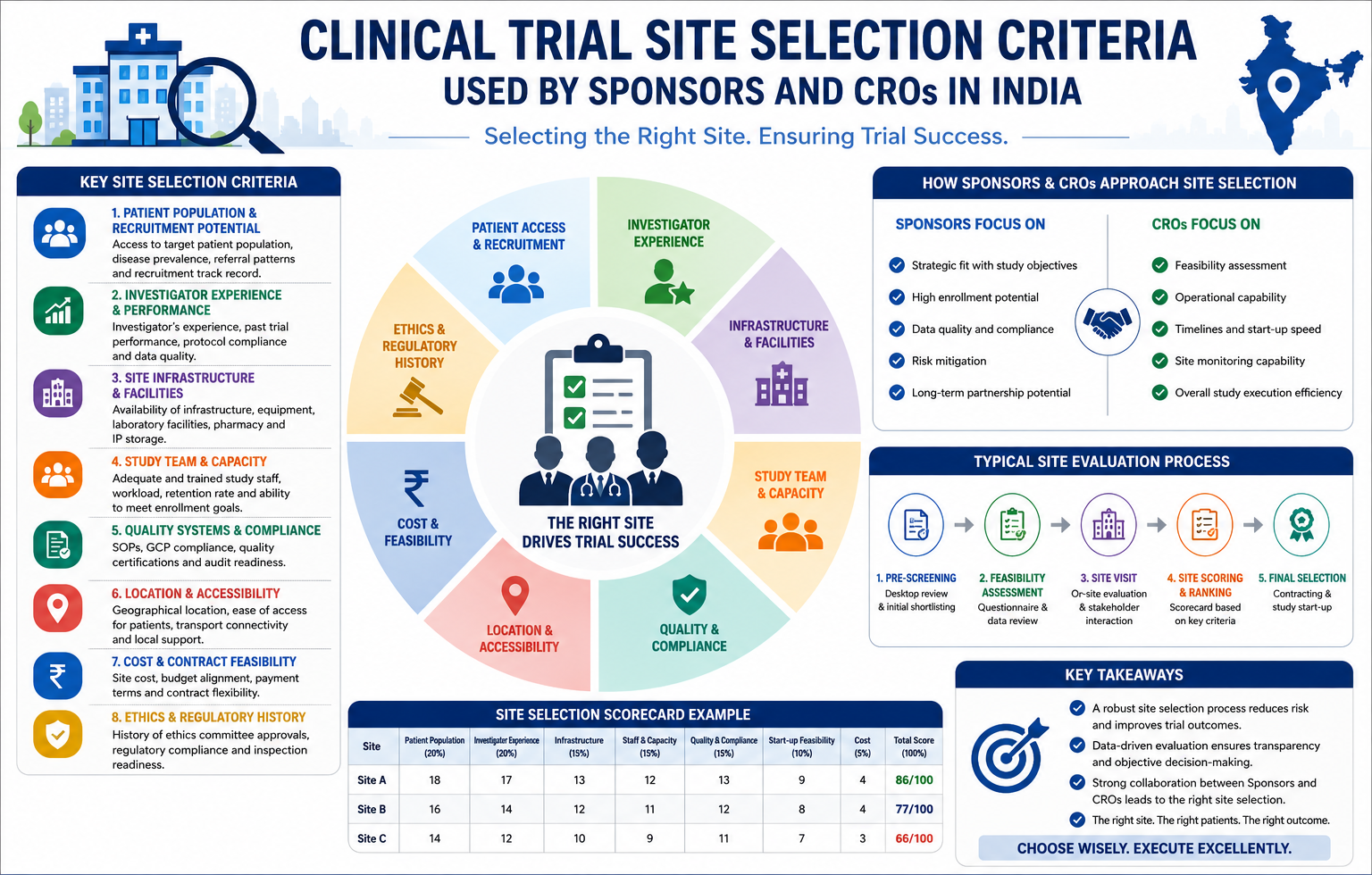
II. Paramount Site Selection and Robust Monitoring: The quality of a clinical trial is intrinsically linked to the performance of the research sites. Oxygen Clinical Research employs a rigorous site selection process and implements comprehensive monitoring strategies to ensure adherence to protocols and maintain participant safety.

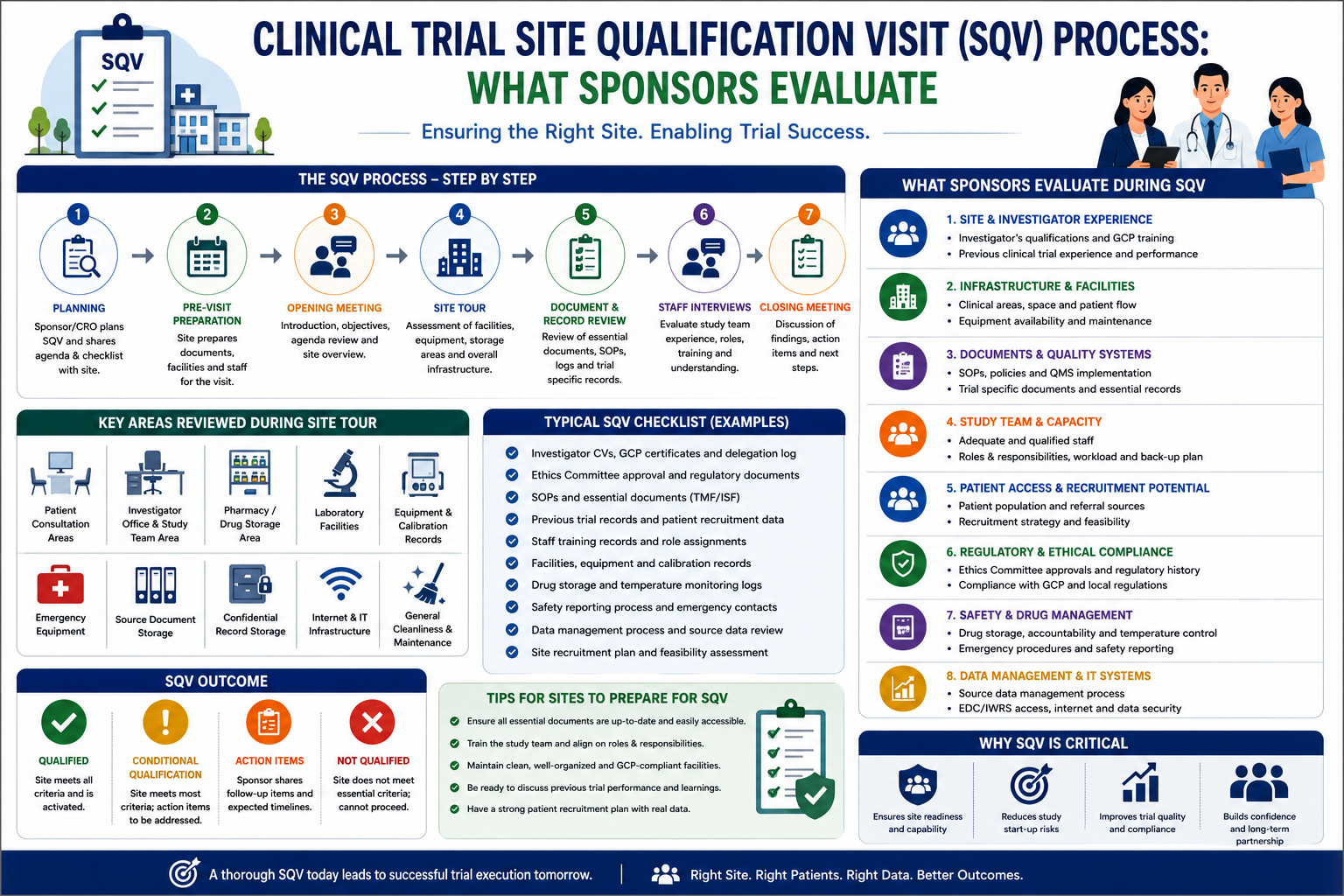
  1. Site Qualification and Selection: Potential research sites are meticulously evaluated for their infrastructure, investigator and staff expertise, patient recruitment capabilities, experience with similar studies, and commitment to GCP principles. Site qualification visits are conducted by experienced clinical research associates (CRAs) to assess the site’s readiness and suitability.
  2. Proactive Monitoring and Oversight: Oxygen Clinical Research’s monitoring strategy is not merely reactive; it is proactive and data-driven. CRAs conduct regular site visits (both remote and on-site) to verify data accuracy, ensure adherence to the protocol and regulatory requirements, review source documentation, assess patient safety, and provide ongoing support and training to site staff. This includes source data verification (SDV), review of regulatory binders, and assessment of investigational product handling.
  3. Risk-Based Monitoring (RBM): Recognizing that not all trial data and processes carry equal risk to patient safety or data integrity, Oxygen Clinical Research increasingly employs a Risk-Based Monitoring (RBM) approach. This strategy focuses monitoring efforts on critical data and processes identified as having the greatest potential to impact patient safety or data reliability, thereby optimizing resource allocation and enhancing early detection of potential issues.

III. Rigorous Data Management and Quality Control: Accurate and reliable data is the bedrock of meaningful clinical trial results. Oxygen Clinical Research employs sophisticated data management systems and stringent quality control measures to ensure data integrity.

  1. Electronic Data Capture (EDC) Systems: Oxygen Clinical Research utilizes advanced EDC systems for efficient and accurate data collection. These systems incorporate built-in edit checks and data validation rules to minimize errors at the point of entry, ensuring data quality from the outset.
  2. Data Validation and Cleaning: A multi-layered data validation and cleaning process is implemented. This includes automated checks within the EDC system, manual review of data queries by trained data managers, and statistical review for anomalies.
  3. Centralized Data Monitoring: Data trends and potential data quality issues are continuously monitored centrally by dedicated data management teams. This allows for prompt identification of systemic errors or site-specific issues that may require immediate attention.
  4. Quality Assurance (QA) Audits: Independent QA audits are conducted regularly to assess the compliance of trial operations with protocols, GCP, and regulatory requirements. These audits provide an objective evaluation of the quality management system and identify areas for improvement.

IV. Proactive Risk Assessment and Mitigation: Anticipating and addressing potential risks is crucial for maintaining both safety and reliability. Oxygen Clinical Research adopts a forward-thinking approach to risk management.

  1. Identification of Potential Risks: From the initial protocol design phase through study execution, potential risks to patient safety, data integrity, and operational efficiency are systematically identified. This includes risks associated with investigational product handling, patient recruitment challenges, protocol deviations, and data management issues.
  2. Development of Mitigation Strategies: For each identified risk, specific mitigation strategies are developed and implemented. This might involve enhanced monitoring plans, additional training for specific site personnel, development of standardized operating procedures (SOPs), or the implementation of specific data management checks.
  3. Adverse Event (AE) and Serious Adverse Event (SAE) Management: Oxygen Clinical Research has robust systems in place for the prompt and accurate reporting, assessment, and reconciliation of AEs and SAEs. All AEs are meticulously documented, evaluated for causality and severity, and reported to the sponsor and regulatory authorities in accordance with established timelines.
  4. Continuous Improvement: The lessons learned from risk assessments, monitoring activities, and audits are fed back into the organizational learning process, driving continuous improvement in all aspects of clinical trial conduct.

conclusion: Oxygen Clinical Research’s commitment to ensuring safe and reliable clinical trials is a testament to their comprehensive and proactive approach. By prioritizing strict protocol adherence, meticulous site selection and monitoring, rigorous data management, and proactive risk mitigation, Oxygen Clinical Research consistently delivers high-quality clinical trial data that is both scientifically sound and ethically conducted. This unwavering dedication to safety and reliability not only protects the well-being of study participants but also provides the pharmaceutical and biotechnology industries with the trustworthy evidence needed to advance medical innovation and bring life-changing therapies to patients worldwide.


Facebook
Twitter
Pinterest

Check our latest blogs

Patient Availability Clinical Trial
govindap.2208@gmail.com

How to Demonstrate Patient Availability During Clinical Trial Feasibility in India

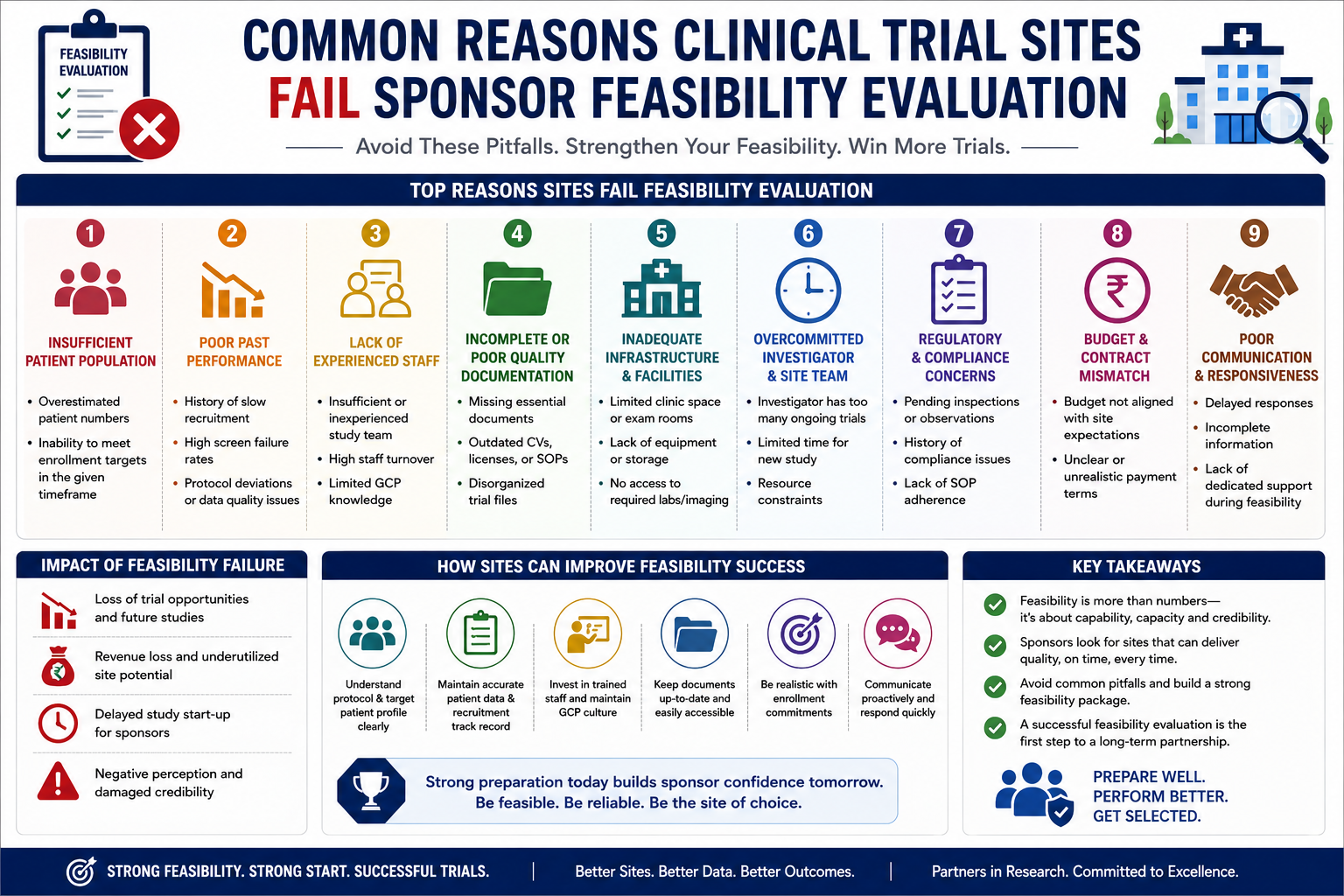
By Govind Pawar, Senior Clinical Operations Leader – 15 years experience across Indian and global sponsors, CROs and biotech partners Patient Availability Clinical Trial Introduction Demonstrating patient availability is the single most decisive factor when a feasibility team decides whether a protocol can be executed on time and within budget in India. In my fifteen‑year career I have seen sites lose a study because the sponsor relied on generic census data, and I have seen the same protocol succeed when the feasibility package contained granular, verified patient‑flow information. This article walks through the practical steps, common pitfalls and mitigation strategies that operational teams can apply to produce a robust, evidence‑based patient‑availability assessment for any therapeutic area in India. Why Generic Census Numbers Fail Sr.No. Issue Typical Assumption Real‑World Observation Impact on Timeline Impact on Budget 1 National disease prevalence “X % of Indian population has disease Y” Prevalence varies widely by state, urban vs rural, and socio‑economic tier Delayed site start‑up when recruitment slower than projected Extra monitoring visits, extended drug supply 2 Hospital inpatient census “Hospital admits 200 patients/month for condition Z” Admissions are driven by referral patterns; many patients are transferred elsewhere Site fails to meet enrollment targets Increased site‑level costs, sponsor penalties 3 Outpatient clinic footfall “Clinic sees 1,000 outpatients daily” Only a fraction meet protocol inclusion criteria (age, comorbidities, biomarker status) Low screen‑fail ratio, early stop‑go decisions postponed Waste of CRO resources on screening 4 Investigator’s perception “I see enough patients” Investigator optimism not backed by documented screening logs Unexpected drop‑outs, protocol amendments Additional source‑data verification (SDV) effort 5 Public health reports “Government data shows 50 k cases per year” Data often lagging by 12–24 months, missing private‑sector patients Under‑estimation of reachable pool Need for supplemental recruitment campaigns The above table illustrates that reliance on macro‑level data leads to under‑ or over‑estimation of the true enrolment capacity. Step‑by‑Step Framework to Demonstrate Patient Availability 1. Define the Target Patient Profile Sr.No. Parameter Source Practical Tip 1 Indication‑specific diagnostic criteria Latest ICMR guidelines, disease‑specific consensus statements Keep a copy of the guideline version used at the time of feasibility 2 Biomarker status (e.g., HER2, KRAS) Local pathology labs, central lab validation reports Verify assay turnaround time; request a 30‑day validation window 3 Disease stage / severity Hospital SOPs, oncology registry Capture stage distribution percentages from the past 12 months 4 Concomitant medication restrictions Sponsor protocol List common drugs in use locally; cross‑check with prescription patterns 5 Socio‑economic and literacy considerations Site’s patient‑education records Include an estimate of patients who can complete e‑consent A clear, site‑specific definition of the target population reduces ambiguity when you later quantify availability. Patient Availability Clinical Trial 2. Gather Historical Site Data What works: Sites that maintain a standardized screening log (date, indication, inclusion/exclusion status, outcome) can provide data within 48 hours. What fails: Sites that use handwritten notebooks often miss data, leading to incomplete feasibility reports. 3. Conduct a Field Visit Sr. No. Activity Duration Critical Observation 1 Walk‑through of outpatient department (OPD) 2 hrs Patient flow bottlenecks (registration, triage) 2 Interview of study coordinator 30 min Understanding of SOP adherence, workload 3 Review of electronic medical record (EMR) search capability 45 min Ability to run real‑time queries for inclusion criteria 4 Meet the principal investigator (PI) 30 min PI’s clinical trial experience, commitment level 5 Observe consent process 1 hr Patient comprehension, language barriers A site visit validates the numbers supplied in the logs and uncovers operational friction that may not be captured on paper. Patient Availability Clinical Trial 4. Quantify the Reachable Patient Pool Use the following formula, adjusted for each site: Reachable Pool = (Total diagnosed patients per month) Example (Oncology site in Mumbai): Rounded, the site can realistically enroll 07 patients per month for an EGFR‑targeted trial. 5. Build the Feasibility Package Sr. No. Section Content Requirements 1 Executive Summary High‑level enrolment forecast, risk rating 2 Site Profile Infrastructure, staff FTE, EMR capability 3 Patient Availability Analysis Data sources, calculations, assumptions 4 Risks & Mitigation Patient‑flow, regulatory, competition 5 Recommendations Recruitment strategy, timelines, monitoring plan All tables and calculations must be foot‑noted with the raw data source (e.g., “Screening Log – Jan 2024 – 31 entries”). Patient Availability Clinical Trial Practical Checklist for Feasibility Teams Sr.No. Checklist Item Owner Due Date 1 Obtain signed data‑sharing agreement with site CRO Legal Day 3 2 Request de‑identified screening logs (last 12 months) Feasibility Lead Day 5 3 Validate biomarker assay availability at local lab Lab Liaison Day 7 4 Schedule on‑site visit (incl. PI interview) Operations Manager Day 10 5 Run EMR query for target diagnosis Site IT Day 12 6 Populate Reachable Pool calculation template Analyst Day 14 7 Draft risk matrix (patient‑flow, competition) Risk Officer Day 16 8 Review package with sponsor’s medical lead Sponsor Medical Day 18 9 Final sign‑off and upload to sponsor portal Project Manager Day 20 Common Myths vs. Reality Myth Reality “A site with >200 OPD visits per day automatically guarantees enrolment” High footfall does not translate to eligible patients; inclusion/exclusion criteria filter out >80 % of visitors. “If the PI has published on the disease, the site is recruitment‑ready” Publication record does not reflect current staff capacity or EMR search capability. “Patient availability can be estimated from national disease registries alone” Registries lack granularity on stage, biomarker status, and willingness to participate in trials. “One site visit is sufficient to assess feasibility” Ongoing monitoring of patient flow, especially after competing studies start, is essential. “Electronic consent eliminates all literacy barriers” Language localization, cultural perception of research, and internet access still affect consent rates. Challenges and Mitigation Strategies Challenge Root Cause Mitigation Low consent conversion Complex consent language, lack of patient education Develop site‑specific visual aids; train coordinators in plain‑language communication Inaccurate screening logs Manual data entry errors Implement a lightweight e‑screening tool (e.g., REDCap) with validation rules Competition from parallel trials Same therapeutic area, overlapping eligibility Conduct a competitive landscape analysis; stagger recruitment windows Regulatory delays for biomarker testing Limited accredited labs in tier‑2 cities Pre‑qualify a network of labs; negotiate fast‑track approvals with CDSCO Staff turnover High turnover in contract research staff Maintain a

Read More »
govindap.2208@gmail.com

Methods Used by Clinical Trial Sites to Identify Eligible Patients in India

Introduction – Why Patient Identification Matters In the Indian clinical‑research ecosystem, the speed and accuracy with which a site can pull the right patient into a trial often determines whether a study meets its enrolment timeline, stays within budget, and delivers compliant, high‑quality data. Over the past fifteen years, I have watched every recruitment model evolve—from simple chart reviews to sophisticated, AI‑driven outreach platforms. The reality on the ground, however, is that most sites still rely on a mix of low‑tech and high‑tech methods, each with its own operational friction. This article breaks down the methods we use today, highlights what works, where the gaps are, and offers a practical checklist that any sponsor, CRO, or site manager can apply immediately. 1. Conventional Methods Still in Use Sr.No. Method Typical Use‑Case Average Lead‑Time (Days) Data Source Regulatory Touch‑Points Success Rate (%) Common Pitfalls Mitigation 1 Manual Chart Review Large tertiary hospitals with EMR gaps 14‑21 Paper records, legacy EMRs Informed consent verification 30‑45 Missed records, inconsistent documentation Standardised abstraction template 2 Physician Referral Specialty clinics (oncology, cardiology) 7‑10 PI’s patient list PI’s NDA, IC signing 55‑70 Referral bias, over‑reliance on a single PI Rotate referral responsibility, cross‑check with EMR 3 Disease Registry Scraping Disease‑specific registries (e.g., ICMR TB registry) 10‑15 Registry databases Data‑privacy compliance (IT Act) 40‑60 Out‑dated entries, duplicate records Quarterly registry refresh, de‑duplication script 4 Community Outreach (NGOs, patient groups) Rural trials, rare diseases 21‑35 NGO member lists, local health workers Community consent, ethics committee approval 20‑35 Low literacy, mistrust Culturally adapted IEC materials, local language consent 5 Advertising (Print/Radio/Online) Consumer‑driven Phase II/III trials 30‑45 Public media, social platforms Advertising disclosures per CDSCO 10‑20 High drop‑out, low qualification Pre‑screening hotline, targeted geo‑filtering Quote: “Even after three years of digitising our records, we still spend 40 % of our recruitment time on manual chart pulls. The process is error‑prone but unavoidable without a unified EMR.” – Dr. Anjali Mehta, Principal Investigator, New Delhi 2. Technology‑Enabled Approaches Sr.No. Method Platform Example Integration Requirement Lead‑Time (Days) Success Rate (%) Cost (₹ ₹) Pros Cons 1 EMR‑based Eligibility Algorithms Medico, Healthify API access to hospital EMR, data‑mapping 3‑5 70‑85 ₹ 5‑10 L Real‑time alerts, minimal manual work Requires robust data governance 2 Clinical Trial Management System (CTMS) Patient Pools Veeva, Medidata CTMS‑to‑EMR linkage, user‑role configuration 4‑7 65‑80 ₹ 8‑12 L Centralised view across sites High upfront integration cost 3 AI‑driven Predictive Screening Deep Health, Quert Cloud‑based model, de‑identified data feed 2‑4 80‑90 ₹ 12‑20 L Predicts eligibility before chart review Black‑box perception, needs validation 4 Mobile Apps for Patient‑self‑screening MyTrials, TrialX App store deployment, GDPR‑style consent 5‑10 45‑60 ₹ 2‑4 L Scales to large populations quickly Digital literacy barrier 5 Wearable‑based Pre‑Screening Fitbit, Apple HealthKit SDK integration, data‑privacy agreement 3‑6 55‑70 ₹ 3‑6 L Captures real‑world vitals, continuous Device cost, adherence issues Operational Note: In my experience, sites that combined EMR‑based algorithms with a manual “clinical adjudication” step achieved the highest overall enrollment efficiency (≈ 78 %). The AI models alone produced false‑positives that overloaded site staff, while pure manual methods missed many eligible candidates.Patient recruitment clinical trials India 3. Hybrid Models – The Best‑Practice Blueprint A hybrid model leverages low‑tech outreach for awareness while using high‑tech tools for eligibility confirmation. The typical workflow is: Patient recruitment clinical trials India 1.       Awareness Generation – Community talks, NGO partnerships, and targeted digital ads. 2.       Pre‑Screening Capture – Mobile app or web form collects basic demographics and disease‑specific criteria. 3.       EMR‑Trigger – The pre‑screened data pushes a flag to the site’s EMR eligibility algorithm. 4.       Clinical Review – A research nurse reviews flagged records, confirms eligibility, and schedules consent. 5.       Enrolment Confirmation – Final eligibility check against the protocol, followed by e‑consent (if approved by the Ethics Committee). Why it works: The front‑end captures a broad pool, while the back‑end filters with high precision. The model reduces the “no‑show” rate from 35 % (pure advertising) to under 12 % when the clinical review step is added.Patient recruitment clinical trials India 4. Practical Checklist for Site Teams Sr. No. Checklist Item Responsible Role Frequency Documentation Required 1 Verify EMR‑API connectivity and data‑mapping accuracy IT Lead Monthly API log report 2 Update disease registry extract and run de‑duplication script Data Manager Quarterly Registry version log 3 Conduct patient‑facing consent language audit (local language) CRO QA Bi‑annual Revised IEC sheet 4 Run AI algorithm validation against a sample of 50 charts Clinical Lead Quarterly Validation report 5 Review advertising ROI and adjust geo‑targeting Marketing Ops Monthly Media spend vs enrollment chart 6 Train research nurses on pre‑screening questionnaire Site Manager Quarterly Training attendance sheet 7 Perform privacy impact assessment for mobile app data Compliance Officer Before launch PIA document 8 Cross‑check referral lists with EMR to eliminate overlap PI & Data Analyst Weekly Reconciliation spreadsheet 9 Update SOP for “Screen‑fail” documentation QA Lead As needed Revised SOP 10 Capture patient feedback on recruitment experience CRO Survey Team Ongoing Survey summary report Tip: Keep this checklist in a shared drive with version control; the most common cause of delayed recruitment is a missing or outdated SOP. 5. Challenges & Mitigation Strategies Challenge Root Cause Impact on Enrollment Mitigation Data silos across departments Lack of EMR integration 20‑30 % drop in eligible pool Deploy middleware that aggregates data in real time High “screen‑fail” ratio Over‑broad advertising Wasted site staff time, increased cost Refine inclusion criteria in ad copy, use pre‑screen filters Regulatory delays for e‑consent Inconsistent ethics‑committee guidance 2‑4 week lag Prepare a standard e‑consent dossier and engage EC early Patient mistrust in digital tools Low digital literacy, privacy concerns Low enrollment from urban tech‑savvy cohorts Conduct on‑site demo sessions, obtain explicit data‑use consent Staff turnover Frequent rotation of research nurses Knowledge loss, inconsistent processes Implement a “knowledge‑handover” workbook, schedule overlap weeks   6. Myths vs Reality Myth Reality “If we launch a massive digital ad campaign, enrollment will double.” Digital ads increase awareness but do not guarantee qualification; conversion rates remain < 20 % without pre‑screening. “AI will replace manual chart review.” AI can prioritize records but still requires clinician adjudication to meet GCP compliance. “Community outreach is

Read More »
govindap.2208@gmail.com

Why Sponsors Prefer Tier‑2 Cities for Faster Recruitment

Introduction: India has long been on the radar of global pharmaceutical sponsors. However, India’s clinical trial landscape is undergoing rapid transformation. By 2025, the balance is shifting from traditional metropolitan cities such as Delhi, Mumbai, Bangalore, and Hyderabad to tier-2 cities including Pune, Indore, Kochi, Guwahati, and Visakhapatnam. The headline phrase “India Clinical Trial Landscape 2025: Why Sponsors Prefer Tier‑2 Cities for Faster Recruitment” is no longer a speculative question; it is a reality that is reshaping how new therapies move from the lab to the patient. In this long‑form blog post, we unpack the forces behind this trend, highlight the concrete benefits for sponsors, and explore how the ecosystem is adapting to meet the demand for faster, higher‑quality participant enrollment. “The biggest bottleneck in drug development today is not chemistry or biology; it’s patient recruitment,” says Dr. Ananya Rao, Head of Clinical Operations at a leading global CRO. “Tier‑2 cities in India are offering a shortcut that many sponsors simply cannot ignore.” 1. The Evolution of the India Clinical Trial Landscape in 2025 1.1. A Snapshot of the Current Market 1.2. Why Tier‑2 Cities Have Emerged as Hubs Historically, tier‑2 cities were considered peripheral due to perceived infrastructure limitations. Fast forward to 2025, and a confluence of factors has turned that perception on its head: Factor Impact on Tier‑2 Appeal Health‑Care Infrastructure Upsurge – New multispecialty hospitals and diagnostic chains (e.g., Apollo, Fortis) have opened branches in tier‑2, offering GCP‑compliant facilities. Provides clinical‑grade spaces without the premium cost of tier‑1 real estate. Digital Connectivity – 5G rollout and nationwide broadband (Digital India Initiative) enable remote monitoring, e‑Consent, and tele‑visits. Reduces need for on‑site staff, speeds up data capture. Patient Pool Density – While absolute population may be lower, patient‑doctor ratios are more favorable, leading to higher willingness to enroll. Faster recruitment per site. Cost Efficiency – Average per‑patient cost is 30‑40% lower than in Mumbai or Delhi. Improves budget predictability for sponsors. Local Government Support – State health ministries offer tax incentives and fast‑track ethics approvals for clinical research. Cuts administrative lag. Cultural Openness – Community outreach programs and higher health‑literacy campaigns have built trust in clinical research. Improves retention and adherence. “When we compared recruitment metrics across our network, tier‑2 sites were enrolling patients at twice the speed of our best tier‑1 locations, while maintaining data quality,” 2. Why Sponsors Prefer Tier‑2 Cities for Faster Recruitment 2.1. Speed is the New Currency In the drug development pipeline, time‑to‑market equals competitive advantage. Every day a trial lingers in the enrollment phase translates into lost revenue and delayed access for patients. Tier‑2 cities provide a faster enrollment curve due to several practical reasons: A 2024 internal analysis by a multinational pharma company revealed that average time to reach 50% enrolment dropped from 112 days (tier‑1) to 68 days (tier‑2) across 12 oncology studies. 2.2. Cost‑Effectiveness Without Compromise “Our 2025 trial budgeting model shows a 25% reduction in total site costs when shifting 40% of our sites to tier‑2 locations, and the data integrity remains unchanged,” 2.3. Data Quality and Compliance Remain Strong One lingering myth is that tier‑2 sites compromise data quality. The reality is the opposite: A 2023 audit of 150 sites across India reported no statistically significant difference in query rates between tier‑1 and tier‑2 locations, reinforcing the notion that speed does not come at the expense of quality. 3. Key Advantages for Faster Recruitment in Tier‑2 Cities 3.1. Community Engagement – The Human Touch Tier‑2 cities often have tighter-knit communities. Sponsors who invest in grassroots awareness can quickly generate trust: “In Indore, our partnership with a local diabetes association helped us enroll 120 patients in just six weeks—far quicker than any other region we’ve tried,” 3.2. Faster Ethics Committee Approvals State‑level ethics committees in tier‑2 regions have been empowered by the government’s ‘Accelerated Review Initiative.’ Many now operate on a 10‑day turnaround for standard protocol reviews, compared to 25‑35 days in larger cities where committees juggle heavier workloads. 3.3. Enhanced Retention Rates Retention is as critical as recruitment. Tier‑2 participants often show higher protocol adherence due to: A multinational oncology trial reported a 95% retention rate in tier‑2 sites versus 88% in tier‑1, translating into fewer lost data points and lower re‑enrollment costs. 4. Challenges and Mitigation Strategies Even with clear benefits, tier‑2 expansion isn’t without hurdles. Understanding these obstacles and applying targeted solutions ensures sustainable growth. 4.1. Infrastructure Gaps Challenge: Some hospitals still lack dedicated research units or advanced imaging capabilities. Mitigation: 4.2. Talent Shortage Challenge: While cost‑effective, tier‑2 locations may have a smaller pool of experienced CRAs and data managers. Mitigation: 4.3. Regulatory Complexity. Challenge: Navigating varying state regulations can be confusing for global sponsors. Mitigation: Centralized Regulatory Services: CROs now offer “one‑stop” regulatory assistance, handling site‑specific submissions and liaison with state health ministries. 4.4. Cultural Sensitivities Challenge: Language barriers and varying health beliefs may affect consent processes. Mitigation: 5. Success Stories – Real‑World Evidence of Faster Recruitment 5.1. The Visakhapatnam Oncology Trial A Phase II trial evaluating a novel immunotherapy for non‑small cell lung cancer enrolled 250 patients across 8 sites in six months. Four of those sites were located in Visakhapatnam’s tier‑2 hospitals. “Our data showed that tier-2 sites met enrolment targets ahead of schedule and delivered high-quality data with very few queries In 2024, a global biotech firm launched a Phase III paediatric vaccine trial targeting children aged 2–5 years. The study’s Tier‑2 site in Kochi achieved the fastest enrolment: 180 participants in 90 days, outperforming all other Indian sites. Key factors: 5.3. The Guwahati Diabetes Real‑World Study A multinational pharma conducted a real‑world evidence (RWE) study on a new oral hypoglycemic agent. Leveraging tier‑2 facilities in Guwahati, the study captured 1,200 patient records within three months – a 45% increase over the projected timeline. “The integration of digital tools with local health networks enabled us to collect high‑density data at a pace that simply wasn’t possible in larger metros,” 6. Future Outlook – What 2026 and Beyond Hold for Tier‑2

Read More »
govindap.2208@gmail.com

Why Sponsors Prefer Tier‑2 Cities for Faster Recruitment

Introduction: India has long been on the radar of global pharmaceutical sponsors, but the country’s clinical trial landscape is undergoing a rapid transformation. By 2025, the balance of power is shifting from the traditional metropolises of Delhi, Mumbai, Bangalore, and Hyderabad to a broader network of tier‑2 cities such as Pune, Indore, Kochi, Guwahati, and Visakhapatnam. The headline phrase “India Clinical Trial Landscape 2025: Why Sponsors Prefer Tier‑2 Cities for Faster Recruitment” is no longer a speculative question; it is a reality that is reshaping how new therapies move from the lab to the patient. In this long‑form blog post, we unpack the forces behind this trend, highlight the concrete benefits for sponsors, and explore how the ecosystem is adapting to meet the demand for faster, higher‑quality participant enrollment. “The biggest bottleneck in drug development today is not chemistry or biology; it’s patient recruitment,” says Dr. Ananya Rao, Head of Clinical Operations at a leading global CRO. “Tier‑2 cities in India are offering a shortcut that many sponsors simply cannot ignore.” 1. The Evolution of the India Clinical Trial Landscape in 2025 1.1. A Snapshot of the Current Market 1.2. Why Tier‑2 Cities Have Emerged as Hubs Historically, tier‑2 cities were considered peripheral due to perceived infrastructure limitations. Fast forward to 2025, and a confluence of factors has turned that perception on its head: Factor Impact on Tier‑2 Appeal Health‑Care Infrastructure Upsurge – New multispecialty hospitals and diagnostic chains (e.g., Apollo, Fortis) have opened branches in tier‑2, offering GCP‑compliant facilities. Provides clinical‑grade spaces without the premium cost of tier‑1 real estate. Digital Connectivity – 5G rollout and nationwide broadband (Digital India Initiative) enable remote monitoring, e‑Consent, and tele‑visits. Reduces need for on‑site staff, speeds up data capture. Patient Pool Density – While absolute population may be lower, patient‑doctor ratios are more favorable, leading to higher willingness to enroll. Faster recruitment per site. Cost Efficiency – Average per‑patient cost is 30‑40% lower than in Mumbai or Delhi. Improves budget predictability for sponsors. Local Government Support – State health ministries offer tax incentives and fast‑track ethics approvals for clinical research. Cuts administrative lag. Cultural Openness – Community outreach programs and higher health‑literacy campaigns have built trust in clinical research. Improves retention and adherence. “When we compared recruitment metrics across our network, tier‑2 sites were enrolling patients at twice the speed of our best tier‑1 locations, while maintaining data quality,” 2. Why Sponsors Prefer Tier‑2 Cities for Faster Recruitment 2.1. Speed is the New Currency In the drug development pipeline, time‑to‑market equals competitive advantage. Every day a trial lingers in the enrollment phase translates into lost revenue and delayed access for patients. Tier‑2 cities provide a faster enrollment curve due to several practical reasons: A 2024 internal analysis by a multinational pharma company revealed that average time to reach 50% enrolment dropped from 112 days (tier‑1) to 68 days (tier‑2) across 12 oncology studies. 2.2. Cost‑Effectiveness Without Compromise “Our 2025 trial budgeting model shows a 25% reduction in total site costs when shifting 40% of our sites to tier‑2 locations, and the data integrity remains unchanged,” 2.3. Data Quality and Compliance Remain Strong One lingering myth is that tier‑2 sites compromise data quality. The reality is the opposite: A 2023 audit of 150 sites across India reported no statistically significant difference in query rates between tier‑1 and tier‑2 locations, reinforcing the notion that speed does not come at the expense of quality. 3. Key Advantages for Faster Recruitment in Tier‑2 Cities 3.1. Community Engagement – The Human Touch Tier‑2 cities often have tighter-knit communities. Sponsors who invest in grassroots awareness can quickly generate trust: “In Indore, our partnership with a local diabetes association helped us enroll 120 patients in just six weeks—far quicker than any other region we’ve tried,” 3.2. Faster Ethics Committee Approvals State‑level ethics committees in tier‑2 regions have been empowered by the government’s ‘Accelerated Review Initiative.’ Many now operate on a 10‑day turnaround for standard protocol reviews, compared to 25‑35 days in larger cities where committees juggle heavier workloads. 3.3. Enhanced Retention Rates Retention is as critical as recruitment. Tier‑2 participants often show higher protocol adherence due to: A multinational oncology trial reported a 95% retention rate in tier‑2 sites versus 88% in tier‑1, translating into fewer lost data points and lower re‑enrollment costs. 4. Challenges and Mitigation Strategies Even with clear benefits, tier‑2 expansion isn’t without hurdles. Understanding these obstacles and applying targeted solutions ensures sustainable growth. 4.1. Infrastructure Gaps Challenge: Some hospitals still lack dedicated research units or advanced imaging capabilities. Mitigation: 4.2. Talent Shortage Challenge: While cost‑effective, tier‑2 locations may have a smaller pool of experienced CRAs and data managers. Mitigation: Mitigation: Centralized Regulatory Services: CROs now offer “one‑stop” regulatory assistance, handling site‑specific submissions and liaison with state health ministries. 4.4. Cultural Sensitivities Challenge: Language barriers and varying health beliefs may affect consent processes. Mitigation: 5. Success Stories – Real‑World Evidence of Faster Recruitment 5.1. The Visakhapatnam Oncology Trial A Phase II trial evaluating a novel immunotherapy for non‑small cell lung cancer enrolled 250 patients across 8 sites in six months. Four of those sites were located in Visakhapatnam’s tier‑2 hospitals. “Our data showed that tier‑2 sites not only met enrollment targets ahead of schedule but also delivered high‑quality data with minimal queries,” A global biotech firm launched a Phase III pediatric vaccine trial in 2024, targeting children aged 2‑5 years. The study’s Tier‑2 site in Kochi achieved the fastest enrollment: 180 participants in 90 days, outperforming all other Indian sites. Key factors: “The collaborative model with schools and local health workers proved decisive; we could reach families who otherwise would not have considered trial participation,” 5.3. The Guwahati Diabetes Real‑World Study A multinational pharma conducted a real‑world evidence (RWE) study on a new oral hypoglycemic agent. Leveraging tier‑2 facilities in Guwahati, the study captured 1,200 patient records within three months – a 45% increase over the projected timeline. “The integration of digital tools with local health networks enabled us to collect high‑density data at a

Read More »
govindap.2208@gmail.com

The Ultimate Guide to Choosing the Best Site Management Organization for Clinical Trials

Introduction Clinical trials are an essential part of the drug development process. They help researchers determine the safety and efficacy of new treatments, allowing them to make informed decisions about the best course of action for patients. However, managing clinical trials can be a complex and challenging task, which is why many organizations rely on site management organizations (SMOs) to ensure the smooth running of their trials. In this article, we will explore the role of SMOs in clinical trials and provide you with a comprehensive guide on how to choose the best site management organization for your needs. What is a Site Management Organization (SMO)? A site management organization (SMO) is a third-party service provider that specializes in managing clinical trials. They typically work with research sites, sponsors, and contract research organizations (CROs) to ensure the efficient and effective conduct of clinical trials. The primary responsibilities of an SMO include: Factors to Consider When Choosing an SMO When selecting an SMO for your clinical trial, there are several factors to consider: Conclusion: Choosing the right site management organization is crucial for the success of your clinical trial. By considering factors such as expertise, flexibility, technology, quality assurance, communication, and cost, you can select an SMO that will help you achieve your objectives and bring new treatments to patients faster. Remember to do your research and compare multiple SMOs before making a decision. With the right partner by your side, you can navigate the complex world of clinical trials with confidence and ease.

Read More »
govindap.2208@gmail.com

Site Management Organizations: Your Partner in Streamlining Clinical Trials

Site Management Organizations: Your Partner in Streamlining Clinical Trials As someone deeply involved in the world of Oxygen Clinical Research and Services, I understand the challenges that come with conducting successful clinical trials. From navigating complex regulatory landscapes to ensuring accurate data collection, the path to bringing new treatments to market can be fraught with obstacles. That’s where Site Management Organizations (SMOs) come in, acting as invaluable partners in streamlining the entire clinical trial process. But what exactly is an SMO, and how can it benefit your research? Let’s delve into the intricacies of SMOs and explore how they can accelerate your research timeline, improve data quality, and ultimately, contribute to better patient outcomes. Essentially, an SMO acts as an extension of your research team, providing support and expertise in various aspects of clinical trial management. They work directly with clinical sites, handling administrative tasks, patient recruitment, data management, and more. This allows investigators and their staff to focus on what they do best: providing excellent patient care and conducting scientifically rigorous research. Think of it like this: you’re the conductor of the orchestra, leading the musicians to create a beautiful symphony (your research). The SMO is your dedicated stage manager, ensuring everything runs smoothly backstage so you can focus on the performance. Why Partner with an SMO? The Advantages in a Nutshell Partnering with an SMO offers a multitude of benefits, all contributing to a more efficient and successful clinical trial. Here are some key advantages: Fast Patient Recruitment: The Lifeblood of Your Trial One of the biggest hurdles in clinical research is often patient recruitment. Delayed enrollment can significantly prolong the trial timeline and increase costs. SMOs can address this challenge head-on with strategic and proactive recruitment strategies. They understand the target patient population, know how to effectively reach them, and have proven tactics for engaging and retaining participants. Here’s how SMOs contribute to faster patient recruitment: Here’s how SMOs enhance patient retention: Here’s how SMOs streamline data management: “The best SMO is one that understands your goals and works collaboratively with you to achieve them. It’s about building a true partnership.” In Conclusion: Partnering for Success SMOs play a vital role in the success of clinical trials. By providing crucial support to clinical sites, SMOs accelerate patient recruitment, improve data quality, and reduce the administrative burden, allowing researchers to focus on advancing scientific knowledge and improving patient outcomes. As someone dedicated to Oxygen Clinical Research and Services, I believe that partnering with the right SMO can be a game-changer for your research. FAQs about Site Management Organizations Q: How are SMOs different from Contract Research Organizations (CROs)? A: CROs typically manage the entire clinical trial process, from protocol development to final report writing. SMOs, on the other hand, focus specifically on supporting clinical sites. Q: Can an SMO guarantee faster patient recruitment? A: While an SMO can’t guarantee specific recruitment numbers, they can significantly improve recruitment rates by implementing effective strategies and streamlining the screening process. Q: What is the cost of working with an SMO? A: The cost of working with an SMO varies depending on the services provided and the complexity of the trial. However, the increased efficiency and reduced errors often lead to long-term cost savings. Q: How do I find a reputable SMO? A: Ask for referrals from colleagues, search online directories, and check references and testimonials before making a decision. Q: What kind of regulatory compliance do SMOs follow? A: SMOs regularly follow GCP (Good Clinical Practice) guidelines and make sure they adjust to required standards. Hopefully, this article has shed some light on the world of Site Management Organizations and how they can contribute to the success of your clinical trials. Remember, choosing the right partner can make all the difference in achieving your research goals and bringing innovative treatments to patients in need.

Read More »
Scroll to Top