By Govind Pawar, Senior Clinical Operations Leader – 15 years experience across Indian and global sponsors, CROs and biotech partners Patient Availability Clinical Trial
Introduction
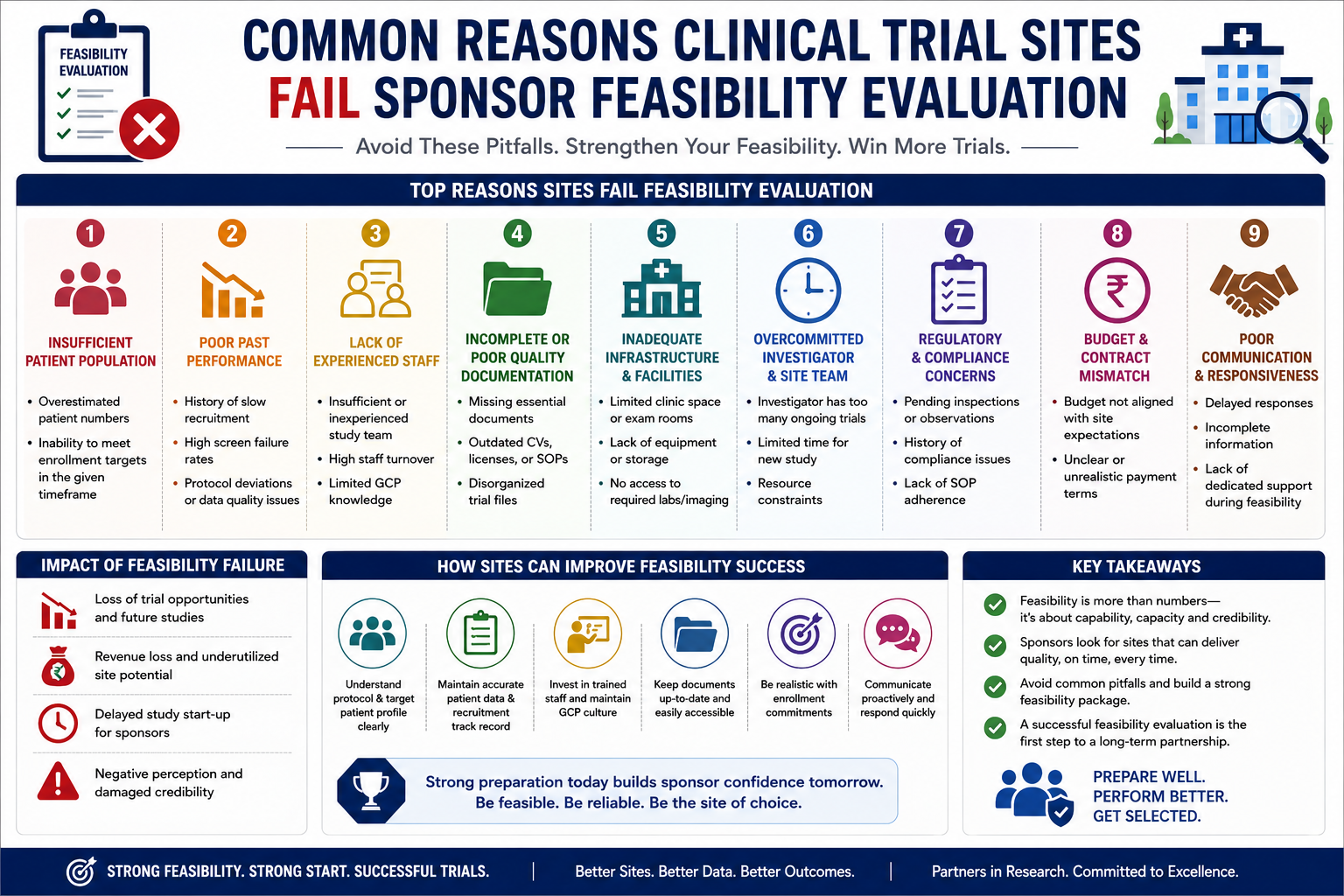
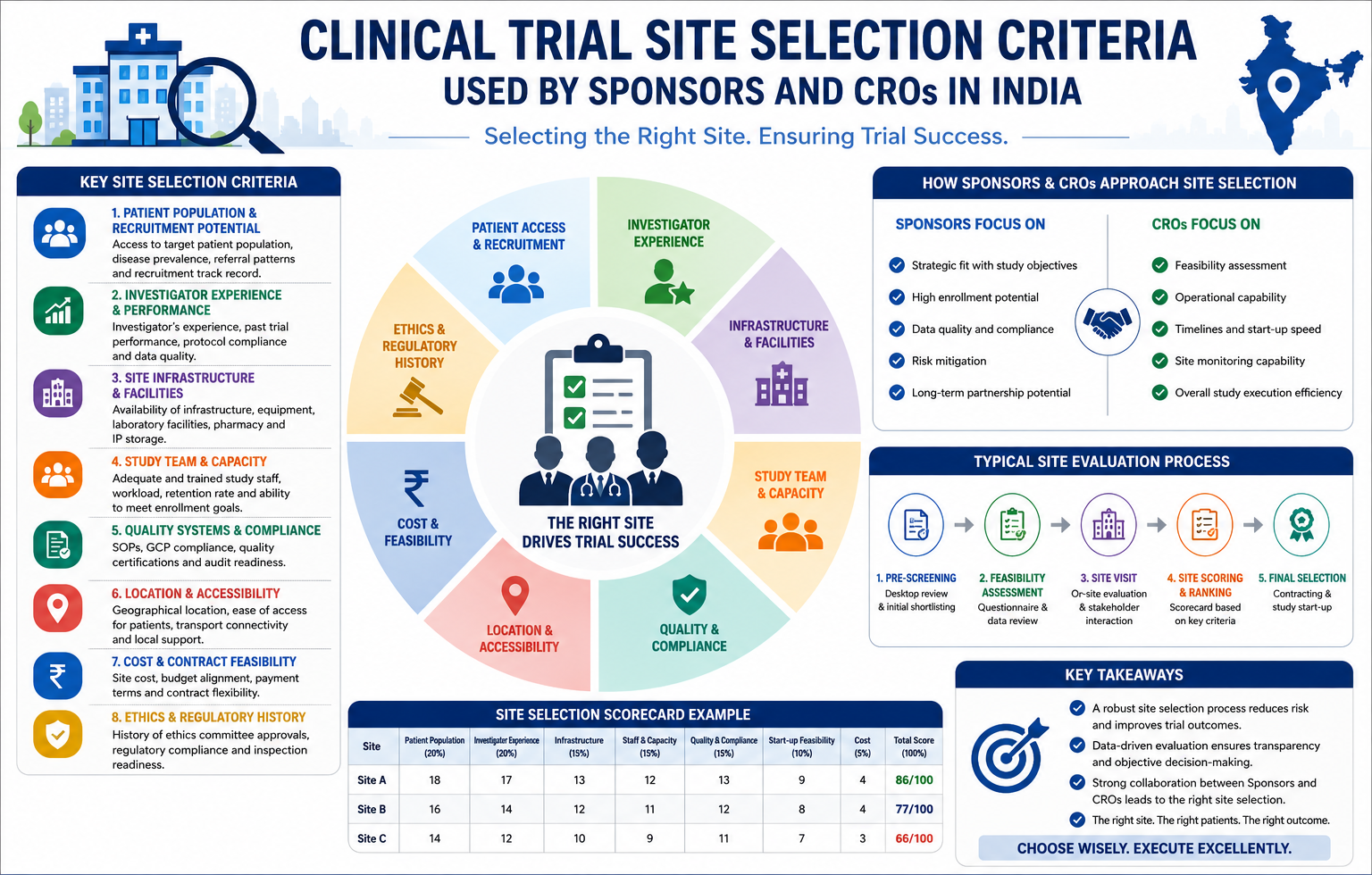
Demonstrating patient availability is the single most decisive factor when a feasibility team decides whether a protocol can be executed on time and within budget in India. In my fifteen‑year career I have seen sites lose a study because the sponsor relied on generic census data, and I have seen the same protocol succeed when the feasibility package contained granular, verified patient‑flow information. This article walks through the practical steps, common pitfalls and mitigation strategies that operational teams can apply to produce a robust, evidence‑based patient‑availability assessment for any therapeutic area in India.
Why Generic Census Numbers Fail
| Sr.No. | Issue | Typical Assumption | Real‑World Observation | Impact on Timeline | Impact on Budget |
| 1 | National disease prevalence | “X % of Indian population has disease Y” | Prevalence varies widely by state, urban vs rural, and socio‑economic tier | Delayed site start‑up when recruitment slower than projected | Extra monitoring visits, extended drug supply |
| 2 | Hospital inpatient census | “Hospital admits 200 patients/month for condition Z” | Admissions are driven by referral patterns; many patients are transferred elsewhere | Site fails to meet enrollment targets | Increased site‑level costs, sponsor penalties |
| 3 | Outpatient clinic footfall | “Clinic sees 1,000 outpatients daily” | Only a fraction meet protocol inclusion criteria (age, comorbidities, biomarker status) | Low screen‑fail ratio, early stop‑go decisions postponed | Waste of CRO resources on screening |
| 4 | Investigator’s perception | “I see enough patients” | Investigator optimism not backed by documented screening logs | Unexpected drop‑outs, protocol amendments | Additional source‑data verification (SDV) effort |
| 5 | Public health reports | “Government data shows 50 k cases per year” | Data often lagging by 12–24 months, missing private‑sector patients | Under‑estimation of reachable pool | Need for supplemental recruitment campaigns |
The above table illustrates that reliance on macro‑level data leads to under‑ or over‑estimation of the true enrolment capacity.
Step‑by‑Step Framework to Demonstrate Patient Availability
1. Define the Target Patient Profile
| Sr.No. | Parameter | Source | Practical Tip |
| 1 | Indication‑specific diagnostic criteria | Latest ICMR guidelines, disease‑specific consensus statements | Keep a copy of the guideline version used at the time of feasibility |
| 2 | Biomarker status (e.g., HER2, KRAS) | Local pathology labs, central lab validation reports | Verify assay turnaround time; request a 30‑day validation window |
| 3 | Disease stage / severity | Hospital SOPs, oncology registry | Capture stage distribution percentages from the past 12 months |
| 4 | Concomitant medication restrictions | Sponsor protocol | List common drugs in use locally; cross‑check with prescription patterns |
| 5 | Socio‑economic and literacy considerations | Site’s patient‑education records | Include an estimate of patients who can complete e‑consent |
A clear, site‑specific definition of the target population reduces ambiguity when you later quantify availability. Patient Availability Clinical Trial
2. Gather Historical Site Data
- Screening logs (last 12 months) – Request a de‑identified CSV file from the PI or site manager.
- Enrollment logs (last 3 studies) – Note the average screen‑fail rate, consent‑to‑randomisation ratio, and dropout rate.
- Referral network map – Identify primary and secondary referral sources; quantify the number of patients each source sends per month.
What works: Sites that maintain a standardized screening log (date, indication, inclusion/exclusion status, outcome) can provide data within 48 hours.
What fails: Sites that use handwritten notebooks often miss data, leading to incomplete feasibility reports.
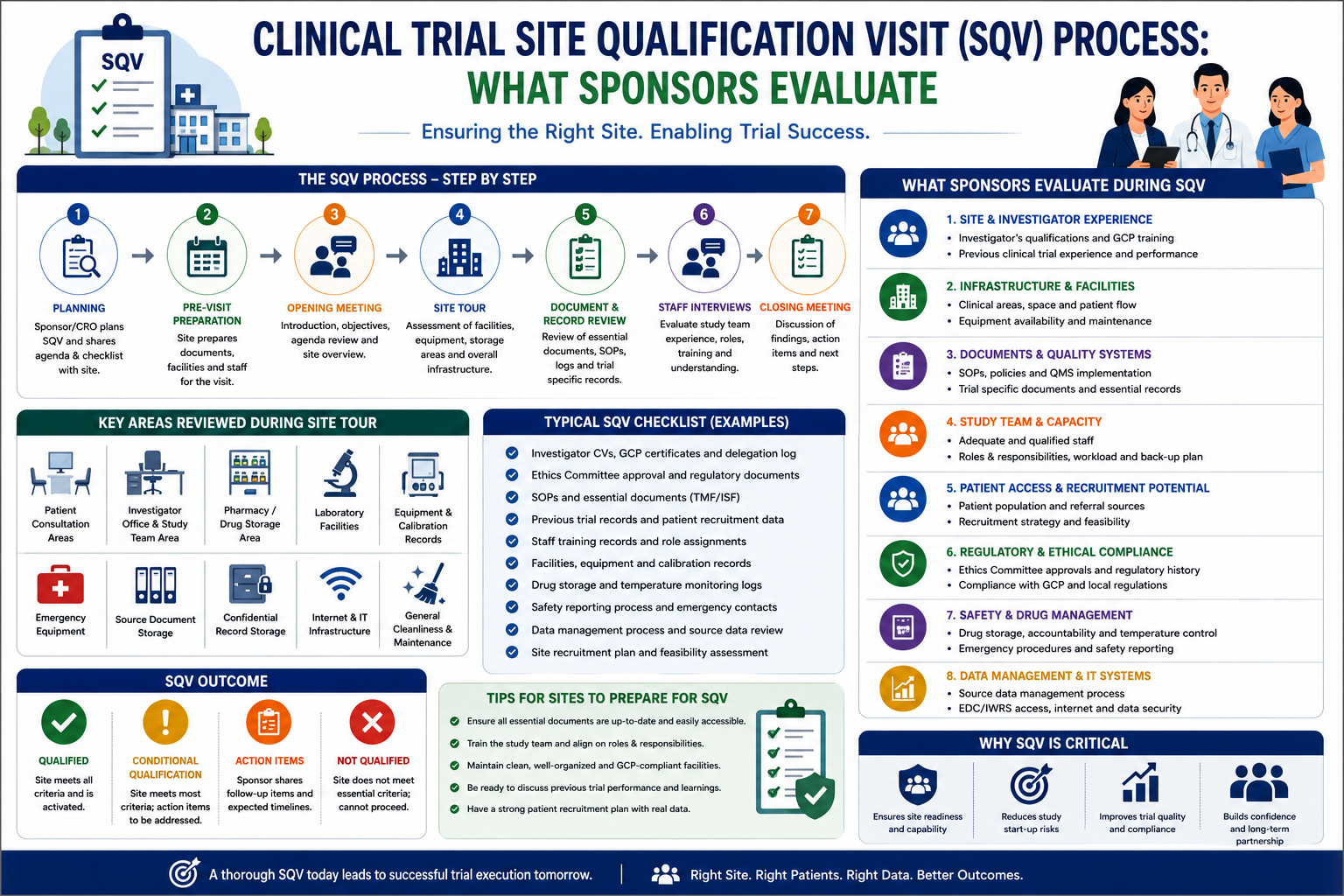
3. Conduct a Field Visit
| Sr. No. | Activity | Duration | Critical Observation |
| 1 | Walk‑through of outpatient department (OPD) | 2 hrs | Patient flow bottlenecks (registration, triage) |
| 2 | Interview of study coordinator | 30 min | Understanding of SOP adherence, workload |
| 3 | Review of electronic medical record (EMR) search capability | 45 min | Ability to run real‑time queries for inclusion criteria |
| 4 | Meet the principal investigator (PI) | 30 min | PI’s clinical trial experience, commitment level |
| 5 | Observe consent process | 1 hr | Patient comprehension, language barriers |
A site visit validates the numbers supplied in the logs and uncovers operational friction that may not be captured on paper. Patient Availability Clinical Trial
4. Quantify the Reachable Patient Pool
Use the following formula, adjusted for each site:
Reachable Pool = (Total diagnosed patients per month)
× (Proportion meeting biomarker criteria) × (Proportion eligible after inclusion/exclusion review) × (Site’s average consent‑to‑randomisation conversion) × (Retention factor – expected dropout within 3 months)Example (Oncology site in Mumbai):
- Diagnosed lung‑cancer patients (stage III/IV) = 120 / month
- EGFR‑mutated proportion = 15 % → 18 patients
- Eligibility after clinical review = 70 % → 12.6 patients
- Consent conversion = 60 % → 7.6 patients
- Retention factor (90 % at 3 months) → 6.8 patients
Rounded, the site can realistically enroll 07 patients per month for an EGFR‑targeted trial.
5. Build the Feasibility Package
| Sr. No. | Section | Content Requirements |
| 1 | Executive Summary | High‑level enrolment forecast, risk rating |
| 2 | Site Profile | Infrastructure, staff FTE, EMR capability |
| 3 | Patient Availability Analysis | Data sources, calculations, assumptions |
| 4 | Risks & Mitigation | Patient‑flow, regulatory, competition |
| 5 | Recommendations | Recruitment strategy, timelines, monitoring plan |
All tables and calculations must be foot‑noted with the raw data source (e.g., “Screening Log – Jan 2024 – 31 entries”). Patient Availability Clinical Trial
Practical Checklist for Feasibility Teams
| Sr.No. | Checklist Item | Owner | Due Date |
| 1 | Obtain signed data‑sharing agreement with site | CRO Legal | Day 3 |
| 2 | Request de‑identified screening logs (last 12 months) | Feasibility Lead | Day 5 |
| 3 | Validate biomarker assay availability at local lab | Lab Liaison | Day 7 |
| 4 | Schedule on‑site visit (incl. PI interview) | Operations Manager | Day 10 |
| 5 | Run EMR query for target diagnosis | Site IT | Day 12 |
| 6 | Populate Reachable Pool calculation template | Analyst | Day 14 |
| 7 | Draft risk matrix (patient‑flow, competition) | Risk Officer | Day 16 |
| 8 | Review package with sponsor’s medical lead | Sponsor Medical | Day 18 |
| 9 | Final sign‑off and upload to sponsor portal | Project Manager | Day 20 |
Common Myths vs. Reality
| Myth | Reality |
| “A site with >200 OPD visits per day automatically guarantees enrolment” | High footfall does not translate to eligible patients; inclusion/exclusion criteria filter out >80 % of visitors. |
| “If the PI has published on the disease, the site is recruitment‑ready” | Publication record does not reflect current staff capacity or EMR search capability. |
| “Patient availability can be estimated from national disease registries alone” | Registries lack granularity on stage, biomarker status, and willingness to participate in trials. |
| “One site visit is sufficient to assess feasibility” | Ongoing monitoring of patient flow, especially after competing studies start, is essential. |
| “Electronic consent eliminates all literacy barriers” | Language localization, cultural perception of research, and internet access still affect consent rates. |
Challenges and Mitigation Strategies
| Challenge | Root Cause | Mitigation |
| Low consent conversion | Complex consent language, lack of patient education | Develop site‑specific visual aids; train coordinators in plain‑language communication |
| Inaccurate screening logs | Manual data entry errors | Implement a lightweight e‑screening tool (e.g., REDCap) with validation rules |
| Competition from parallel trials | Same therapeutic area, overlapping eligibility | Conduct a competitive landscape analysis; stagger recruitment windows |
| Regulatory delays for biomarker testing | Limited accredited labs in tier‑2 cities | Pre‑qualify a network of labs; negotiate fast‑track approvals with CDSCO |
| Staff turnover | High turnover in contract research staff | Maintain a bench of trained backup coordinators; cross‑train clinical staff |
Mistakes Frequently Made by Sponsors, CROs, PIs, and Patients
| Stakeholder | Typical Mistake | Consequence |
| Sponsor | Over‑relying on a single high‑volume site without backup | Single‑site bottleneck, delayed trial start |
| CRO | Ignoring site‑level EMR capabilities when planning centralized screening | Inaccurate patient pool estimate, wasted screening |
| PI | Agreeing to a recruitment target without reviewing historic enrolment data | Unrealistic expectations, protocol amendment |
| Patient | Assuming participation will cover travel costs | Higher dropout, lower retention |
| Feasibility Team | Using outdated disease prevalence data (>2 years) | Misaligned projections, budget overruns |
Frequently Asked Questions
Q1: How many months of historical data are enough to project patient availability?
A: Minimum 12 months of screening and enrolment logs provide a robust baseline. If a site has undergone major staffing changes, extend the review to 18 months to capture the transition effect.
Q2: Should we include patients from private hospitals that refer to the site?
A: Yes. Map the referral network and assign a realistic capture rate (usually 20‑30 % of referred patients) based on past referral performance.
Q3: What is an acceptable screen‑fail rate for a feasibility estimate?
A: In India, a screen‑fail rate of 45‑55 % is common for oncology and rare‑disease protocols. Adjust the Reachable Pool calculation accordingly.
Q4: How do I verify biomarker assay turnaround time?
A: Request a lab SOP and a sample turnaround report for the past 30 days. Include a contingency buffer of 7 days in the feasibility timeline.
Q5: Can we use e‑consent to improve patient availability?
A: E‑consent can increase enrollment speed by 10‑15 % in urban centers, but only if the platform supports local languages and offline capture.
Q6: What if a site’s EMR does not support complex queries?
A: Deploy a simple Excel‑based tracking sheet for the coordinator to flag potential candidates during routine visits; schedule a weekly data pull.
Q7: How often should feasibility be re‑validated during the trial?
A: Perform a mid‑study feasibility check after 25 % of enrolment to capture any shifts in patient flow or competing studies.
Q8: Are there regulatory limits on patient recruitment numbers per site?
A: CDSCO does not impose a hard cap, but ethical committees often require justification for high enrolment targets to avoid over‑burdening patients.
Q9: What is the best way to document patient‑availability calculations for audit?
A: Keep a master Excel workbook with raw data sheets, calculation sheets, and a separate “Assumptions” tab. Export a PDF version for sponsor audit trails.
Q10: How do I involve patients in the feasibility process without breaching confidentiality?
A: Conduct a patient‑focus group using anonymized case scenarios; collect feedback on willingness to participate and preferred communication channels.
Actionable Conclusion
Demonstrating patient availability in India demands a data‑driven, site‑specific approach that goes beyond national prevalence figures. By:
- Defining an exact target patient profile,
- Extracting and validating historic screening/enrolment logs,
- Conducting focused field visits,
- Applying a transparent Reachable Pool formula, and
- Packaging the analysis with clear risks and mitigations,
operational teams can deliver feasibility assessments that are both realistic and auditable.
When sponsors and CROs adopt this disciplined framework, they gain predictability in start‑up timelines, reduce budget overruns, and improve data quality from day 1. In practice, I have seen enrolment timelines tighten by 20 % and dropout rates fall by 12 % when the feasibility package contains granular, verified patient‑availability data. Patient Availability Clinical Trial
For any organization looking to scale clinical trials across India, the next step is to institutionalize the checklist above, train coordinators in simple e‑screening tools, and embed a mid‑study feasibility re‑assessment as a standard operating procedure.
Suggested Internal Links
- Site Selection Playbook – Oxygen Clinical Research and Services
- Risk Management Framework for Indian Trials – Oxygen Clinical Research
- Standard Operating Procedure: Screening Log Management
Suggested External References
- Central Drugs Standard Control Organization (CDSCO) – Guidance on Biomarker Testing
- Indian Council of Medical Research (ICMR) – Disease Prevalence Reports 2023
- Clinical Trials Registry – India (CTRI) – Competition Landscape Dashboard
*For further discussion or to share site‑specific challenges, contact me at govindpawar@oxygenclinicaltrials.com or connect on LinkedIn: www.linkedin.com/in/govind-pawar-42518511a.
Visit the Oxygen Clinical Research website for templates and tools: oxygenclinicaltrial.com