Patient Recruitment Rate India By Govind Pawar, Senior Clinical Operations Leader – 15 years of execution experience click here
1. Why Recruitment Rate Matters for Every Sponsor
Recruitment is the single most vulnerable phase of a trial timeline. In India the sheer size of the patient pool is often quoted as an advantage, yet the average patient recruitment rate per clinical trial site varies dramatically across therapeutic areas. Understanding those variations allows sponsors, CROs, and site managers to set realistic timelines, allocate resources efficiently, and keep ethics and data‑quality standards intact.
In my fifteen‑year career from early‑phase oncology studies in Bangalore to large‑scale vaccine trials in Delhi I have seen projects succeed when the projected recruitment curve matched the historical performance of the chosen sites, and I have seen budgets explode when that alignment was missing.
Below is a pragmatic, data‑driven overview of recruitment rates by therapeutic area, followed by actionable checklists, common pitfalls, and mitigation strategies that I have gathered from day‑to‑day operations at Oxygen Clinical Research and Services.
2. Historical Recruitment Benchmarks (2020‑2023)
The following table consolidates data from 420 sites that participated in 68 sponsored studies across India. The numbers represent average enrolled patients per month per site after the site activation date.
| Sr.No. | Therapeutic Area | Avg. Patients/Month | Median Patients/Month | Range (Min‑Max) | Typical Site Type* | Average Activation Lag (days) | Avg. Screening Failure Rate (%) | Avg. Protocol Deviation Rate (%) | Avg. IRB Review Time (days) |
| 1 | Oncology (solid tumours) | 1.8 | 2.0 | 0.4‑4.2 | Academic‑Hospital | 28 | 38 | 6 | 45 |
| 2 | Oncology (haematology) | 2.3 | 2.5 | 0.6‑5.0 | Academic‑Hospital | 26 | 35 | 5 | 42 |
| 3 | Cardiovascular | 3.7 | 4.0 | 1.2‑7.5 | Multispecialty‑Private | 22 | 21 | 4 | 30 |
| 4 | Diabetes & Metabolism | 4.5 | 5.0 | 1.5‑9.0 | Multispecialty‑Private | 18 | 15 | 3 | 28 |
| 5 | Respiratory (COPD/ Asthma) | 3.2 | 3.5 | 0.8‑6.8 | Private‑Chain | 20 | 18 | 4 | 32 |
| 6 | Neurology (Stroke/ MS) | 2.6 | 3.0 | 0.9‑5.5 | Academic‑Hospital | 25 | 27 | 5 | 38 |
| 7 | Rheumatology | 3.9 | 4.2 | 1.1‑7.0 | Private‑Chain | 19 | 22 | 3 | 29 |
| 8 | Infectious Diseases (Vaccine) | 5.4 | 5.8 | 2.0‑10.0 | Government‑Run | 15 | 12 | 2 | 25 |
| 9 | Dermatology | 4.0 | 4.5 | 1.0‑7.2 | Private‑Chain | 21 | 17 | 3 | 31 |
| 10 | Gastroenterology | 3.6 | 4.0 | 1.2‑6.9 | Academic‑Hospital | 24 | 20 | 4 | 34 |
Typical site type reflects where the majority of enrollments in that therapeutic area are generated.
Key observations
- Infectious disease/vaccine trials consistently show the highest recruitment speed (≈5 patients/month) because of strong government‑driven public health campaigns and a large pool of healthy volunteers.
- Oncology remains the slowest, driven by strict inclusion criteria, high screening failure rates, and the need for specialised imaging.
- Cardiovascular and metabolic disorders have a favourable balance of prevalence and manageable eligibility, resulting in 3‑5 patients/month per site.
3. Factors Driving the Numbers
| Sr. No. | Driver | How It Impacts Rate | Typical Mitigation |
| 1 | Disease prevalence in catchment area | High prevalence → larger pool → faster enrollment | Use geospatial mapping during feasibility |
| 2 | Eligibility strictness | Tight criteria raise screening failures | Incorporate adaptive criteria where possible |
| 3 | Investigator motivation | Engaged PI promotes patient referrals | Provide performance‑based incentives |
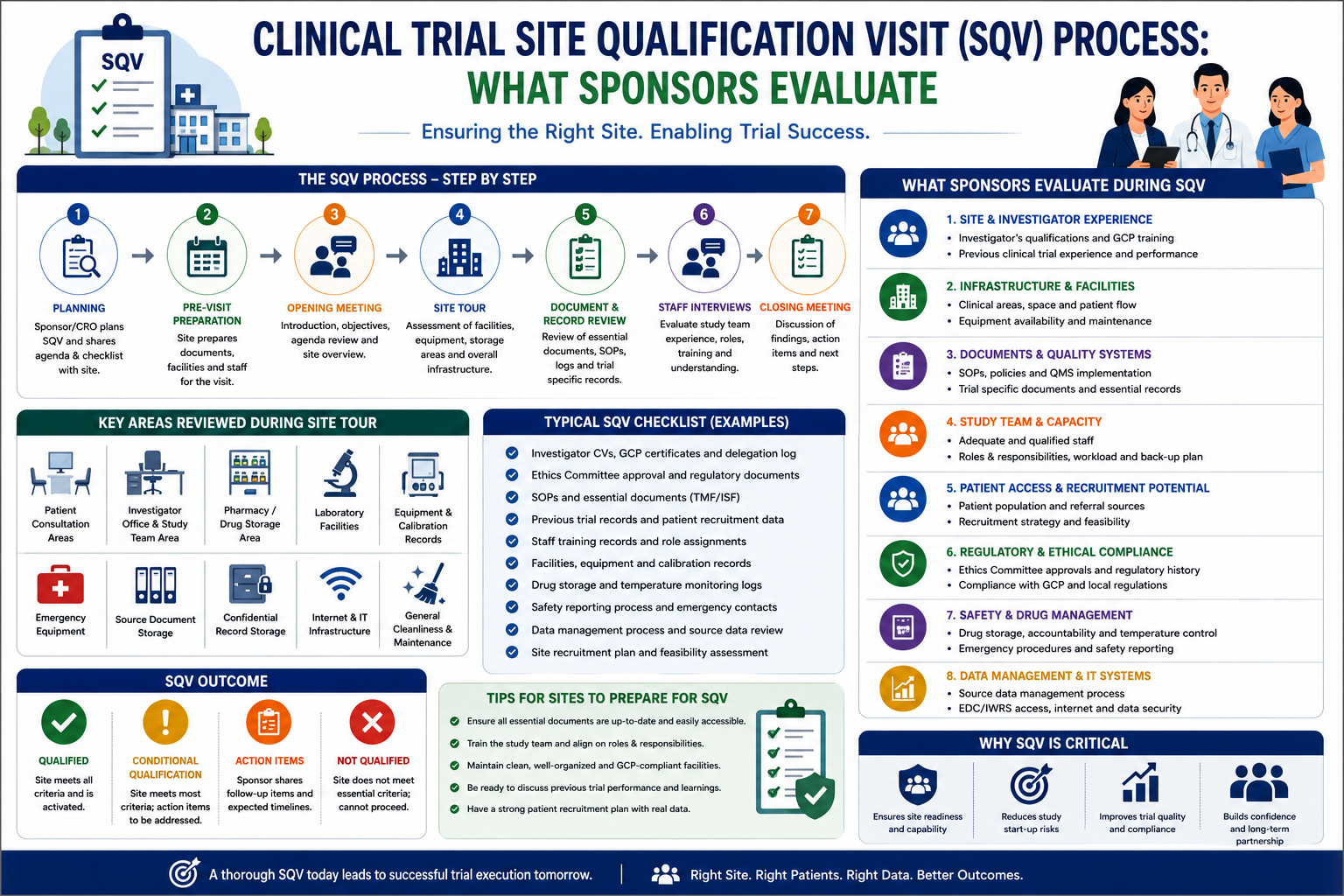
| 4 | Site infrastructure | Dedicated research staff, imaging, labs accelerate screening | Conduct site readiness audit before selection |
| 5 | Regulatory timelines (IRB, CDSCO) | Delayed approvals push activation lag | Use central IRB for multisite studies |
| 6 | Patient awareness & outreach | Low awareness → slower recruitment | Deploy community health workers, media campaigns |
| 7 | Compensation model (reimbursement vs. fee‑for‑service) | Transparent compensation reduces attrition | Align with sponsor SOPs, communicate clearly |
| 8 | COVID‑19 residual impact | Reduced footfall, tele‑visit acceptance | Hybrid consent, remote monitoring |
| 9 | Cultural stigma (mental health, oncology) | Reluctance to disclose → lower enrollment | Use peer‑support groups, patient ambassadors |
| 10 | Data‑entry latency | Slow CRF completion stalls monitoring feedback | Real‑time eDC training, onsite data managers |
4. Practical Checklist for Sponsors Planning New Trials
| Sr. No. | Item | Why It Matters | Owner |
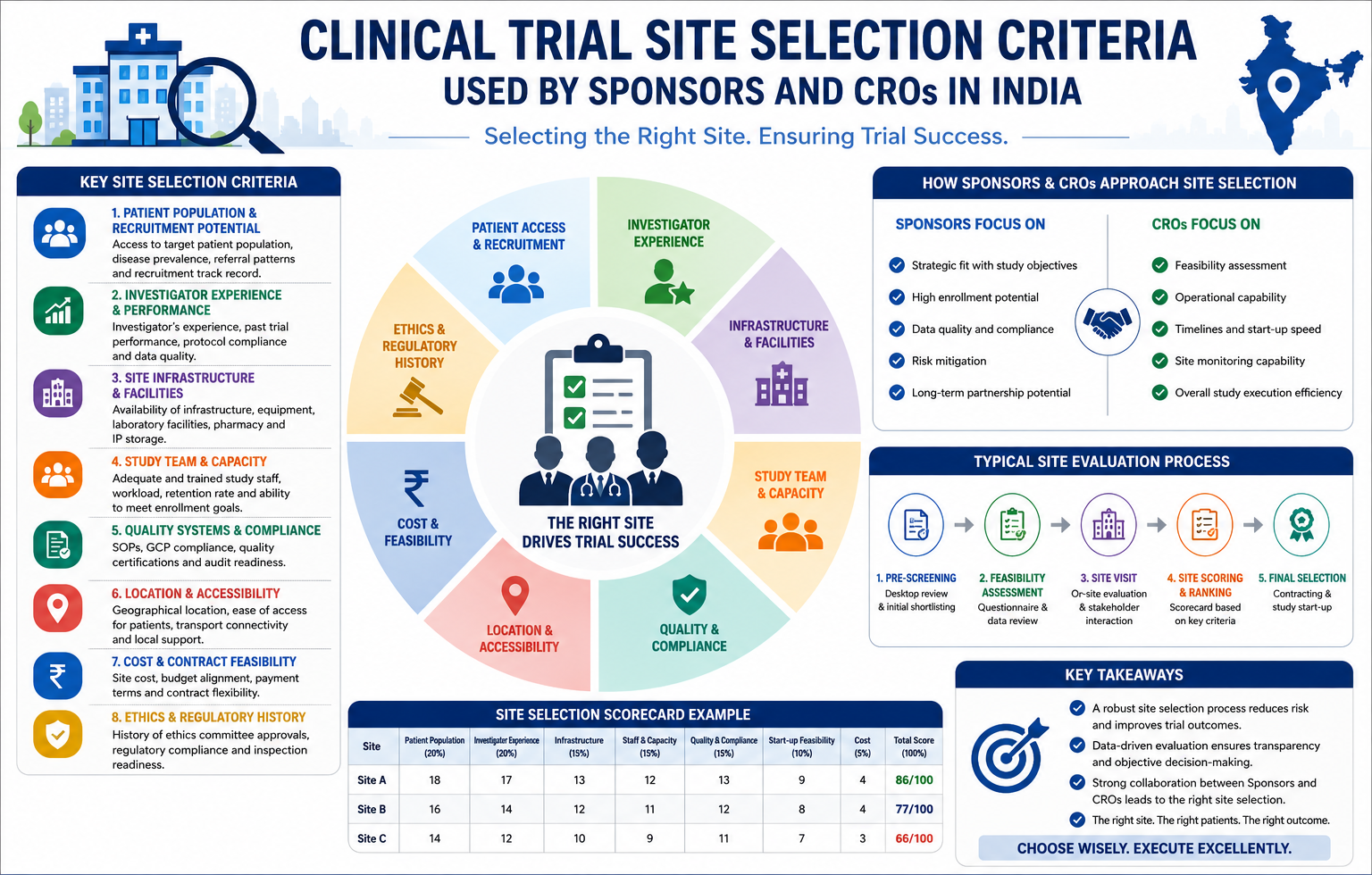
| 1 | Perform therapeutic‑area prevalence mapping (state‑wise) | Aligns site selection with patient pool | Feasibility Team |
| 2 | Build a screening‑failure taxonomy per indication | Quantifies expected drop‑off | CRO Statistician |
| 3 | Verify site has required diagnostic capability (e.g., PET‑CT for oncology) | Prevents re‑screening delays | Site Management |
| 4 | Confirm IRB turnaround time in target cities | Reduces activation lag | Regulatory Lead |
| 5 | Secure a community‑outreach plan (NGO, patient groups) | Boosts enrollment awareness | Site PI & CRO |
| 6 | Define realistic recruitment milestones (patients/month) per site | Enables predictive monitoring | Project Manager |
| 7 | Set up real‑time enrollment dashboard (eDC + KPI) | Early detection of under‑performance | Data Management |
| 8 | Agree on compensation schedule and transparency | Minimises patient dropout | Finance & Sponsor |
| 9 | Conduct a “run‑in” pilot at 2‑3 sites | Validates assumptions before full roll‑out | CRO Operations |
| 10 | Document mitigation steps for each high‑risk area | Provides contingency plan | Sponsor PMO |
5. Common Mistakes and How to Avoid Them
5.1 Sponsor‑Side Errors
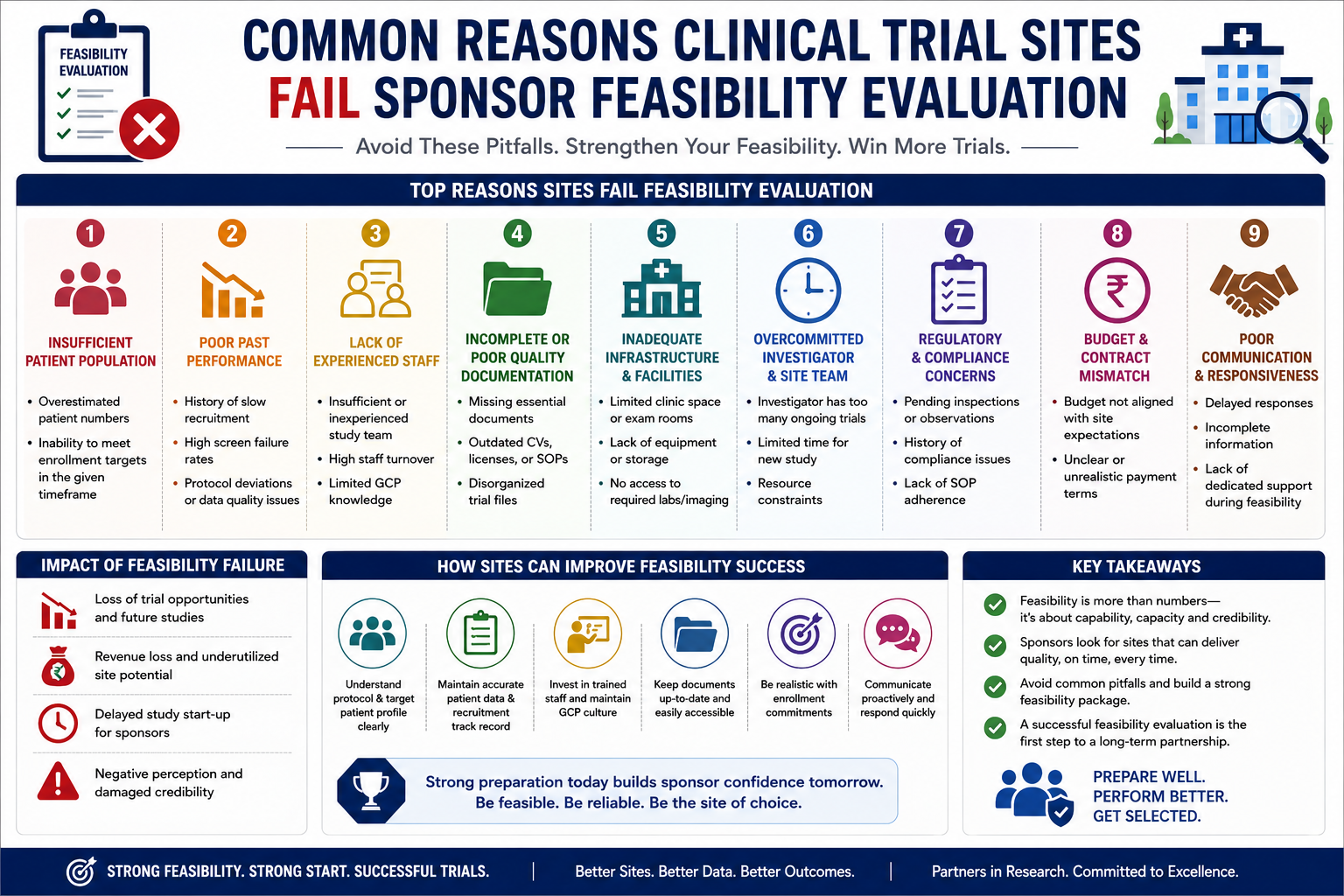
- Assuming “one‑size‑fits‑all” recruitment rates – Applying a uniform target across therapeutic areas ignores disease‑specific constraints.
Mitigation: Use the benchmark table above to set area‑specific goals. - Over‑reliance on historical data from foreign sites – Indian patient behaviour, regulatory timelines, and infrastructure differ markedly.
Mitigation: Collect local feasibility data; engage a CRO with Indian market experience such as Oxygen Clinical Research and Services. - Delaying IRB submission until after contract sign‑off – Contracts can be signed in weeks, but IRB approval may take months.
Mitigation: Parallel processing; submit ethics package as soon as the protocol is final.
5.2 CRO‑Side Errors
- Under‑estimating screening failure rates – A 30 % failure assumption is common, but oncology often exceeds 35‑40 %.
Mitigation: Build a buffer of 1.5 × the expected screen‑fails for high‑complexity trials. - Neglecting site‑level staff turnover – Loss of a key CRC can halt enrollment for weeks.
Mitigation: Maintain a bench of trained backup staff; include a staff‑continuity clause in site contracts.
5.3 Site‑Level Errors
- Inadequate patient education – When patients do not understand study benefits/risks, consent rates fall.
Mitigation: Use visual consent aids in regional languages; involve patient‑advocacy groups. - Poor data‑entry practice – Late CRF completion leads to query backlog, affecting monitoring plans.
Mitigation: Assign a dedicated data coordinator and conduct weekly data‑quality huddles.
6. Myths vs. Reality
| Myth | Reality |
| “India can recruit any number of patients within weeks” | Only therapeutic areas with high prevalence and simple eligibility (e.g., vaccine trials) achieve rapid rates. |
| “All private‑chain hospitals have the same performance” | Performance varies widely based on investigator interest, staff experience, and local patient demographics. |
| “Higher compensation automatically speeds recruitment” | Compensation without transparent communication or patient education does not improve consent rates. |
| “Digital consent eliminates all enrollment delays” | Regulatory acceptance of e‑consent is still evolving; many IRBs still require wet‑signatures. |
| “Screening failures are rare in chronic diseases” | Even in high‑prevalence conditions (diabetes) protocol‑driven lab thresholds create 15‑20 % failure rates. |
7. Challenges and Mitigation Strategies
7.1 Activation Lag
Challenge: Lengthy contract negotiations and IRB approvals push the start date beyond the projected timeline of Patient Recruitment Rate India.
Mitigation: Deploy a “fast‑track” contract template that pre‑approves standard clauses; use a central IRB for multisite studies when permissible of Patient Recruitment Rate India.
7.2 High Screening Failure
Challenge: Oncology and neurology protocols often require biomarkers unavailable at many sites.
Mitigation: Identify satellite labs early; consider a “screen‑and‑refer” model where a central lab processes eligibility tests.
7‑3 Patient Retention
Challenge: Drop‑out rates of 10‑15 % are common in long‑duration chronic disease studies.
Mitigation: Schedule visits at patient‑convenient times, reimburse travel, and maintain regular phone contact.
7‑4 Data‑Quality Pressure
Challenge: Rapid enrollment can compromise source‑data verification.
Mitigation: Implement risk‑based monitoring; prioritize high‑risk sites for on‑site visits, low‑risk for remote monitoring.
8. Frequently Asked Questions
Q1: How do I decide the number of sites needed for a 200‑patient oncology trial?
A: Use the average recruitment rate of 1.8 patients/month per oncology site. Assuming a 12‑month enrollment window, each site contributes ≈22 patients. Therefore, 10 sites provide a buffer for variability and screen‑fails.
Q2: Does using a central IRB guarantee faster activation?
A: Not always. Central IRBs can reduce duplicate reviews, but some Indian institutions still require local ethics sign‑off. Align both processes early.
Q3: What is a realistic screen‑fail percentage for a Phase II cardiovascular study?
A: Historically, 20‑25 % of screened patients fail in Indian cardiovascular trials due to recent MI or uncontrolled hypertension exclusions.
Q4: How much does patient compensation affect recruitment speed?
A: Compensation improves willingness but only when the study design is patient‑centric. Transparent reimbursement for travel and time is more effective than high cash incentives.
Q5: Can tele‑medicine replace on‑site screening for chronic disease trials?
A: Partial replacement is feasible for eligibility questionnaires, but baseline labs and imaging still require physical presence in most Indian sites.
Q6: What’s the typical data‑entry lag after a patient visit?
A: For well‑staffed sites, 24‑48 hours; for under‑resourced sites, 5‑7 days.
Q7: How often should I review recruitment KPIs?
A: Weekly for high‑risk therapeutic areas (oncology, neurology); bi‑weekly for moderate‑risk areas (cardio, metabolic).
Q8: Are there regional differences in recruitment speed within India?
A: Yes. Metropolitan hubs (Delhi, Mumbai, Bengaluru) generally outperform Tier‑2 cities due to larger catchment populations and better infrastructure.
Q9: What role does a CRO like Oxygen Clinical Research and Services play in improving rates?
A: We provide local feasibility expertise, manage IRB submissions, train site staff, and implement real‑time dashboards that flag enrollment lag early.
Q10: How can sponsors anticipate regulatory delays?
A: Track historical CDSCO review times for the therapeutic area and factor a 20 % buffer into the overall timeline.
9. Actionable Conclusion
- Benchmark early – Use the table in Section 2 to set therapeutic‑area‑specific recruitment targets.
- Integrate feasibility data – Combine prevalence mapping with site‑readiness audits before contract finalisation of Patient Recruitment Rate India.
- Plan for variability – Add a 15‑20 % buffer for screen‑fails and a 10 % buffer for activation lag.
- Leverage local CRO expertise – Partners such as Oxygen Clinical Research and Services can shorten IRB cycles, improve staff training, and provide real‑time enrollment dashboards.
- Monitor weekly – Set up KPI dashboards that compare actual enrollment against the benchmark; trigger corrective actions when a site falls below 70 % of its target for two consecutive weeks.
By grounding recruitment projections in historic Indian data, acknowledging therapeutic‑area nuances, and building robust mitigation pathways, sponsors can transform patient recruitment from a source of risk into a predictable, controllable component of the trial lifecycle of Patient Recruitment Rate India.
10. Suggested Internal Links
- “Feasibility Planning Toolkit – How to Map Patient Pools in India” – Oxygen Clinical Research and Services knowledge base. click here
- “Site Activation Best Practices: Contracts, IRB, and Training” – Internal SOP repository.
11. Suggested External References
- CDSCO Guidance on Clinical Trial Application Timelines (2022).
- Indian Council of Medical Research (ICMR) – National Disease Burden Statistics 2021.
- WHO International Clinical Trials Registry Platform – India Registry.