The cost of a delayed clinical trial is often measured in the millions, but for a Clinical Operations leader, it is measured in lost momentum and preventable friction. In the Indian landscape, we often see global sponsors lose three to five months simply because they treated site startup as a linear administrative task rather than a high-stakes negotiation with local bureaucracies (Clinical Trial Startup Timelines)
Over the last 15 years, I have seen studies stall not because the science was flawed, but because a legal department at a Tier-1 hospital took twelve weeks to review a Clinical Trial Agreement (CTA) indemnity clause. These delays are not inevitable. They are the result of poor feasibility, lack of site-level management, and a failure to understand the second-order effects of Indian regulatory shifts under the New Drugs and Clinical Trials Rules (2019). (Clinical Trial Startup Timelines)
Reducing startup timelines requires moving beyond the checklist. It requires an execution strategy that anticipates institutional bottlenecks long before the first patient is screened (Clinical Trial Startup Timelines)
Executive Summary: The Financial and Operational Weight of Delay:
For a global sponsor, every day a site is not “Greenlighted” is a day the patent clock ticks without data generation. In India, the delta between a well-managed startup and a standard one is roughly 90 to 120 days. This timeline variance directly impacts the “First Patient In” (FPI) targets and the overall trial budget.
The table below outlines the operational impact of optimised vs. traditional site startup approaches.
Table 1: Comparative Impact of Startup Execution Strategies
| Sr. No. | Startup Phase | Traditional Timeline | Optimized Timeline | Cost Impact (USD) | Compliance Risk | Site Engagement | Data Quality Entry | Operational Bottleneck | Strategic Result |
| 1 | Site Feasibility | 4-6 Weeks | 2 Weeks | High | Low | Passive | Delayed | Generic surveys | Validated sites |
| 2 | EC Submission | 8-12 Weeks | 3-4 Weeks | Medium | Moderate | Low | Delayed | Meeting frequency | Faster approval |
| 3 | CTA Negotiation | 12-16 Weeks | 4-6 Weeks | High | High | Strained | N/A | Legal bureaucracy | Contract finality |
| 4 | Regulatory Filing | 12-18 Weeks | 8-10 Weeks | Very High | Low | Neutral | N/A | CDSCO queries | Faster import |
| 5 | Site Initiation | 3-4 Weeks | 1 Week | Low | Low | High | Immediate | Logistic delays | Ready for FPI |
Navigating the Indian Regulatory Gatekeepers:
The Indian regulatory environment is dual-layered. You are not just dealing with the Central Drugs Standard Control Organisation (CDSCO), but also with individual Institutional Ethics Committees (IEC).
Since the 2019 NDCT Rules, the timeline for CDSCO approval for Global Clinical Trials (GCT) has improved, typically landing around 90 days. However, the clock often stops due to avoidable queries. If your protocol has not been localized for Indian standard of care or if your Investigator’s Brochure (IB) lacks specific safety data required by the Drug Controller General of India (DCGI), you will face a “Query Letter.” Each query adds 15 to 30 days of delay (Clinical Trial Startup Timelines).
Parallel processing is the only way to survive. You must initiate EC submissions and CTA negotiations the moment you have a “Letter of Intent” from the site, rather than waiting for the DCGI approval (Clinical Trial Startup Timelines).
Table 2: Regulatory and Administrative Milestone Breakdown
| Sr. No. | Milestone | Primary Authority | Typical Lag | Root Cause of Delay | Mitigation Strategy | Impact on SIV | Documentation Needed | CTRI Linkage | Audit Focus |
| 1 | DCGI Approval | CDSCO | 90-120 Days | Technical Queries | Pre-submission review | Critical Path | Form CT-04/06 | Prerequisite | Compliance |
| 2 | EC Approval | Inst. EC | 30-90 Days | Quorum issues | Use Central EC (if app) | Site Readiness | Protocol/ICD | Required | GCP Adherence |
| 3 | HMSC Approval | ICMR | 60-90 Days | Biological samples | Early dossier prep | Export permit | Material Transfer | Not Direct | Legal/Ethics |
| 4 | CTRI Reg. | CTRI | 15-30 Days | Data entry errors | Dedicated specialist | Patient Screen | EC/DCGI Letters | Mandatory | Transparency |
| 5 | Import License | CDSCO | 15-20 Days | Logistic paperwork | Parallel processing | Drug Supply | Form CT-16/11 | N/A | Storage/Chain |
Real-World Case Studies: When Execution Meets Reality
1. Case Study 1: The Contractual Quagmire
- Study Type: Phase III Oncology
- Site Type: Large Government Academic Center
- Problem: CTA negotiation stalled for 7 months.
- Root Cause: The hospital’s legal team refused the sponsor’s standard “Indemnity” wording, insisting on state-mandated language.
- Action Taken: We engaged a local site management partner to mediate face-to-face with the hospital’s legal counsel, using a previously approved template from a similar study.
- Outcome: Contract signed in 3 weeks post-intervention.
- Lesson Learned: Never send a “standard” global template to an Indian government site without local legal vetting first.
2. Case Study 2: The Ethics Committee Paradox
- Study Type: Phase II Cardiology
- Site Type: Private Multi-specialty Hospital
- Problem: Site could not initiate because the EC chairman resigned, and no meetings were held for 4 months.
- Root Cause: Reliance on a single-site institutional EC without a backup plan.
- Action Taken: Shifted the study to a site within the same city that utilized a more robust, frequently meeting Independent Ethics Committee.
- Outcome: Saved 4 months of waiting. Site activated in 45 days.
- Lesson Learned: During feasibility, always ask for the EC meeting calendar and the history of quorum failures.
3. Case Study 3: The CTRI Bottleneck
- Study Type: Rare Disease / Orphan Drug
- Site Type: Specialist Research Institute
- Problem: DCGI and EC approvals were ready, but the site could not screen because the Clinical Trials Registry – India (CTRI) registration was “pending.”
- Root Cause: The applicant did not respond to a CTRI query regarding the “Primary Sponsor” definition.
- Action Taken: Daily follow-up with the CTRI helpdesk and immediate correction of the metadata in the portal.
- Outcome: Registration granted in 72 hours.
- Lesson Learned: CTRI is not a “fire and forget” system; it requires active monitoring of the portal for admin queries.
Where Delays Hide: The Unseen Bottlenecks
Most sponsors focus on the big hurdles—DCGI and EC. However, the “Last Mile” is where the timeline usually bleeds out.
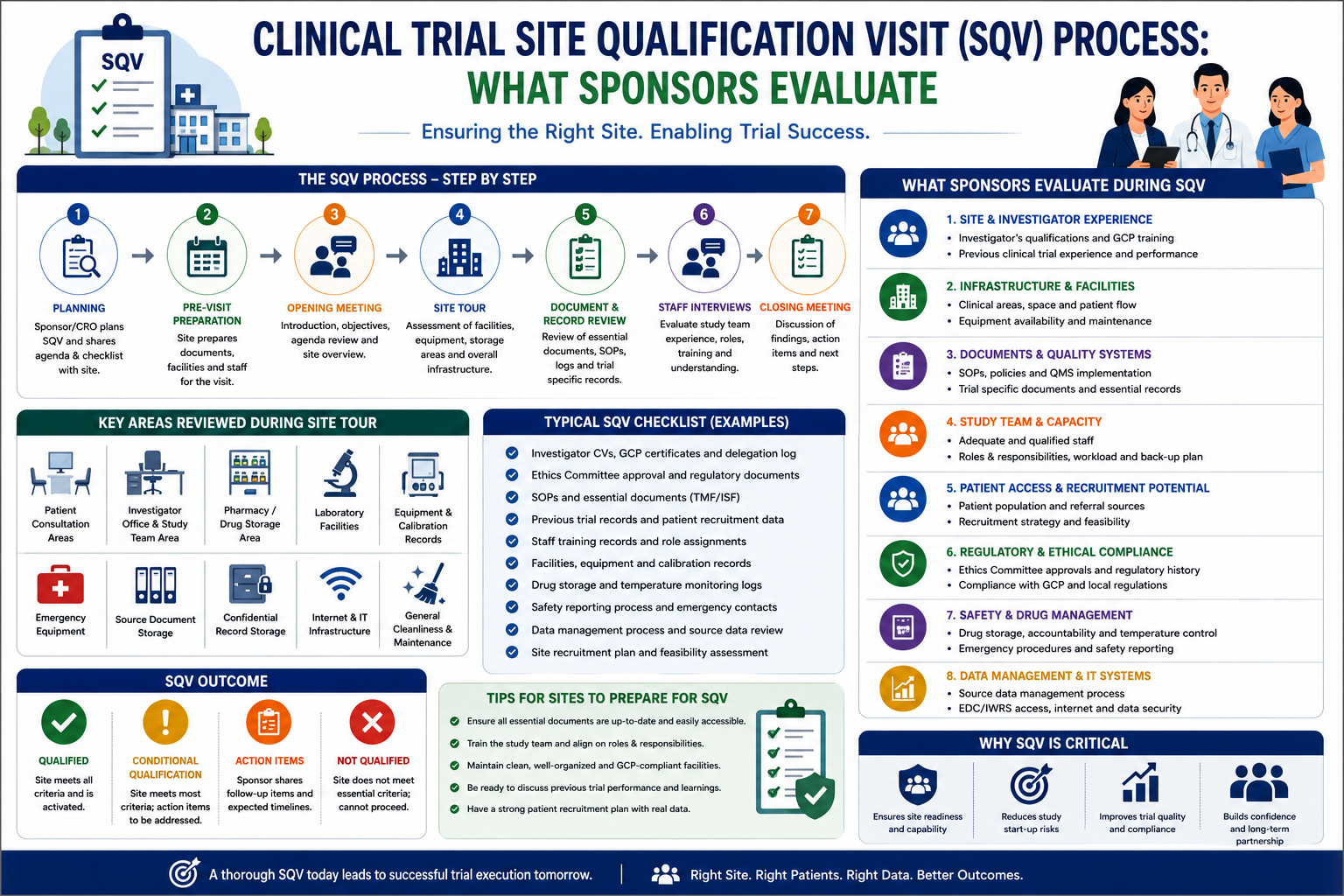
- Site Facility Readiness: I have seen SIVs (Site Initiation Visits) cancelled because the pharmacy did not have a calibrated -80°C freezer or the “Red-Bin” waste management contract had expired.
- Lab Logistics: If the study requires a central lab, the Courier/Import permit for the lab kits often takes longer than expected. If the kits are stuck in customs due to an incorrect HSN code, your startup is dead on arrival.
- Investigator Availability: A “star” PI is often too busy to sign the 1572 or the delegation logs. If the Sub-I (Sub-Investigator) hasn’t been properly briefed, the site is effectively inactive.
Myths vs. Reality in Indian Clinical Research
- Myth: Using a “Central Ethics Committee” is always faster. Reality: While a Central EC is faster for multicentric studies, many major hospitals in India mandate that their own Institutional EC must review the study for “local suitability.” You end up doing double the work.
- Myth: India provides the fastest recruitment, so startup delays don’t matter. Reality: High recruitment potential does not compensate for a 6-month delay in startup. Competitor trials in other regions (Eastern Europe or LATAM) will capture the patient pool first.
- Myth: Digital signatures are accepted everywhere. Reality: While CDSCO is moving digital via the SUGAM portal, many hospital administrators still demand “wet ink” signatures on tri-partite agreements. Shipping original documents across continents adds weeks if not managed via local couriers.
Common Mistakes and How to Fix Them
1. Sponsor Mistakes
- Inflexible Templates: Insisting on global CTA language that violates Indian law (specifically regarding compensation for trial-related injury).
- Delayed Funding: Failing to set up local currency accounts or payment milestones, leading to sites refusing to start screening because they haven’t received the startup fee.
2. CRO Mistakes
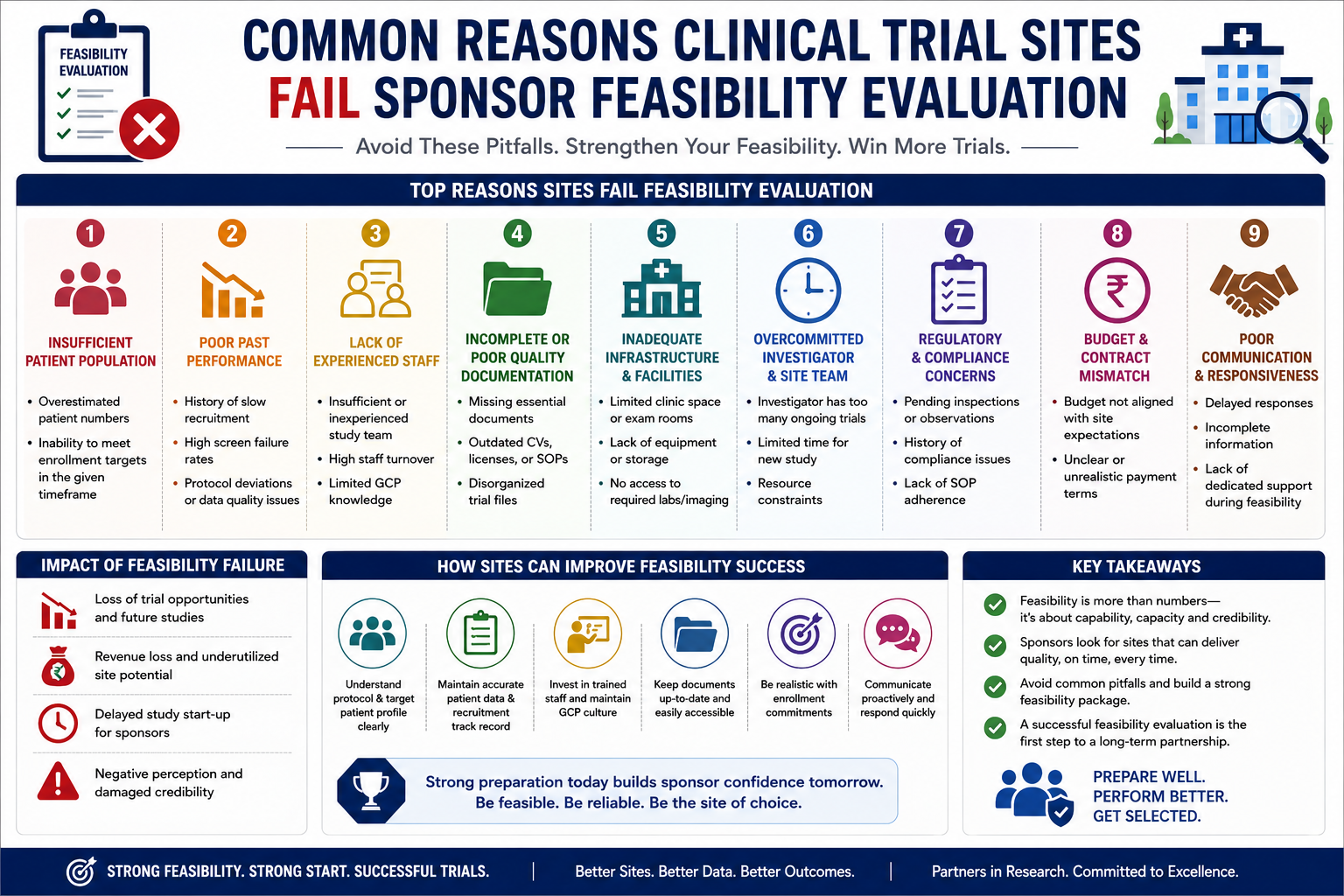
- Optimistic Feasibility: Telling the sponsor that “EC approval takes 30 days” when they know the specific hospital EC only meets once every two months.
- Junior Staffing: Assigning inexperienced CRAs to handle startup. Startup is a high-level negotiation, not a monitoring task.
- Over-commitment: Taking on 20 trials simultaneously without increasing the number of Site Coordinators.
- Poor Documentation: Failing to keep updated CVs and medical licenses of the study team, which stalls the Greenlight package.
Counterintuitive Insight: The “Over-Resourced” Site Failure
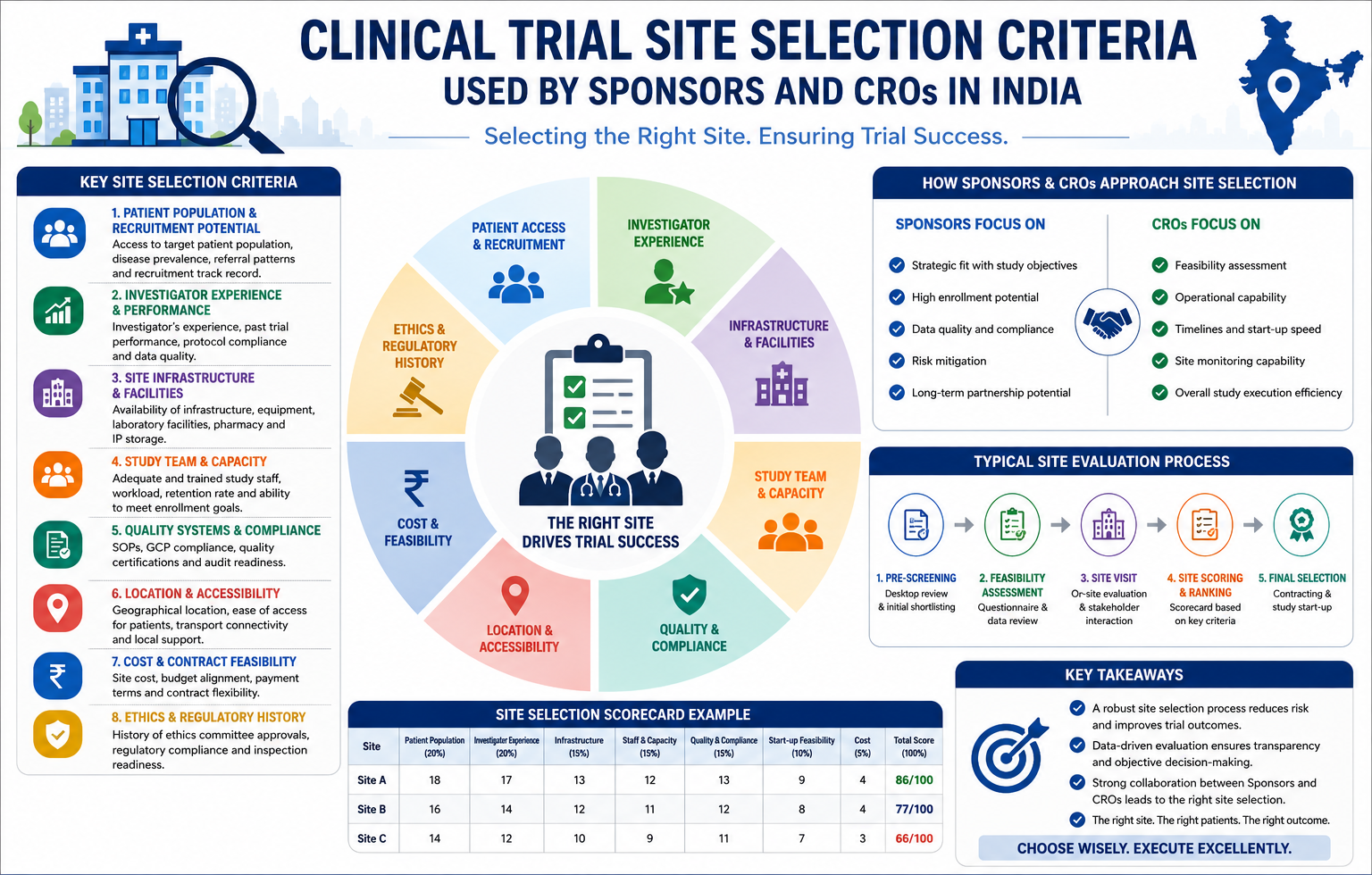
Sponsors often flock to the top five prestigious medical institutes in India. These sites have the best PIs and the most patients. However, these sites are also the most bureaucratic. A mid-tier, high-quality private hospital or a dedicated research center will often activate three times faster than a prestigious government hospital. If your trial is time-sensitive, diversify your site mix. Do not put all your “patient recruitment eggs” in the basket of a site that takes a year to sign a contract.
Practical Sponsor Checklist for Accelerated Startup
Feasibility Stage
- Confirm EC meeting frequency (monthly vs. quarterly).
- Verify if the site accepts an Independent EC or requires an Institutional one.
- Check the current workload of the Site Coordinator.
- Assess the hospital’s “Legal Review” track record for other clinical research services in India.
Startup Stage
- Submit to the EC and start CTA negotiations simultaneously with the CDSCO filing.
- Ensure the Informed Consent Document (ICD) includes the mandatory Indian compensation clauses per NDCT 2019.
- Pre-order all lab supplies and equipment 8 weeks before the expected SIV.
Execution Stage
- Verify all site staff have current GCP training certificates (within 2-3 years).
- Ensure the CTRI registration is public before the first subject is consented.
- Have a local expert like Govind Pawar or a senior lead review the Greenlight package for administrative completeness.
Regulatory and Compliance Framework
All trials in India must adhere to:
- CDSCO (Central Drugs Standard Control Organisation): The primary regulator under the DCGI.
- New Drugs and Clinical Trials Rules (2019): The definitive legal framework for compensation, ethics, and timelines.
- ICMR (Indian Council of Medical Research): Provides the Ethical Guidelines for Biomedical Research.
- CTRI (Clinical Trials Registry – India): Mandatory public registry.
- ICH-GCP E6(R3): The global standard for quality and ethical conduct.
Failure to comply with these, especially the compensation for injury or death clauses, can lead to the permanent blacklisting of a sponsor in the Indian market.
Suggested Infographics for Internal Use
- The Parallel Thread Diagram: A visual showing EC, CTA, and CDSCO tracks running at the same time.
- The Approval Funnel: Showing where 100 potential sites narrow down to 10 activated sites based on administrative hurdles.
FAQ
- How long does it realistically take to start a site in India? From the time of site selection to First Patient In (FPI), a well-managed study takes 4 to 6 months. Anything less is exceptional; anything more usually indicates a breakdown in the CTA or EC process.
- Can we use an Independent Ethics Committee for all sites? No. If a site has its own registered Institutional Ethics Committee, you are typically required to use it. Independent ECs are generally only used for sites that lack their own registered committee.
- What is the biggest cause of DCGI queries? Insufficient justification for the dose selection or a lack of clarity on the “medical management” provided to subjects in case of an Adverse Event (AE).
- Does CTRI registration happen before or after EC approval? The CTRI requires the EC approval letter to be uploaded before they grant a final registration number. You cannot screen patients without the CTRI number.
- Is India still a “fast-track” destination for clinical trials? Yes, but only for those who understand the 2019 Rules. The speed comes from the recruitment phase, but you must play the “long game” during the startup phase to reap those rewards.
For more detailed operational strategies or to discuss specific site challenges in India, you can reach out via oxygenclinicaltrial.com or contact me directly at govindpawar@oxygenclinicaltrials.com for an execution-focused consultation.
Operational excellence in India is not about clearing hurdles; it is about knowing where the hurdles are before you start running. By prioritizing parallel processing and local site management, sponsors can reliably trim 12 weeks off their startup timelines, ensuring life-saving therapies reach the market faster.