Recruitment Performance and Patient Access
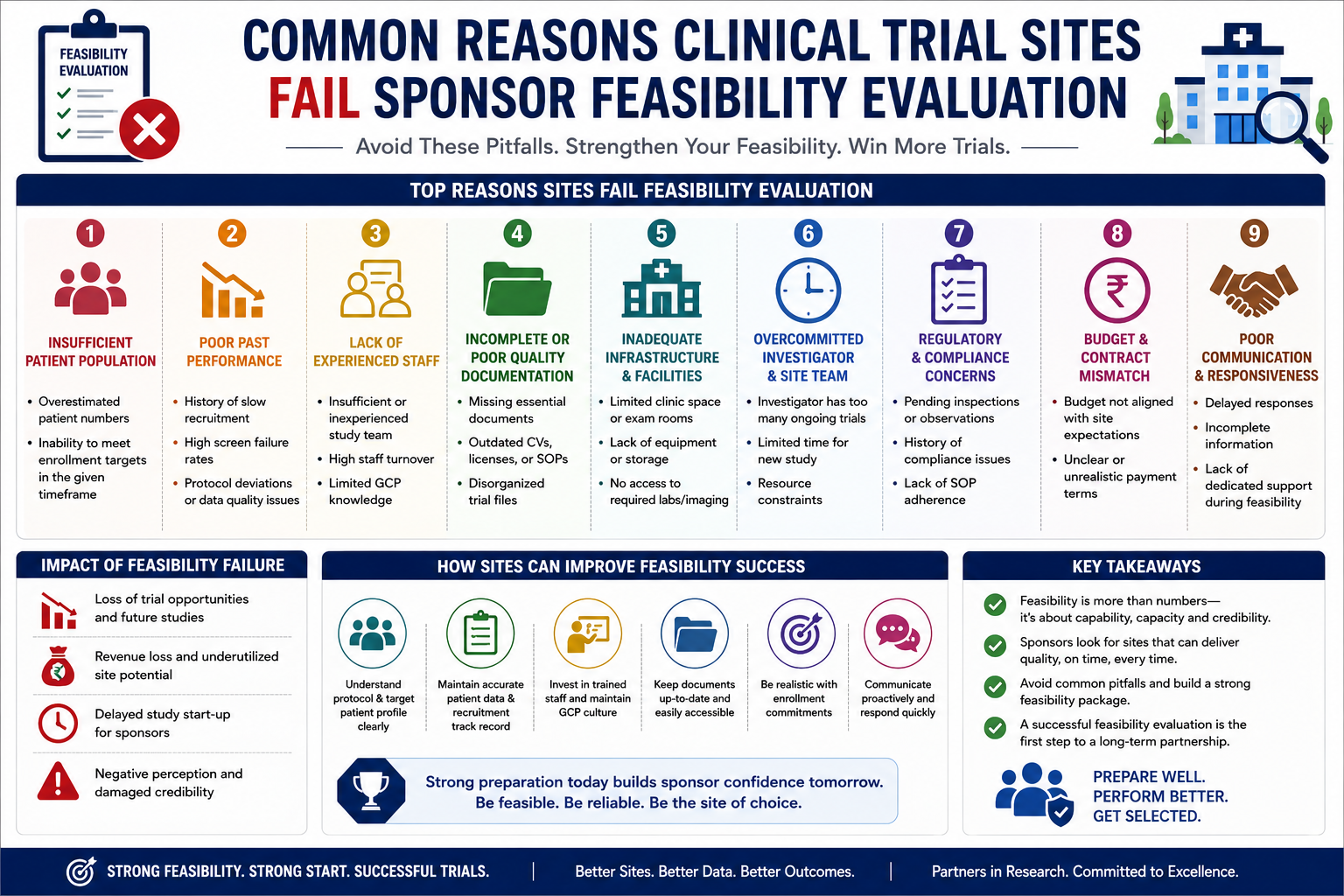
It is 3:00 AM in New Jersey, and a Global Clinical Operations Lead is staring at a recruitment dashboard that has turned red. A Phase III trial is stalled. The feasibility reports from three months ago promised twenty patients per month from a premier institute in Delhi. The reality? Zero. The Ethics Committee (EC) meeting was postponed twice. The Principal Investigator (PI) delegated responsibilities to a junior resident. However, the resident does not fully understand the protocol. In addition, the site has not yet ordered the centrifugation equipment required for primary endpoint samples.
This is the reality of clinical trial execution in India. It often occurs when site selection is based on prestige rather than operational readiness. As a result, delays, compliance issues, and operational gaps become more common.
Sponsors often enter the Indian market because of the large patient pool and lower operational costs. However, they frequently underestimate the complexities of the New Drugs and Clinical Trials Rules (NDCT), 2019. In addition, many overlook the ground-level execution risks involved in trial operations. As a result, operational delays and compliance challenges become more likely.
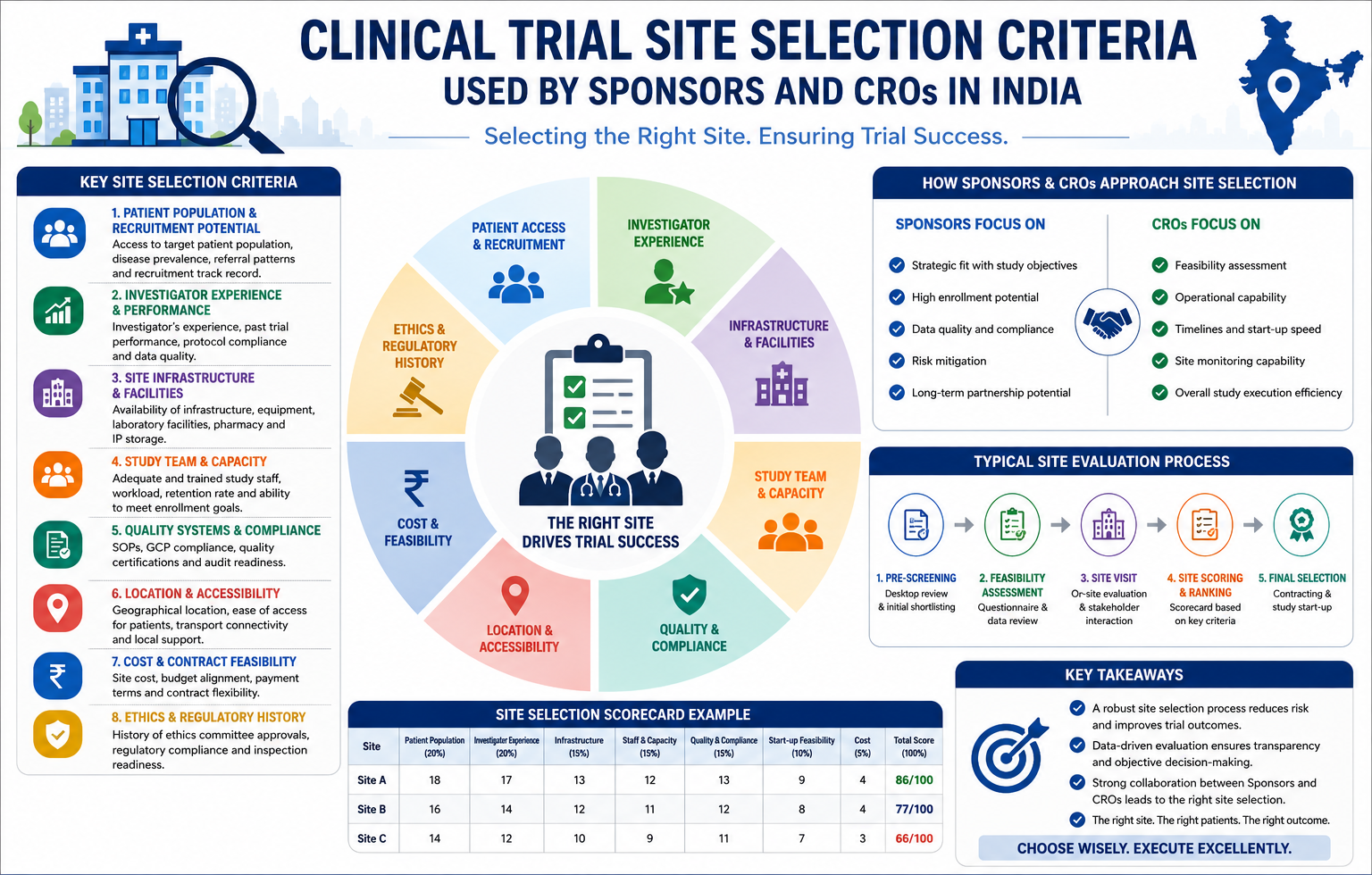
Identifying a high-performing site is not about choosing the biggest hospital. Instead, it is about selecting a site that balances regulatory hygiene with consistent recruitment performance. In addition, the site must maintain high-quality ALCOA+ data integrity standards. As a result, sponsors can achieve more reliable and compliant trial execution.
Executive Summary: The Financial Impact of Site Selection
For a sponsor, a site is an investment. In India, the gap between a high-performing site and a struggling one is often measured in months of delay and thousands of dollars in rescue costs. For example, a site that delays its EC submission by three weeks can postpone the country’s entire First Patient In (FPI). As a result, multiple global milestones may also be delayed.
• High-performing sites in India provide faster recruitment cycles. In many cases, patient enrollment is twice as fast as in Western sites.
• Additionally, these sites maintain predictable regulatory timelines through CDSCO (Central Drugs Standard Control Organisation).
• Well-managed longitudinal studies also achieve retention rates above 90% in many cases.
• Another major advantage is the generation of clean data that passes FDA and EMA inspections successfully.
• On the other hand, poor site selection can create serious operational and regulatory challenges.
• For instance, sponsors may face regulatory queries and potential Form 483 observations under US FDA oversight.
• Sponsors may also need to over-recruit globally to compensate for sites that over-promised and under-delivered.
• Consequently, overall study timelines and budgets can be significantly affected.
The Indian Regulatory Landscape: Beyond the Basics
To find a top site, you must understand the infrastructure they operate within. The regulatory framework in India is governed by the DCGI (Drug Controller General of India) under the CDSCO. Since the 2019 NDCT rules, the process has become more streamlined but also more stringent regarding ethics and compensation.
High-performing sites demonstrate an intimate knowledge of:
• CTRI (Clinical Trials Registry-India): Ensuring registration is done accurately before the first patient is enrolled.
• Ethics Committee Registration: Only ECs registered with the CDSCO can oversee clinical trials. A site using an unregistered or lapsed EC is a non-starter.
• SAE Reporting: The 24-hour reporting window to the DCGI and EC is non-negotiable. Top sites have internal systems to ensure this timeline is never missed.
• Compensation Rules: Understanding the formula-based compensation for trial-related injuries is critical for risk management.
Where the Delays Actually Happen
Most feasibility assessments focus on “Patient Potential.” This is a mistake. In India, the bottleneck is rarely the number of patients in the waiting room; it is the process of moving those patients through the screening funnel.
- Administrative Inertia: Many large, tertiary-care hospitals have complex legal departments. Contract negotiations (Clinical Trial Agreements) can take six months if the site management team is not proactive.
- EC Meeting Cycles: Some Ethics Committees meet once a month. Missing a submission deadline by one day results in a 30-day delay. High-performing sites have a clear “submission calendar” and follow it religiously.
- Logistics and Importation: Issues with Form CT-16 (import license) or biological sample export permissions (DGFT and ICMR-NOC) often catch sponsors off guard. A site that understands these requirements can save weeks of frustration.
Real Operational Insights: What Works vs. What Fails
Through years of monitoring and managing sites across the subcontinent, I have seen a clear pattern. The “star” investigators at Tier 1 private hospitals are often spread too thin.
They are consultants, researchers, and frequent speakers at international conferences. They have the patients, but they do not have the time.
A high-performing site usually features a “Rising Star” investigator—someone who is building their reputation, who remains accessible for site initiation visits (SIV), and who personally oversees the Study Coordinators (SCs).
Evidence of a high-performing site includes:
• Dedicated Clinical Research Coordinators (CRCs): Not just part-time staff shared between three different departments.
• Archival Systems: Well-organized, fire-safe, and moisture-controlled areas for long-term storage of Source Documents.
• Patient Centricity: Does the site have a plan for patient travel reimbursement? In India, logistics are a major cause of dropout. Effective site management accounts for these small but vital details.
Case Studies: Real-World Execution Scenarios
Case Study 1: The Oncology Recruitment Illusion
• Study Type: Phase II Lung Cancer (Late Stage).
• Site Type: Large Government Specialty Hospital.
• Problem: The site predicted 30 patients in 6 months but enrolled only 2 after 4 months.
• Root Cause: The PI was overwhelmed with general OPD (Outpatient Department) patients and had no dedicated space for trial-specific informed consent discussions. Long wait times led potential subjects to choose standard-of-care elsewhere.
• Action Taken: Moved the study to a private specialty center with similar patient volume but a dedicated trial wing and appointed a second Sub-Investigator.
• Outcome: Enrollment targets met; data quality improved.
• Lesson Learned: Volume does not equal enrollment capacity. Look for infrastructure that supports the patient experience.
Case Study 2: The Vaccine Data Integrity Crisis
• Study Type: Phase III Multi-center Vaccine Trial.
• Site Type: Private Medical College.
• Problem: During an interim audit, the CRA found discrepancies in temperature logs for the Investigational Product (IP).
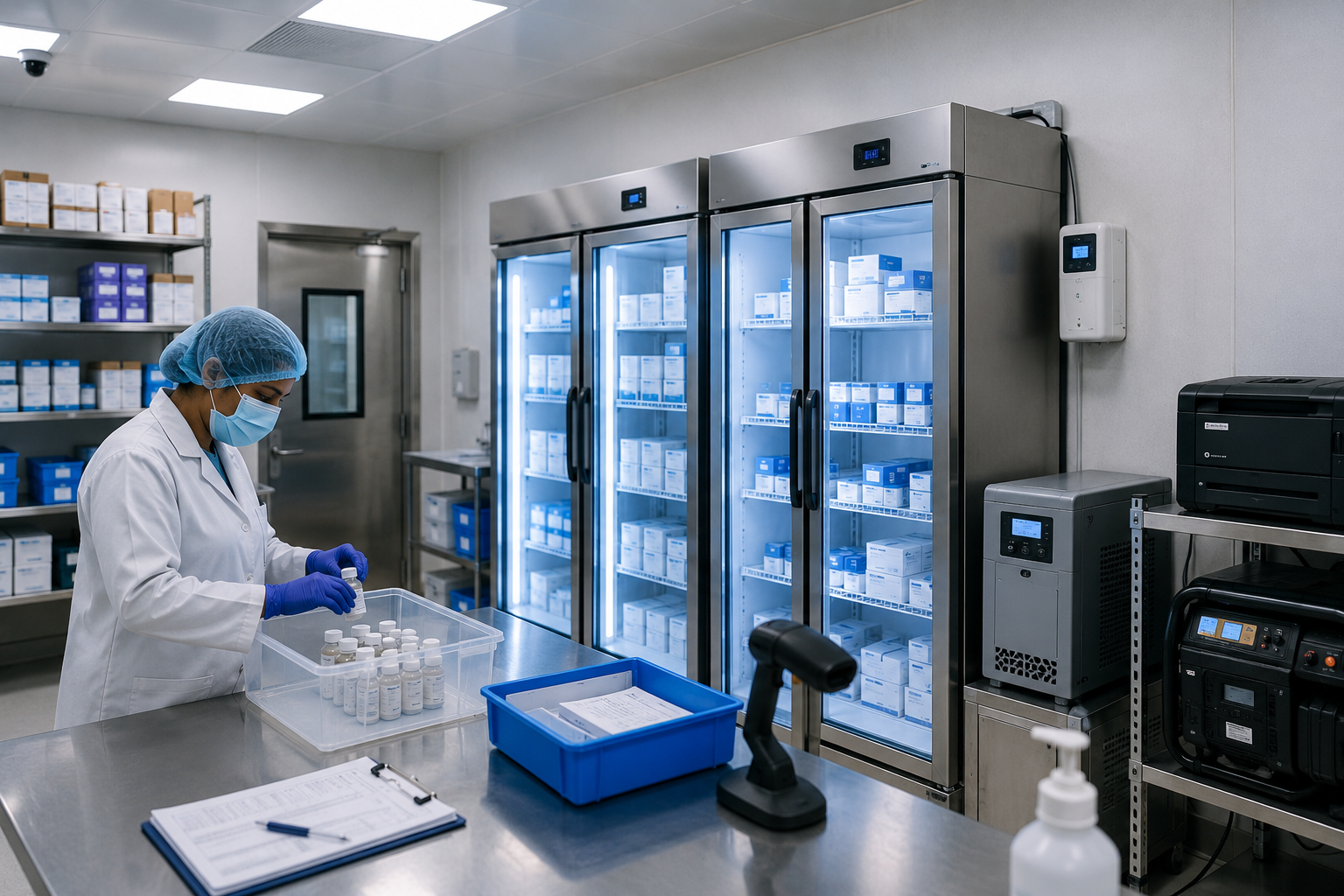
• Root Cause: The site used a common pharmacy fridge with no back-up power source (common in certain Indian states with power fluctuations).
• Action Taken: Immediate installation of a medical-grade refrigerator with 24/7 digital temperature monitoring and a dedicated UPS (Uninterruptible Power Supply).
• Outcome: Prevented the loss of all IP; sites now require pre-qualification of storage equipment.
• Lesson Learned: Never assume a hospital-grade fridge is sufficient for clinical trial IP.
Case Study 3: The Rare Disease Startup Delay
• Study Type: Orphan Drug Program (Pediatric).
• Site Type: Specialist Research Institute.
• Problem: Startup took 9 months compared to the 4-month global average.
• Root Cause: The site’s legal team insisted on indemnity clauses that contradicted the sponsor’s global policy.
• Action Taken: Brought in a clinical research service provider to mediate between the site’s legal department and the sponsor’s counsel using localized templates.
• Outcome: Finalized the CTA in 3 weeks after mediation.
• Lesson Learned: Local expertise in Indian contract law is essential to avoid “Infinite Loop” negotiations.
Challenges and Mitigation: No Sugarcoating
Execution in India involves risks that are rarely discussed in “glossy” feasibility decks.
Risk 1: Staff Turnover Study coordinators in India are highly mobile. If your lead SC leaves mid-study, the trial can derail.
Mitigation: Ensure the site has a “Succession Plan” and that the PI is not overly dependent on a single individual.
Risk 2: Documentation Discrepancies In many Indian hospitals, physicians write notes on paper charts that are often brief.
Mitigation: Continuous training on ALCOA+ principles. If it isn’t documented clearly, it didn’t happen. High-performing sites use structured Source Data Templates.
Risk 3: Investigational Product (IP) Mismanagement Customs clearance and local transport (Cold Chain) are danger zones.
Mitigation: Use validated vendors for logistics and ensure the site has a delegated IP pharmacist who is GCP-trained.
Myths vs. Reality
- Myth: “India is great for cheap trials.
Reality: If you prioritize “cheap” over “qualified,” you will pay five times more in audits, data cleaning, and potential regulatory rejection. India offers value, not just low cost. - Myth: “Government sites are too slow.
Reality: Government sites often have the highest patient volumes and the most experienced investigators. When managed by a competent Site Management Organization (SMO), they can be top performers. - Myth: “Digital health records are standard in India
Reality: While improving, many sites are still hybrid (paper and digital). Your protocol must be flexible enough to handle this.
Common Mistakes
Sponsor Mistakes
• Lack of Ground Presence: Sponsors often try to manage Indian sites from US or EU time zones. As a result, local monitoring and operational support become inadequate.
• Rigid Global Templates: Some sponsors expect Indian sites to sign global contracts or consent forms. However, these documents may not align with the 2019 NDCT rules in India. Consequently, approval delays and compliance concerns can arise.
CRO Mistakes
• Over-promising in Feasibility: Telling the sponsor what they want to hear to win the bid.
• High Monitor Turnover: Changing the Clinical Research Associate (CRA) every six months, which destroys relationship-building with the PI.
Site Mistakes
• Under-budgeting for Staff: Trying to run a complex Phase II trial with a single coordinator.
• Ignoring the “Small Print”: Not realizing the level of detail required for IP accountability or SAE reporting until an audit occurs.
Counterintuitive Insight: The “Small Hospital” Advantage
Standard wisdom says to go to the largest teaching hospitals. However, a counterintuitive truth is that many “medium-sized” private specialty centers are often more efficient. Why? Because the PI is usually the owner or a senior partner. They have a direct stake in the site’s reputation. They make decisions faster, the staff is more stable, and they are more willing to invest in trial-specific infrastructure.
Practical Sponsor Checklist for Indian Site Selection
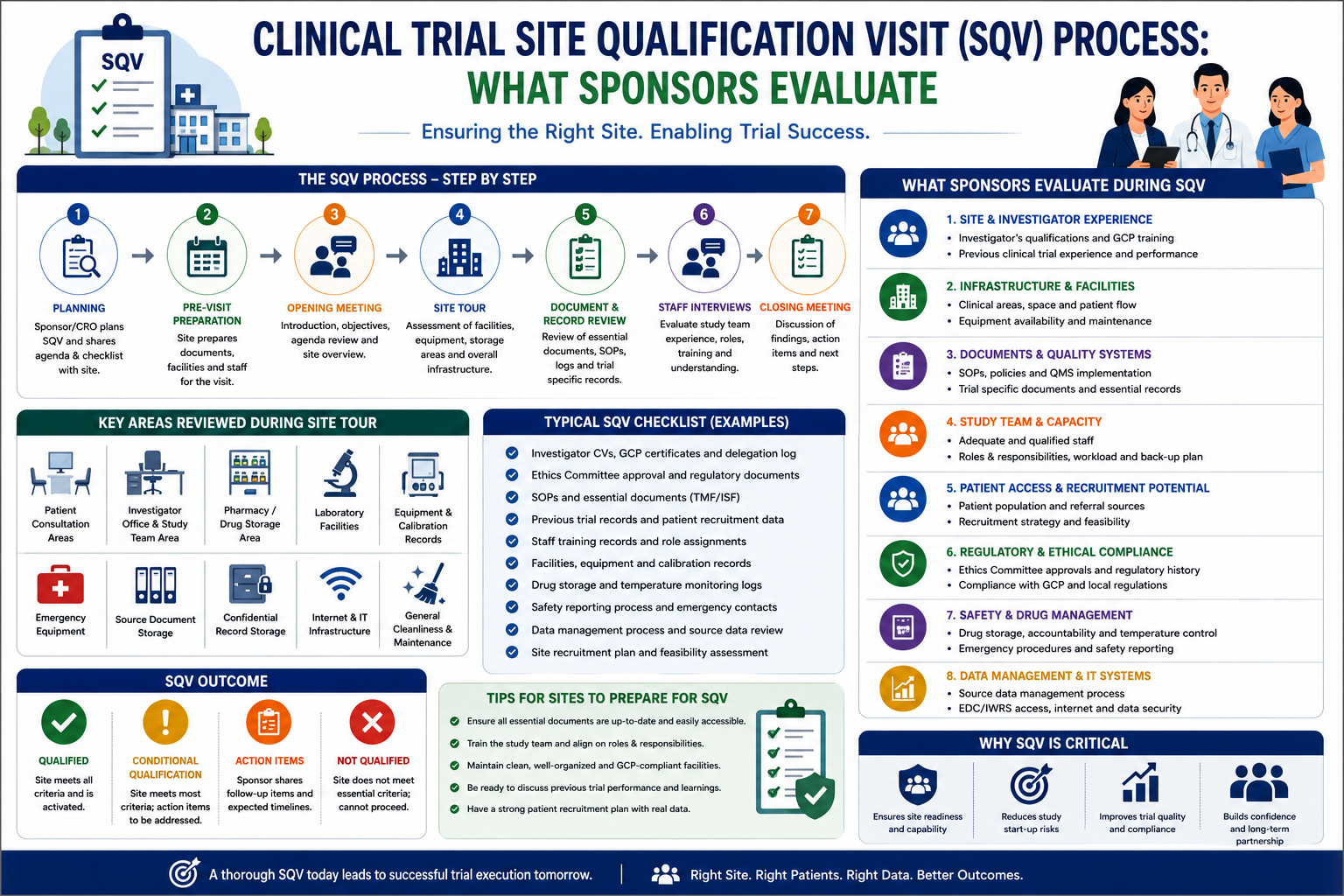
Feasibility Stage
• Verify EC registration on the SUGAM portal.
• Check the number of competing trials in the same therapeutic area.
• Assess the PI’s previous history of SAE reporting and query resolution.
• Inspect the pharmacy’s storage capacity and backup power.
Startup Stage
• Confirm timelines for CTA (Contract) sign-off.
• Ensure the Informed Consent Document (ICD) includes the mandatory compensation language required by Indian law.
• Validate the site’s understanding of the CTRI registration process.
Execution Stage
• Audit the first 2-3 subjects immediately after enrollment to catch systematic errors.
• Monitor CRC-to-patient ratios.
• Keep a close eye on the shipping/import timelines for lab kits and IP.
Regulatory and Compliance Context
Navigating India requires a firm grip on local and international standards.
• CDSCO & DCGI: The primary bodies for trial approval and oversight.
• ICMR (Indian Council of Medical Research): Provides the ethical guidelines that every EC must follow. Their 2017 guidelines are the gold standard for ethical conduct in India.
• CTRI: All trials must be registered here. It is a public database, and data must match the protocol exactly.
• ICH-GCP E6(R3): The global standard that top-performing Indian sites use to ensure their data is acceptable to the FDA and EMA.
• New Drugs and Clinical Trials Rules (2019): This is the “Bible” for clinical research in India. It defines everything from timelines to compensation formulas.
Poor execution is not just a delay; it is a compliance risk. A site that fails to follow ICH-GCP guidelines can lead to the disqualification of entire data sets, potentially ruining a multi-million dollar program.
Suggested Images / Infographics for Strategy Presentations
- The Indian Regulatory Funnel: A diagram showing the flow from DCGI submission to EC approval to CTRI registration.
- The Cost of Delay: A chart comparing the cost of a site starting in 4 months vs. 8 months.
- Site Infrastructure Matrix: A visual checklist of mandatory vs. preferred site features (e.g., -80C freezers, backup power, dedicated consenting rooms).
External References
For sponsors digging deeper into the regulatory requirements:
• CDSCO Official Website
• ICMR Ethical Guidelines
• Clinical Trials Registry – India (CTRI)
• ICH Official Website
FAQ Section
- How long does it realistically take to get a site “Green Light” in India? From the time of dossier submission to the DCGI (if required) and the Ethics Committee, you should budget for 4 to 6 months. While some sites can do it faster, things like legal review and import licenses for Investigational Products often take longer than expected High Performing Trial Sites.
- Is the US FDA active in inspecting Indian sites? Yes. India has the largest number of FDA-approved manufacturing plants outside the US, and clinical sites are frequently inspected, especially in support of New Drug Applications (NDAs) or Biologics License Applications (BLAs). High-performing sites operate in a constant state of “inspection-readiness.” High Performing Trial Sites.
- What is the biggest reason for patient dropout in Indian trials? It is usually logistical. Patients in India often travel long distances to reach top hospitals. If the sponsor does not provide adequate compensation for travel or if the site does not streamline the visit schedule, patients will simply stop coming after two or three visits High Performing Trial Sites.
- Can I use a Central Ethics Committee for all sites in India? No. Under the 2019 NDCT rules, you must have an Institutional Ethics Committee for each site. While “Independent” ECs exist and can be used for certain types of studies or secondary oversight, the primary responsibility lies with the registered committee of the institution where the trial is conducted High Performing Trial Sites.
- How do I verify a site’s recruitment claims? Never take a feasibility questionnaire at face value. Ask to see the site’s “blinded” patient logs for the relevant indication. A high-performing site will be able to show you exactly how many patients they see per month that meet the core Inclusion/Exclusion criteria without violating patient privacy High Performing Trial Sites.
A Partner in Execution
Success in India is a boots-on-the-ground game. Identifying high-performing sites requires an eye for detail and an understanding of what happens when the monitor isn’t looking. For sponsors and CROs looking to maximize their Indian research footprint, the focus must remain on operational excellence and regulatory hygiene High Performing Trial Sites.
If you have questions about site feasibility, regulatory submissions under DCGI, or managing complex trials in India, feel free to reach out High Performing Trial Sites.
Author Profile: Govind Pawar Senior Clinical Operations Leader Email: govindpawar@oxygenclinicaltrials.com LinkedIn: www.linkedin.com/in/govind-pawar-42518511a Website: https://oxygenclinicaltrial.com/
In an environment as complex as India, the difference between a successful trial and a failed one is often the quality of the partnership between the sponsor and the site. Therefore, choose sites that demonstrate not just the capacity to enroll, but also the discipline to comply. Moreover, operational consistency and regulatory readiness are equally critical for long-term trial success. If you need assistance in navigating this landscape, contact us today. As a result, you can make more informed site selection decisions and improve overall study performance High Performing Trial Sites.