Clinical Trial Feasibility Failure.. Three months into a Phase III global trial, a sponsor realized that their lead site in India—selected for its high patient volume—had not enrolled a single subject. The Investigator was a high-profile KOL with five other active trials. The site staff was overwhelmed, the Ethics Committee (EC) had an unexpected three-month backlog, and the storage facility for Investigational Product (IP) lacked temperature-controlled backup. This failure cost the sponsor approximately $45,000 in lost startup costs and delayed the regional database lock by twelve weeks.
In fifteen years of clinical operations, I have seen that high-quality data and timeline adherence do not happen by accident. They are the result of looking past the “paper feasibility” and assessing the site’s actual capacity to execute under the New Drugs and Clinical Trials Rules (2019).
Executive Summary for Sponsors and CROs
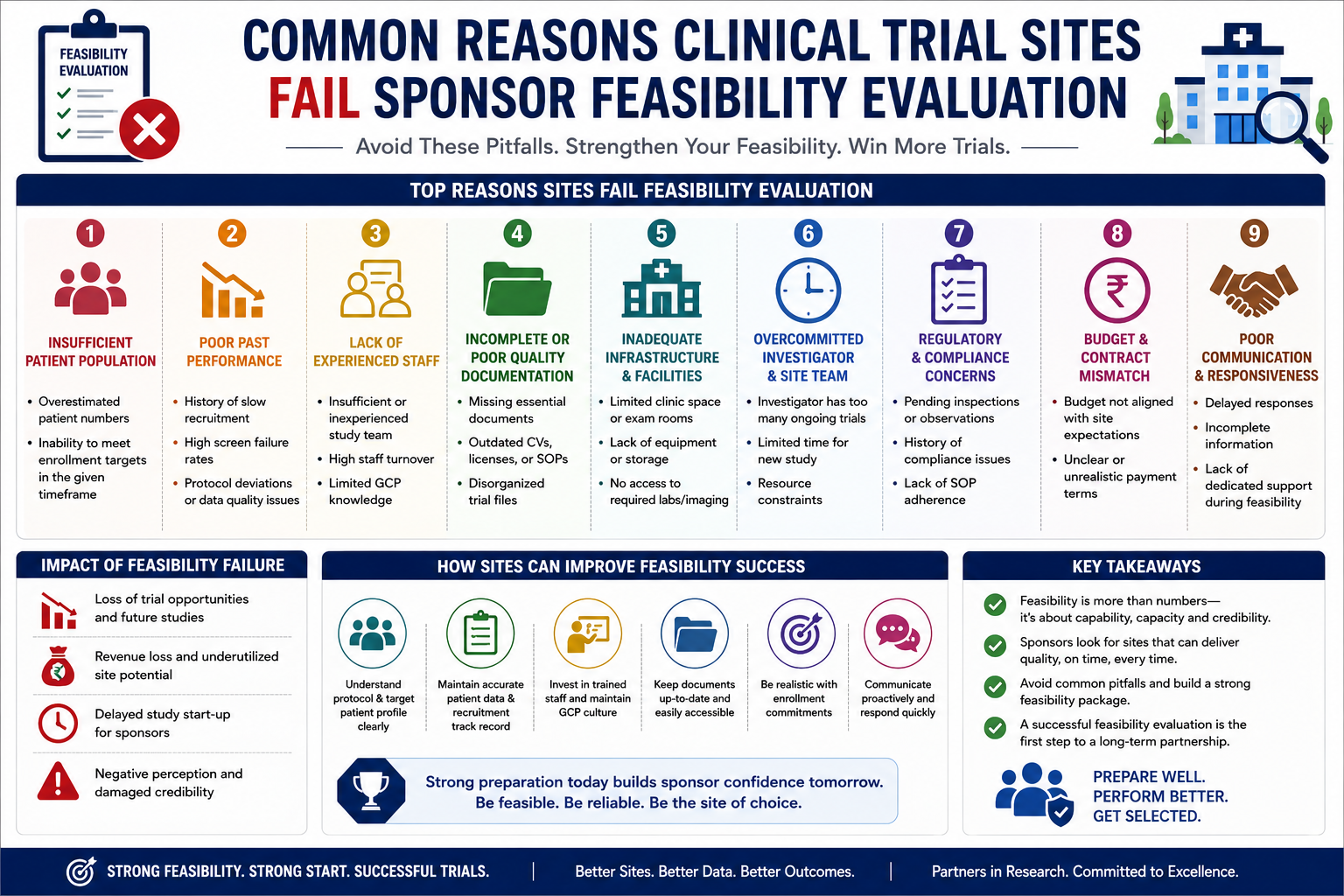
Feasibility failure is the single largest controllable risk to trial timelines and budgets. When a site fails feasibility or, worse, passes feasibility but fails execution, the financial impact is compounding. Beyond the $30,000 to $50,000 spent on administrative startup, monitoring, and IP logistics, the second-order effects include missed milestones and compromised data integrity.
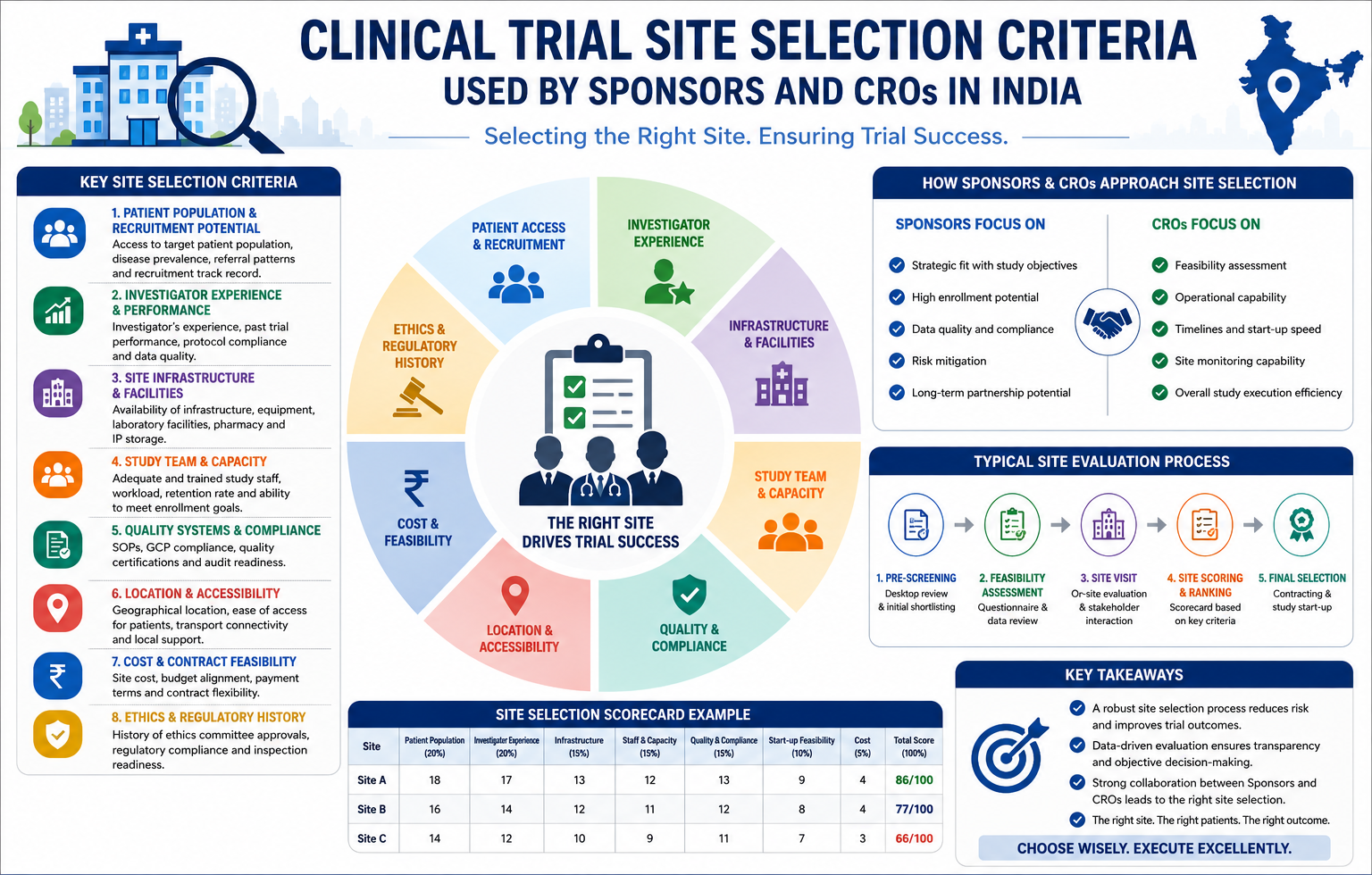
A successful feasibility evaluation in the Indian landscape requires a granular understanding of institutional bureaucracy, PI commitments, and patient pathways. Sponsors must move away from generic questionnaires and focus on evidence-based site selection that prioritizes ALCOA+ principles and regulatory readiness.
The Reality of the Approval Process in India
Many sponsors assume that a quick feasibility turnaround translates to a quick startup. This is rarely the case. Sites often fail feasibility because they cannot clearly map out their internal approval timelines. A site might claim a 30-day startup, but if they have an unorganized Institutional Ethics Committee (IEC) that only meets once every two months, that timeline is impossible. Furthermore, the mandatory registration on the Clinical Trials Registry – India (CTRI) requires specific documentation that many sites fail to prepare in advance. Operational delays frequently occur at the intersection of legal and administrative review. If a site’s legal department is notorious for 6-month turnaround times on Clinical Trial Agreements (CTAs), the site is a failure for any trial requiring rapid enrollment.
Critical Operational Bottlenecks
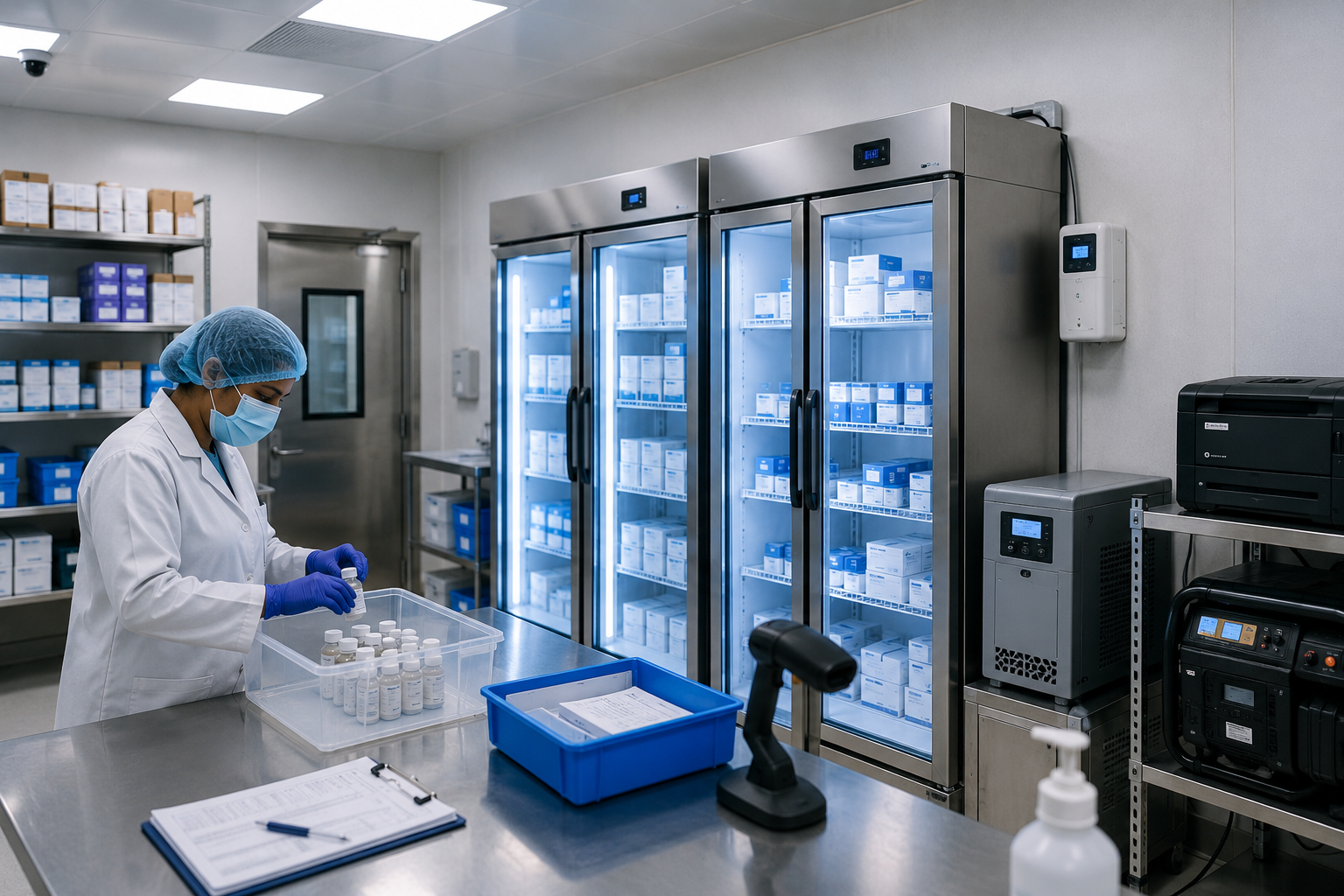
Sites fail feasibility when they lack a dedicated Study Coordinator or when the PI delegates too much responsibility to junior residents with high turnover rates. During a site assessment, the presence of a calibrated centrifuge or a -20°C freezer is basic. What matters is the maintenance log, the power backup protocol, and the staff’s understanding of “Source Data.” If a site cannot demonstrate a clear workflow for data entry into the Electronic Data Capture (EDC) system within 24–48 hours, they will become a bottleneck during the trial. Site failures also stem from a lack of “Patient Depth.” A site may have 500 patients with a specific condition, but if 90% of those patients live more than 200 kilometers away and the protocol requires weekly visits, the feasibility of recruitment is near zero.
Case Studies in Feasibility and Execution Failure
Case Study 1: The “Ghost” Principal Investigator
Study Type: Phase II Oncology Site Type: Large Private Multi-specialty Hospital Problem: Zero recruitment after 4 months of activation. Root Cause: The PI was listed on six other trials and delegated all screening to a junior fellow who did not understand the inclusion/exclusion criteria. Action Taken: Site was closed after the first monitoring visit. Outcome: $60,000 loss in startup and IP costs. Lesson Learned: Always evaluate the PI’s “Time-on-Study” and the number of competing protocols currently active at the site.
Case Study 2: Regulatory and Equipment Collapse
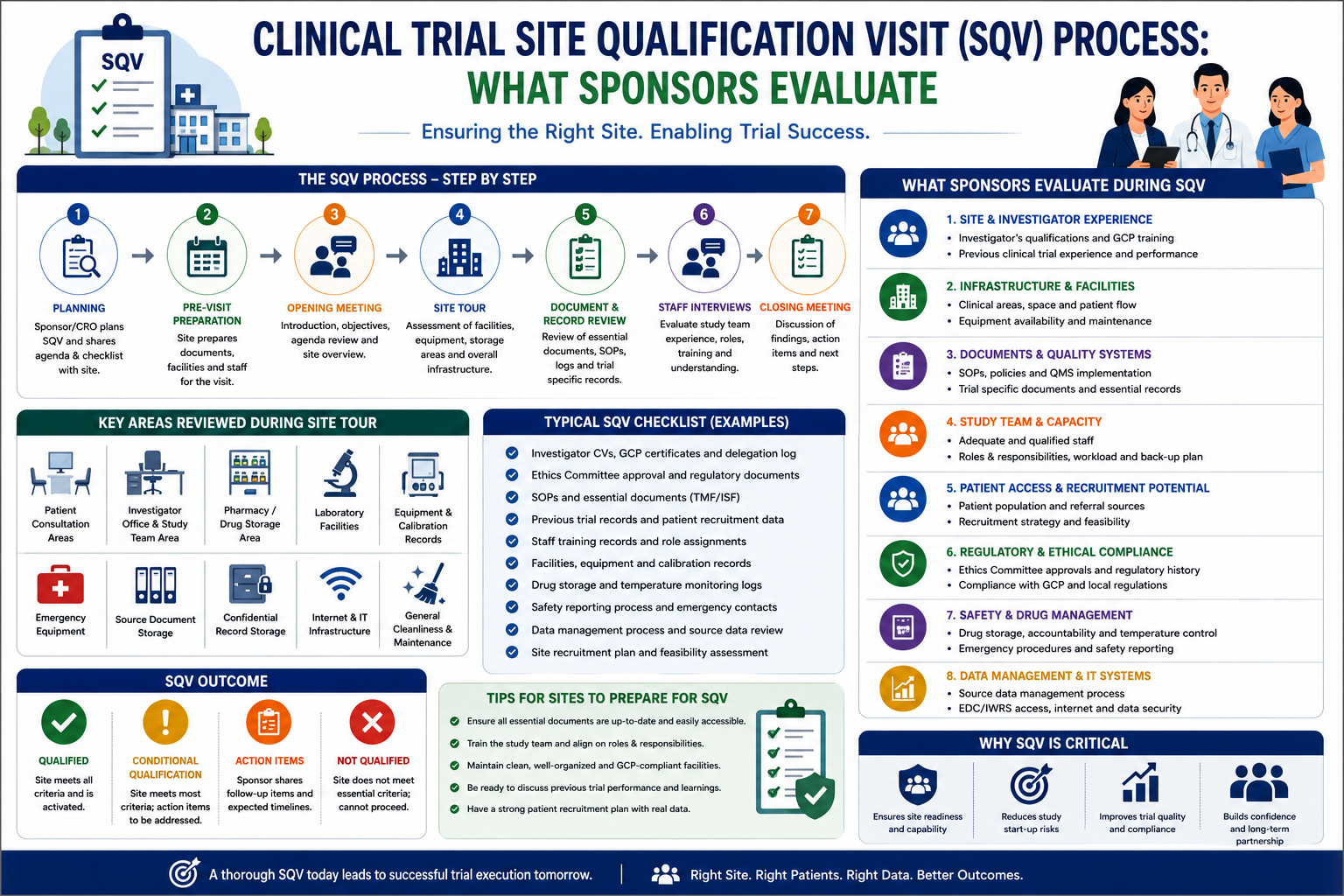
Study Type: Phase III Cardiovascular Site Type: Government Academic Institution Problem: Major audit finding regarding IP temperature excursions. Root Cause: The site claimed to have 24/7 power backup but did not have a dedicated, monitored power line for the IP refrigerator. Action Taken: All subjects at the site were excluded from the primary analysis. Outcome: Compromised data integrity and a significant delay in the NDA submission. Lesson Learned: Physical verification of infrastructure and backup logs is non-negotiable during the Site Selection Visit (SSV).
Case Study 3: The Ethics Committee Quagmire
Study Type: Rare Disease / Orphan Drug Site Type: Specialist Tertiary Care Center Problem: 7-month delay in start-up. Action Taken: Sponsor had to wait for the site to re-register the EC. Outcome: Missed the global recruitment window for the first cohort. Lesson Learned: Verify the EC’s CDSCO registration status and expiration date before finalizing the site.
Case Study 4: Data Quality and ALCOA+ Violations
Study Type: Biosimilar Comparison Site Type: Private Research Site Problem: Systematic errors in source documentation. Root Cause: No dedicated Quality Management System (QMS) at the site level; staff was using “shadow files” instead of real-time entry. Action Taken: Intensive retraining and 100% Source Data Verification (SDV). Outcome: Monitoring costs tripled for this specific site. Lesson Learned: Assess the site’s internal SOPs for data management during feasibility, not just their patient numbers.
Challenges and Mitigation Strategies
Sponsors frequently underestimate the complexity of logistics in India. For example, shipping laboratory samples across state lines or ensuring cold chain integrity in high-heat zones requires more than a standard courier. Instead, sites must use specialized logistics systems designed for temperature-sensitive clinical materials. As a result, sample quality and data reliability can be consistently maintained.
Mitigation starts with honest site assessment. For instance, if a site lacks experience with the specific therapeutic area or the diagnostic equipment required by the protocol, it must be disqualified, regardless of its reputation. Therefore, sponsors should prioritize operational capability over brand recognition. As a result, study quality and protocol compliance are better protected. We often recommend using a dedicated Site Management Organization (SMO) to bridge the gap between the PI’s clinical expertise and the trial’s operational requirements.
For more information on how to navigate these complexities, visit our clinical research services India page.
Myths vs Reality in Indian Clinical Trials
- Myth: A high patient volume always leads to high enrollment.
Reality: Patient volume is useless if the site does not have the staff to screen them or the facility is too difficult for patients to access frequently.
- Myth: Top-tier academic PIs are always the best choice.
Reality: Academic PIs are often stretched too thin. Mid-career PIs at private hospitals often provide higher quality data and better engagement.
- Myth: Every site is ready for an FDA or EMA audit.
Reality: Very few sites in India maintain the level of rigorous documentation required for a global audit without significant oversight from the CRO or SMO.
Common Mistakes in Feasibility
Sponsor Mistakes
Sponsors often use a global feasibility template that doesn’t account for Indian regional holidays, EC meeting frequencies, or local standard of care. They also tend to push for unrealistic timelines, forcing sites to over-promise and under-deliver.
CRO Mistakes
CROs sometimes hide site-level risks to ensure they meet their own “site-on-board” targets. If a CRO is not
transparent about a site’s past performance or equipment failures, the sponsor pays the price later.
Site Mistakes
Sites frequently overestimate their recruitment potential. They fail to account for competing trials or the impact of the protocol’s restrictive inclusion criteria on their existing patient pool.
The Counterintuitive Insight
Most sponsors believe that site equipment and patient numbers are the primary drivers of success. In my experience, the most critical factor is actually the “Administrative Velocity” of the site. In other words, a site’s ability to respond quickly and efficiently often determines overall trial performance. As a result, operational speed becomes a key differentiator during site evaluation.
I would choose a site with a moderate patient pool and a highly responsive, organized administrative office over a high-volume site with a bureaucratic, unresponsive legal and ethics department.
Practical Sponsor Checklist
Feasibility Stage
- Verify PI’s current trial load and competing protocols.
- Confirm EC registration with CDSCO and frequency of meetings.
- Review past recruitment performance on similar protocols.
- Assess site staff experience with EDC and IWRS/IRT systems.
- Validate the “Actual” patient pool versus the “Hospital Database” number.
Startup Stage
- Finalize the CTA within 45 days.
- Ensure site staff attend the Investigator Meeting (IM).
- Verify IP storage, temperature monitoring, and backup power.
- Confirm CTRI registration is initiated early.
Execution Stage
- Implement a 24-hour data entry rule.
- Conduct a first-patient-in (FPI) “War Room” to identify hurdles.
- Maintain a site-level risk register.
- Use site management services to ensure ongoing compliance.
Regulatory and Compliance Context
The Indian regulatory environment is defined by the following bodies and guidelines:
- CDSCO (Central Drugs Standard Control Organization): The national regulatory body for pharmaceuticals and medical devices.
- DCGI (Drugs Controller General of India): Leading the CDSCO, responsible for trial approvals.
- ICMR (Indian Council of Medical Research): Sets ethical guidelines for biomedical research.
- CTRI (Clinical Trials Registry – India): Mandatory registration for all trials conducted in India.
- New Drugs and Clinical Trials Rules (2019): The primary legislative framework.
Compliance with ICH-GCP E6(R3) is the benchmark for data quality. Failure to adhere to these standards, particularly regarding informed consent (Video Consent where applicable) and source data integrity, will lead to site disqualification by global sponsors.
For tailored advice on site selection and regulatory navigation, you can reach out via our contact page or connect with Govind Pawar at govindpawar@oxygenclinicaltrials.com or through LinkedIn.
Suggested Images and Infographics
- Workflow Diagram: The path from Feasibility Questionnaire (FQ) to Site Activation, highlighting potential “Death Valleys” (Legal review, EC approval, IP import).
- Timeline Comparison: A “Realistic vs. Optimistic” timeline for site startup in India.
- Approval Funnel: Showing how 100 potential sites are filtered down to 10 high-performing sites.
External References
- CDSCO Official Website
- ICMR Ethical Guidelines
- ICH-GCP E6(R3) Draft Guidance
- New Drugs and Clinical Trials Rules 2019 Gazette Notification
Frequently Asked Questions
- What is the most common reason a site is rejected during feasibility? The most common reason is a lack of documented proof for patient volume. Sites often provide estimates based on general hospital footfall rather than the specific inclusion/exclusion criteria of the protocol. When asked for redacted screening logs from previous similar trials, many sites fail to provide evidence of their claims Clinical Trial Feasibility Failure.
- How does the New Drugs and Clinical Trials Rules (2019) affect site selection? The 2019 rules streamlined the approval process but increased the accountability of the PI and the EC. Sites now must ensure their EC is registered and that they have clear procedures for compensation in case of trial-related injury. Sites that do not have these procedural frameworks in place are high-risk for sponsors Clinical Trial Feasibility Failure.
- Can a site be used if its Ethics Committee is not yet registered with the CDSCO? No. Under current Indian regulations, only a CDSCO-registered Ethics Committee can oversee a clinical trial involving a new drug or investigational product. Using a non-registered EC is a major regulatory violation and will lead to the rejection of all data from that site Clinical Trial Feasibility Failure.
- Is it better to use a government hospital or a private site in India? Government hospitals offer massive patient diversity and volume but often suffer from slower administrative processes and higher staff turnover. Private sites are generally faster and more responsive to sponsor timelines but may have smaller patient pools. The choice depends entirely on the trial’s specific recruitment needs and timeline Clinical Trial Feasibility Failure.
- What role does a Site Management Organization (SMO) play in feasibility? An SMO acts as the operational arm of the site. They provide dedicated Study Coordinators who ensure that the site’s documentation, data entry, and logistics are handled professionally. For sponsors, an SMO reduces the risk of feasibility failure by providing a layer of oversight that ensures the PI’s clinical work is supported by strong operational execution Clinical Trial Feasibility Failure.
Execution in clinical trials is about managing the details that most people ignore until it is too late. Selecting the right site requires looking past the reputation of the institution and into the reality of the daily operations. At Oxygen Clinical Trial, we focus on the mechanics of trial delivery to ensure that feasibility leads to successful enrollment and high-quality data.